KZN coastal drowning crisis: latest tragedy at Salmon Bay sparks urgent safety warnings
KZN beach fatalities
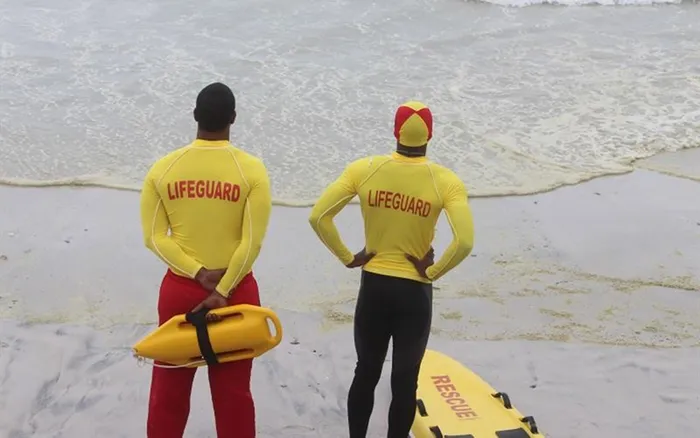
Lifeguards on duty.
Image: System
A MAN in his 20s has drowned at Salmon Bay in Ballito, adding to an alarming 40 fatalities along KZN beaches since December.
The body of Mohammed Zaheer Sindhi, who is believed to have drowned after rescuing his nephew at a Ballito beach on January 2, has yet to be recovered.
This week, his brother, Omar Sindhi, said, “We had to return to Mpumalanga without closure because of work commitments, However, our hearts are still in Durban with my brother. It is still hard to believe he is gone and we have not found his body. We hired extra search organisations for help but still no luck. They did what they could and eventually the search was called off. We hope one day we get closure,” he said.
Meanwhile, the family of Rikus Kylander, an 18-year-old from Krugersdorp, called off the search for their son after 22 days. He disappeared while snorkelling in Mozambique, in December. Kylander had been celebrating the end of his matric year with friends in Ponta do Ouro Beach. He achieved five distinctions in matric.
Safety experts warn most incidents occur at unpatrolled beaches or outside lifeguard hours, urging the public to swim only at protected areas during designated times.
Samantha Meyrick of IPSS Medical Rescue said authorities were investigating the incident.
“We received reports of a swimmer in distress at Salmon Bay. Lifeguards from a nearby protected beach responded, and they were able to bring the man ashore and immediately began CPR. Despite the best efforts of paramedics and lifeguards, the man was declared deceased,” Meyrick confirmed.
Meyrick highlighted a worrying trend of drowning incidents in the region.
“For December alone, the only near drownings we attended to was of a four-year-old at Thompson’s Bay and a 13-year-old at Salt Rock Main Beach, where resuscitation was unsuccessful. This excluded multiple incidents in January, such as the Pennington Beach cases on January 1, where several individuals were either rescued or recovered deceased,” she said.
Meyrick said the majority of drowning incidents occurred at unpatrolled beaches or outside lifeguard duty hours.
“Swimming in areas where there are no lifeguards or where swimming is prohibited is a recurring factor. Two of the recent incidents occurred while lifeguards were off duty. Patterns suggest that most drownings happen in the early morning or late afternoon. Many victims lack swimming skills, ocean knowledge, and exposure to water safety education,” Meyrick said.
Dhaya Sewduth from Lifesaving South Africa echoed similar concerns.
“Since December 1, we estimate at least 40 drownings in the region. This number is still being verified because some individuals are still missing and presumed drowned. Many incidents occur at unpatrolled beaches, outside lifeguard hours, or involve alcohol,” Sewduth said.
Recent incidents include the drowning at Salmon Bay, Zinkwazi, and a tragic incident involving a seven-year-old boy in the Umgeni River near Ntuzuma.
Sewduth also emphasised that many of the incidents occurred at unpatrolled beaches or outside lifeguard duty hours, such as the early morning drowning at Thompsons Bay or the mass drowning at Pennington, which occurred after lifeguards had left the beach.
“Alcohol is another contributing factor. While this can only be confirmed after Blood Alcohol Content (BAC) tests, our lifesavers have reported numerous rescues and near-drownings where the individuals were under the influence.”
Children remain particularly vulnerable.
“Those aged 4 to 17 still make up the largest proportion of drowning victims. This points to a lack of adult supervision,” Sewduth said.
She emphasised that proper supervision and water education are key preventive measures.”
Sewduth highlighted the importance of swimming lessons and survival swimming classes, which taught individuals how to react in risky situations such as rip currents, undertows, or unexpected waves.
“Our lifesavers are trained to get to someone in trouble before the situation becomes too dangerous. Over the years, we have performed pre-emptive rescues in thousands of incidents. That is why, despite crowded beaches, drownings during duty hours occur in only a fraction of 1% of cases,” Sewduth said.
“Bathers must comply with lifesaver instructions. Horseplay is not allowed in aquatic environments. Even a small kick to the head could render a child unconscious, and they could sink to the bottom. Children must always be under adult supervision, at the beach, in pools, or even around water at home. If you are not at arm’s length, you are not close enough,” he said.
She stressed that swimming in guarded areas during duty hours dramatically lowered the risk of drowning.