Religious leaders praise Muslim body's thoughtful azaan volume guidelines
Call to prayer
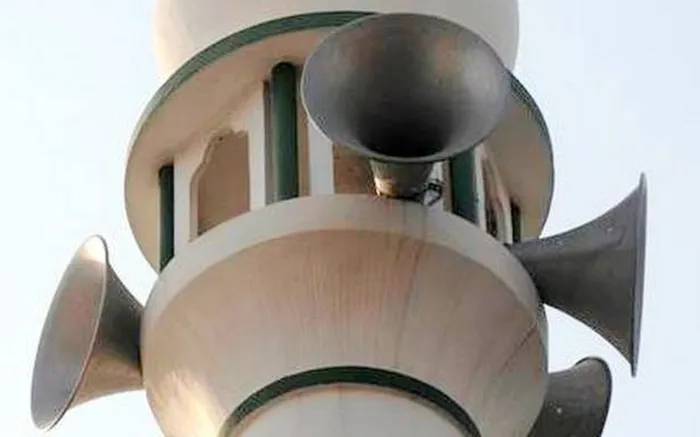
THE Jamiatul Ulama KwaZulu-Natal has issued guidelines on moderate Azaan volumes, particularly during early morning prayers, garnering praise from Hindu, Christian, and cultural rights leaders for promoting harmonious interfaith relations
Image: SUPPLIED
THE Jamiatul Ulama KwaZulu-Natal has issued guidelines on moderate Azaan volumes, particularly during early morning prayers, garnering praise from Hindu, Christian, and cultural rights leaders for promoting harmonious interfaith relations
The organisation called for sound levels during other prayer times to remain “moderate and acceptable,” with special consideration for the elderly, the ill, or young children.
The move has received widespread support from Hindu, Christian, and cultural rights leaders, who praise the Islamic body's thoughtful approach to fostering harmonious interfaith relations.
In a statement issued on January 22, the Islamic body noted the deep religious importance of the Azaan while acknowledging concerns raised by some members of the public.
“The Azaan is a great and vital symbol of our beautiful Deen, serving as a public declaration of the call to Salaah and a reminder of our devotion to Allah Ta'ala,” Jamiatul Ulama KZN said.
The organisation noted that many mosques across South Africa broadcast the five daily calls to prayer using PA systems and expressed gratitude for the freedom Muslims enjoyed to practise Islam openly in the country.
However, the statement also recognised that Muslims are a minority living among predominantly non-Muslim communities and stressed the need for sensitivity.
“A number of complaints have been received concerning the amplification of the Azaan, particularly at the time of Fajr (morning prayer). It is not in keeping with the principles and spirit of our Deen that we cause disturbance or discomfort to others, especially through loud amplification at such early hours.”
Importantly, Jamiatul Ulama KZN clarified that while the Azaan itself is an act of worship, “the use of a PA system for the Azaan was not a requirement of the Shariah.”
The statement added that electronic amplification is not obligatory and called for sound levels during other prayer times to remain “moderate and acceptable,” with special consideration for “the elderly, the ill, or young children.”
According to the organisation, this approach reflects “the balance, wisdom, and mercy of our Shariah,” which promotes good character and harmonious coexistence.
The guidance has been widely welcomed by leaders from other faiths and statutory bodies.
Professor Brij Maharaj, Deputy President of the South African Hindu Maha Sabha, said the organisation had not received complaints regarding the Azaan but welcomed the move.
“We welcome the decision by the Jamiatul Ulama (KZN) to encourage moderate and appropriate sound levels during its call to prayer. This is a thoughtful and responsible step that helps ensure there is no “disturbance or discomfort to others” in our multi-cultural, multi-religious, and multi-racial society. Such consideration reflects the values enshrined in our South African Constitution, which protects freedom of religion and worship while promoting mutual respect and peaceful coexistence among all communities,” said Maharaj.
Dr Raj Govender, Commissioner in the Cultural, Religious and Linguistic Rights Commission, described the communication as “a thoughtful and measured approach.” He said it recognises both the importance of the Azaan to Muslims and the needs of non-Muslim neighbours, demonstrating goodwill and social responsibility.
“The communication by the Jamiatul Ulama is a thoughtful and measured approach that recognizes both the importance of the Azaan to the Muslim community and the needs of non‑Muslim neighbours. By acknowledging the deep religious significance of the call to prayer, while also noting complaints from some residents, the organisation is demonstrating goodwill and social responsibility.
“That balance, honouring religious practice yet remaining mindful of others, is exactly the kind of mutual respect that helps diverse communities live together peacefully. The letter’s emphasis on moderation and avoiding inconvenience mirrors the spirit of constitutional values in South Africa, where freedom of religion is protected, but must be exercised with due consideration in a pluralistic society. In that light, the communication reads as both sincere and constructive: it supports religious expression, encourages adherence to faith, but also invites sensitivity toward neighbours. Overall, this is a commendable example of dialogue rather than confrontation,” said Govender.
Christian leaders have also expressed support. Pastor Cyril Pillay praised Jamiatul Ulama KwaZulu-Natal for its inclusive stance.
“It is lovely to see a religious group take a common sense approach for which they must be commended,” he said.
While noting that he does not view the call to prayer as a disruption, Pillay acknowledged that intolerance exists in some multi-religious areas.
“We never look at the call to prayer as a disruption but since we live in a multi-religious area around Durban, some people are not so tolerant and it is sad. I thank them for appeasing others and being understanding, I fully support them,” said Pillay.