

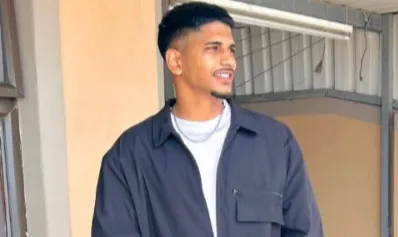
Keith Govender.
Image: Supplied
AFTER a young man was stabbed during a thunee card game, veteran players have condemned the violence while reflecting on the cultural significance of this beloved pastime in the Indian community.
They insist that such incidents betray the true spirit of the game that has brought people together for generations.
Keith Govender, 22 of Westcliff, Chatsworth, is fighting for his life in hospital after he was stabbed in his head by a friend, during a friendly thunee card game at a Silverglen pool hall, last week.
Govender underwent a five-hour brain surgery and is currently on a ventilator.
This incident sparked widespread concern and debate around aggression, emotional control, and responsibility in recreational and competitive spaces, particularly within games deeply rooted in cultural tradition.
Thunee, a popular trick-taking card game with strong ties to the Indian community, is known for its competitive nature and emotional intensity.
While widely regarded as a social and cultural pastime, seasoned players said the incidents of violence were completely contrary to the spirit of the game.
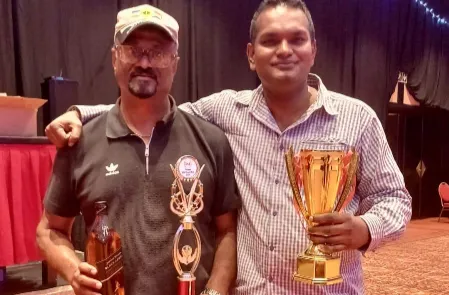
Jaya Naidoo and Justin Chetty.
Image: Supplied
Veteran thunee player Jaya Naidoo, who has been playing the game for more than five decades, described the incident as deeply disturbing and totally unacceptable.
“Thunee is a highly competitive and mentally demanding game. It requires sharp memory, strategy, partnership trust, and quick decision-making. Because of this intensity, emotions can sometimes run high, especially when players feel a partner has made a costly mistake or when pride and ego come into play.
“However, heightened emotions should never translate into aggression or violence,” said Naidoo.
He emphasised that the game’s competitive edge had always been balanced by discipline and respect.
“In a traditional setting, passion is balanced with humour, mutual respect and self-control. Thunee has deep cultural roots within the Indian community. It is more than a card game, it is a social tradition passed down through generations and played at family gatherings, community events, during work breaks and even national tournaments,” Naidoo added.
He stressed that when conflict arose, it was not the game that was to blame.
“Unfortunately some individuals bring personal issues, alcohol, or unresolved anger into the game. When these external factors mix with the competition of the game, conflict can arise, but this is not a reflection of thunee as a card game. It reflects the behaviour of those involved,” Naidoo said.
He said structured environments could help prevent such tragedies.
“Well-run leagues and tournaments have rules, officials and a code of conduct precisely to prevent disputes from escalating to these levels. Heated arguments are not a requirement of the game, nor are they normal when thunee is played in the right spirit,” he said.
Naidoo expressed heartbreak over Govender’s present medical status.
“I am deeply saddened and disturbed by this incident. No game, whether social or competitive, should ever cost someone their life or future. A young man fighting for his life over a card game is completely unacceptable,” he said.
As a senior player, Naidoo said leadership was critical.
“Like many players, I have experienced heated arguments, but they never went beyond words. My responsibility has always been to diffuse situations and calm tensions. True leadership in sport is knowing when to step in, de-escalate, and protect people,” he said.
He added that thunee was increasingly being recognized as an indigenous sport.
“Attempts are being made to have thunee recognised by the Department of Sports and Culture as an indigenous sport. Thunee does not create violence, people do. The game has brought communities together for decades. What we need now is stronger leadership, discipline and accountability in the game,” said Naidoo.
Competitive thunee player Justin Chetty echoed similar sentiments.
He said in some instances passion could cloud judgement.
“I think sometimes the passion of some people gets the better of their judgement. When competition and money is involved, some people want to win at all costs, and the game gets heated,” said Chetty.
He said over the years he had witnessed disagreements but never violence in the game.
“In my playing career, I have seen minor arguments, but never anything violent. For me, it is just a simple game to relax and de-stress. It does not need to end in an argument or violence,” he added.
He described the stabbing incident as a tragedy.
“No one deserves this over a game, especially a young man who has his whole life ahead of him. I honestly pray in God’s name that he recovers from this,” said Chetty.

Chantal Naidu.
Image: Supplied
Tongaat resident Chantal Naidu, affectionately known in her community as “the Aunty from Tongaat”, spoke passionately about the popular card game.
“A lot of people take this game very seriously. Many people join leagues and play sports. The Indian community invented this game of thunee. It is not just a card game. It requires skill, discipline and a mathematical mind,” she said.
Naidu described this recent incident as devastating and unnecessary.
“It is so heartbreaking to hear that a young man was so violently stabbed over a card game. That should have never happened at all. I did read the article which stated that he was playing with people known to him and that makes this story all the more heartbreaking and disappointing,” she said.
Naidu said that while thunee was often played socially among friends and family, it could become a source of tension when cheating or aggressive behaviour was involved.
“Lots of people cheat during this game. It causes a lot of fights. Cheaters and some people play very aggressively,” she added.
Despite these risks, Naidu said thunee plays an important and positive role in her own family life.
“My family and I play thunee on a regular basis. We have taught all our children the game. It is an ideal pastime for us. We do not encourage cheating at all and would rather play fair games.”
She added that while her family had never experienced any conflict over the game, she had witnessed disputes elsewhere.
“We have not ever had a fight at home but we have witnessed other people get into heated arguments and fights. When we play with friends or relatives we do not tolerate anyone who gets aggressive, abusive or cheats during the game,” Naidu added.
Naidu said she learnt to play the game after she married her husband, Rhyne.
“Rhyne was the first of his male cousins to get married. Every time they came to visit they would play thunee for hours on end and I would feel left out. Rhyne taught me so that I could join in the fun,” she said.
For Naidu, the appeal of thunee lies in its mental challenge.
“My family enjoys thunee because you have to use your mathematical skills and wit to win,” she said.
She offered advice to players, particularly those who struggled with losing.
“Play the hand that you are dealt. The more you play, the better you will get at it. Many people take this game too seriously,” she said.
Naidu believes that those who are highly competitive should consider more structured environments.
“If you are one of those people, join a league and play professionally in a controlled environment. Any sportsman knows that discipline is the key to success. At the end of the day, it is a card game. It should bring people together, not tear them apart,” said Naidu.