

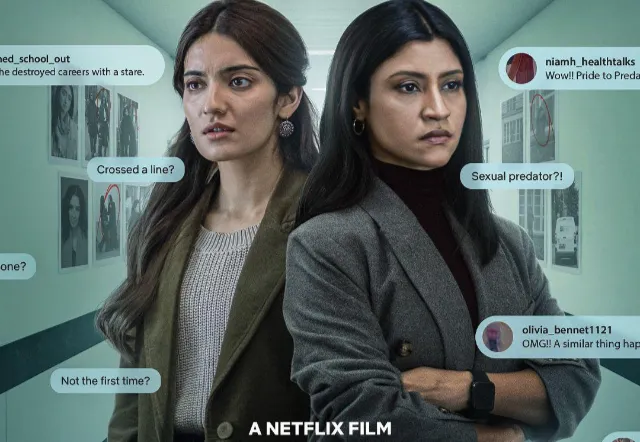
The movie poster
Image: Facebook
Movie review: Accused
Cast: Konkona Sen Sharma, Pratibha Ranta and Sukant Goel
Director: Anubhuti Kashyap
Rating: 6/10
A CELEBRATED, openly queer woman in a position of power. A sexual misconduct scandal. A social media frenzy. Inverting the usual gender dynamic of workplace harassment? Bold. Potentially explosive. And then … it doesn’t quite soar.
Directed by Anubhuti Kashyap (sister of Anurag), the film follows Dr Geetika Sen (Konkona Sen Sharma), a razor-sharp gynaecologist in London, positioned to become dean of her hospital. She is brilliant at what she does and feared at the same time because she is the kind of boss who does not sugarcoat incompetence.
Her wife, Meera (Pratibha Ranta), is gentler and warmer. Their marriage appears stable, aspirational even, until anonymous allegations of sexual harassment begin to surface. An inquiry is launched. Social media erupts. And suddenly, the most controlled person in the room is no longer in control.
The premise is genuinely daring. Hindi cinema has shown us male predators for ages. But a female, queer, high-achieving surgeon accused of abusing power? That’s new terrain. The film smartly refuses to sensationalise Geetika’s sexuality, and her marriage is treated with refreshing normalcy.
I am, unapologetically, a Sharma loyalist. From morally-ambiguous women to socially-awkward introverts, she has built a career on characters that exist in grey zones. Here, she leans into abrasion. Geetika is not designed for affection. She is curt and occasionally cutting. Sharma plays her with restraint. You sense both the arrogance and the vulnerability. She understands that power, especially in a woman, is often read as aggression. Her performance is built on suggestion rather than theatrics.
If Sharma brings tension, Ranta brings ache. Her portrayal of Meera absorbs the humiliation of public scandal with a softness that never tips into weakness. Watch her face in the argument scenes and you will see the doubt creep in. She becomes the emotional barometer of the film and in many ways, the character we invest in most deeply. The dynamic between the two is perhaps the film’s strongest thread. Their confrontations feel lived-in rather than staged. There is love, but also fatigue and the slow corrosion of trust.
Where Accused begins to wobble is in its execution. For a psychological drama flirting with thriller territory, the narrative tension is inconsistent. The first act moves but as the investigation deepens, the screenplay circles around its own themes without sharpening them. The script gestures at questions of bias and double standards, yet stops short of truly interrogating them. The pacing too becomes uneven in the latter half. What begins as a tight moral chess game drifts into prolonged emotional exchanges.
The climax aims for thought-provoking ambiguity, but instead of landing like a punch, it settles like a sigh. Beneath the uneven craft lies a film genuinely wrestling with something uncomfortable. How quickly we condemn, how differently we judge women in authority and how reputations disintegrate in the age of cancel culture. Ultimately, I respect what it attempts, but I can’t ignore where it fumbles. It is thoughtful, but not gripping. But sometimes, even an imperfect attempt at complexity is worth the watch.
Accused is now streaming on Netflix.