

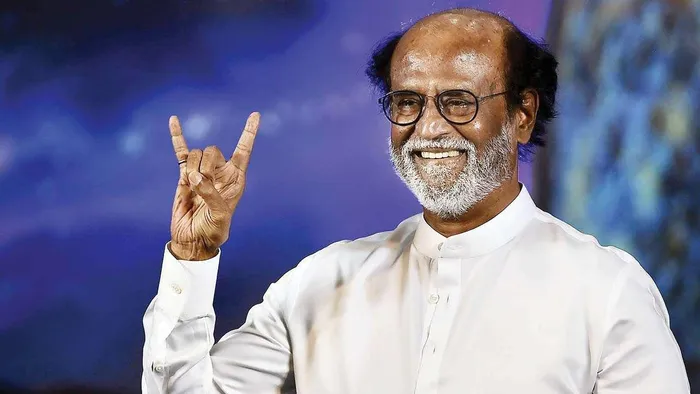
Rajinikanth appears in public without a wig, wears simple cotton clothes, and speaks with a soft-spoken, spiritual roundedness.
Image: Facebook
SOUTH Indian superstar Rajinikanth, who rose from being a bus conductor to the biggest phenomenon in Tamil cinema, has evolved into more than just a film star in the almost six decades that he has dominated the silver screen, especially in South India.
His legacy is not merely etched in box-office records, but in the very identity of Tamil cinema and the millions of fans who view him with a devotion that borders on the religious.
Born Shivaji Rao Gaikwad, the man who would become known globally as "Thalaivar" (leader), represents one of the most improbable and inspiring success stories in modern history. The foundation of the Rajinikanth legacy is his "rags-to-riches" narrative, which provides a deep, relatable connection for his audience.
Working as a bus conductor in Bangalore, he was spotted by legendary director K Balachander, who gave him the stage name Rajinikanth – a name that translates roughly as "colour of the night".
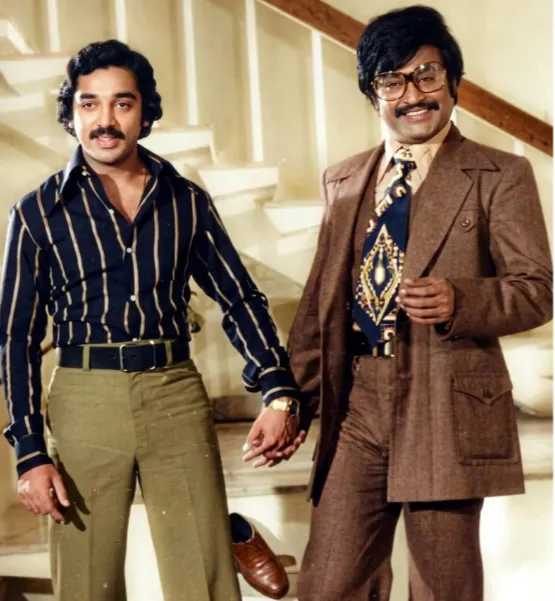
Kamal Haasan and Rajinikanth.
Image: Facebook
This colour link was especially significant, given that Rajnikanth’s debut was in an era when Indian cinema heroes were expected to be fair-skinned and conventionally handsome. Rajinikanth’s dark complexion and rugged features were revolutionary. He didn't just fit into the industry; he forced the industry to expand its definition of a "hero". By embracing his Dravidian identity, he became a symbol of empowerment for millions of ordinary people who finally saw themselves reflected in a superstar.
His debut in Apoorva Raagangal in 1975 saw him playing a minor, morally ambiguous role, but even then, his screen presence was undeniable. While his early career showcased a formidable acting range in films like Mullum Malarum in 1978, it was his move to stylised action that initiated the "superstar" brand.
Rajinikanth pioneered a unique cinematic language of mannerisms that remains unparalleled. The rapid cigarette flip, the gravity-defying sunglasses toss, the lightning-fast walk, and the distinctive laugh became his signatures. These were not just flourishes; they were ritualistic moments that transformed movie theatres into spaces of collective hysteria. His "punch dialogues" – short, rhythmic and morally-charged lines like Naan oru thadava sonna, nooru thadava sonna madhiri (If I say it once, it’s like I’ve said it a hundred times) – became part of the regional vernacular.
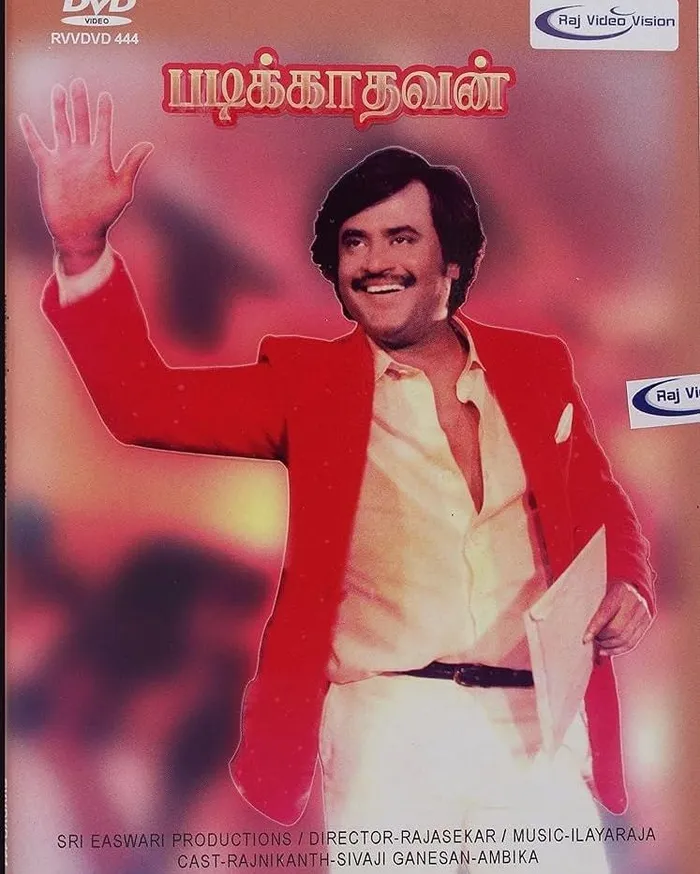
The actor in his heyday.
Image: Facebook
Through films like Billa, Baashha and Padayappa, he perfected the "mass hero" archetype: a man from the masses who stands up against systemic injustice with superhuman flair. While millions rapidly became fans in South India, Rajinikanth’s influence transcended the borders of Tamil Nadu and India. He became a bridge between North and South Indian cinema, gaining massive popularity in the Hindi-speaking belt and collaborating with legends like Amitabh Bachchan.
Perhaps even more surprising was his cult following in Japan, sparked by the release of Muthu there in 1995. The image of the Dancing Maharaja resonated so deeply with Japanese audiences that he remains the only Indian actor to have a dedicated fan base in Tokyo that travels to Chennai for his film premieres.
Always seeking innovation as cinema embraced digital technology, Rajinikanth’s roles in Sivaji: The Boss in 2007 and the science-fiction epic Enthiran in 2010, helped Tamil cinema compete on a global scale regarding production values and visual effects. He proved that his stardom was not a relic of the past, but a force that could adapt to the digital age.
The most enduring aspect of Rajinikanth’s legacy, however, is the stark contrast between his larger-than-life screen persona and his humble off-screen reality. In a world of carefully-curated celebrity images, Rajinikanth is famously unapologetic about his real-life appearance. He appears in public without a wig, wears simple cotton clothes, and speaks with a soft-spoken, spiritual roundedness.
I had personal experience of this when my then colleague, JJ Mathura, and I visited Rajinikanth at his home in Chennai once. We were surprised to find the queues outside his house who were not there just to pay homage to their hero, but to be recipients of the charity that he engaged in as well. This generosity, simplicity and honesty is probably what deepened Rajinikanth's fans' respect for him rather than causing disillusionment among them in the distinction between his screen and personal persona.
They see the "superstar" as a mask he wears to entertain them, while the man underneath – the devotee of the Himalayas and the humble former conductor – remains one of them. This duality is the secret to his longevity; while his movies offer escapism, and his life offers a blueprint for dignity and hard work for the common man.