

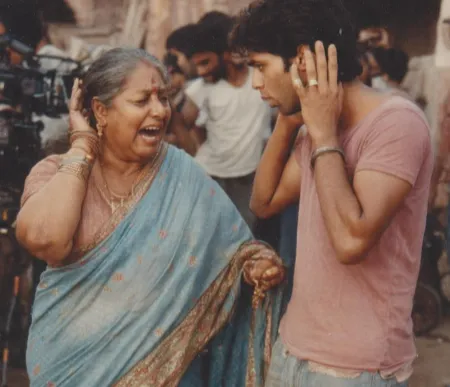
According to a well-informed source close to the board, the proposed action - internally dubbed the “Monologue Moderation Initiative” (MMI) - seeks to limit solo speeches in films to a maximum of 90 seconds.
Image: Meta AI
THE Central Board of Film Certification (CBFC) is reportedly considering strict new guidelines aimed at curbing what it calls the “unchecked proliferation of long-winded soliloquies” in Indian cinema.
According to a well-informed source close to the board, the proposed action - internally dubbed the “Monologue Moderation Initiative” (MMI) - seeks to limit solo speeches in films to a maximum of 90 seconds. Any dialogue exceeding this duration could face mandatory cuts or risk delaying certification.
“We are not against emotion,” said one senior board member on condition of anonymity.
“But when a character begins explaining their entire life story, moral philosophy, and future plans in a single breath, it ceases to be cinema and becomes a public lecture.”
Another official added: “Audiences today have shorter attention spans. If a soliloquy lasts longer than a song, we have to ask - why not just make it a song?”
The issue reportedly came to a head after the recent release of the film Loof Lipra ki Prem Kahani which featured a monologue lasting nearly seven minutes in the climax, during which the protagonist revealed plot twists, delivered social commentary, and reconciled with three separate characters - all without interruption. It generated scores of complaints to the CBFC from audiences.
Internal viewing notes from the Board described the scene as “emotionally powerful but physically exhausting.
”Under the proposed rules, filmmakers would be required to submit a “Dialogue Breakdown Report” alongside their films, highlighting any speeches exceeding 60 seconds. Scenes deemed “excessively verbose” could be flagged for review, with suggested remedies including replacing long dialogues with visuals only accompanied by background songs to “diffuse intensity”.
Predictably, the industry response has been quite varied.
Prominent screenwriter Javed Akbar, speaking outside a studio in Andheri, said: “This is the death of dialogue as we know it. Our heroes are known for their words! Take away their speeches, and what will they do - just nod meaningfully for two hours?”
Directors were divided on the issue. Some see the move as a necessary evolution.
“Cinema is a visual medium,” said filmmaker Darmesh Dhawan.
“If a character needs five minutes to explain something, maybe we haven’t written the scene well," he said.
Others were less convinced.
“Our audiences expect powerful speeches,” argued director Karan Joginder.
“The hero must explain the injustice, challenge the villain, inspire the masses, and deliver a punchline - all in one go. That’s not excess - that’s tradition.”
Actors, too, have weighed in, with reactions ranging from cautious support to theatrical outrage.
Veteran Marathi actor Diya Dhoka - whose name, ironically, translates roughly to Fooled You - dismissed the proposal as “completely impractical.”
“How can you measure passion with a stopwatch?” she asked during a media interaction.
“Some emotions take time to build. If I am confronting the villain who wronged me, my family, and my entire village, I cannot simply say, ‘I am upset’ and move on.”
She paused briefly before adding: “Also, many of us have built our careers on these moments. If you reduce them, you reduce us.”
Younger actors, however, seem more open to the idea.
“Honestly, it might make things more realistic,” said rising star Farhan Akhojee.
“In real life, people don’t speak in paragraphs. They interrupt each other, they hesitate - it could actually improve performances.”
As could be expected, music directors were excited about the proposal.
“If speeches are cut, there’s more room for songs,” said one composer.
“We can create ‘monologue songs’ - same content, but with melody. It could be the next big trend.”
Meanwhile, social media has erupted with debate. Hashtags like #SaveSoliloquy and #SpeakLessActMore have been trending since the NBFC proposal was shared for public comment, which closes today, April 1, with fans divided over whether the change would improve or dilute the essence of Bollywood storytelling.
One user wrote: “Those long speeches are why we remember films. They give us goosebumps!” while another countered, “If I wanted a speech, I’d watch Parliament. Keep the story moving!”
In response to the growing buzz, the CBFC has confirmed that “discussions are ongoing regarding narrative pacing and audience engagement.”
Privately, however, insiders suggest that a pilot phase could begin as early as next month, with select films being reviewed under the new guidelines. As Bollywood grapples with the possibility of a quieter, more concise future, one thing remains certain: if the proposal goes through, heroes across the industry may soon have to learn a new skill - saying more with less.