

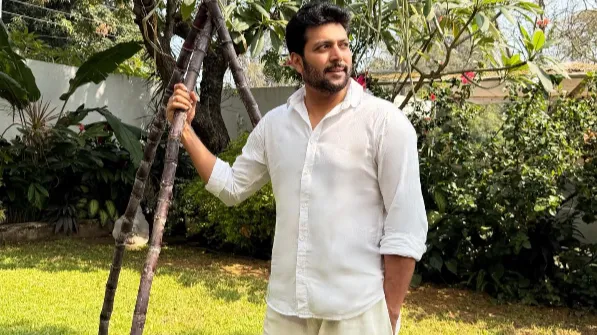
Ravi Mohan
Image: Ravi Mohan/Instagram
THE emotional public breakdown of actor Ravi Mohan has become more than just another celebrity scandal. It has exposed a growing anxiety within many Indian families about marriage, emotional loyalty, masculinity, and the changing structure of the modern household.
For weeks, Tamil social media has been consumed by speculation surrounding Mohan’s divorce from Aarti Ravi. What began as rumour quickly escalated into a full public spectacle after the actor appeared visibly distressed during a very public recent press conference in Chennai. The press interaction has since circulated widely online, and can now easily be watched across YouTube and social media platforms.
During the press conference, Mohan spoke openly about emotional suffering, estrangement from his children, and the collapse of his marriage. In a deeply-vulnerable moment, he described the last two years of his life as emotionally devastating. He suggested that he had lost access not only to peace, but also to his role as a father and son.
He spoke about isolation, about being mentally exhausted, and about feeling that his silence had allowed others to shape the public narrative around him. Reports and clips from the press conference further amplified public concern when he alluded to self-harm, emotional manipulation, and family tensions that allegedly existed from the beginning of the marriage.
What made the moment particularly striking was not simply what he said, but how public it became. Tamil audiences were not reading a carefully managed press statement; they were watching visible anguish unfold in real time. The emotional rawness of the interaction transformed what could have remained private family trauma, into a collective social event.
The public reaction was immediate and intense because, for many Indians, this story feels painfully familiar.
Across India (as well as South Africa), family structures are rapidly changing. Traditional joint-family systems, once built around collective identity and interdependence, are increasingly giving way to more isolated nuclear households. In these transitions, emotional fractures often emerge between parents, sons, daughters-in-law, siblings and spouses.
Many online commentators projected their own experiences on to Mohan’s situation. Some sympathised with the actor as a son who appeared emotionally separated from his parents and family after marriage. Others saw in his story the growing tension many Indian parents feel when sons become distant after entering marital relationships. The language used online was emotionally charged: families spoke about sons being “taken away”, mothers feeling abandoned, and siblings feeling disconnected after marriage changes family loyalties.
These conversations reveal a deeper cultural discomfort around shifting power dynamics inside Indian homes. Earlier generations often expected marriage to integrate a woman into the husband’s family structure. Modern marriages, however, increasingly prioritise the couple as an independent unit. This shift has created tension on all sides. Wives are often accused of encouraging emotional distance from in-laws, while women themselves frequently argue that boundaries are necessary for emotional survival and independence.
What Mohan’s case demonstrates is how quickly celebrity pain becomes a public mirror for society’s unresolved fears. His anguish resonated because it tapped into broader anxieties around masculinity and emotional vulnerability in Indian culture. Indian men are still rarely encouraged to publicly express emotional suffering, especially regarding marriage, rejection, or fatherhood. When they do, the reaction is often explosive.
Social media intensified everything. Every silence became evidence. Audiences no longer consume celebrity news passively; they participate in it emotionally, politically and morally. Mohan’s divorce stopped being about two individuals long ago. It became a national conversation about modern relationships, loyalty, family fragmentation and emotional power inside Indian homes.
But there is also danger in the public response.
Much of the online discourse has reduced an extremely private and complicated marital breakdown into simplistic blame narratives. Women associated with powerful men are often demonised quickly, labelled manipulative, controlling or opportunistic without full understanding of the realities inside a marriage. At the same time, men’s emotional pain is often only acknowledged when it reaches visible collapse.
The truth is that Indian family structures are undergoing enormous transformation. Conflict within families today is not simply about “good” or “bad” individuals. It is about competing expectations of love, loyalty, independence and control.
Mohan’s public pain has, therefore, become symbolic of something much larger than celebrity scandal. It reflects a society caught between older expectations of family duty and newer ideas of personal autonomy. And in today’s world, those tensions no longer remain inside the home. They unfold publicly, virally, and relentlessly before millions watching online.