

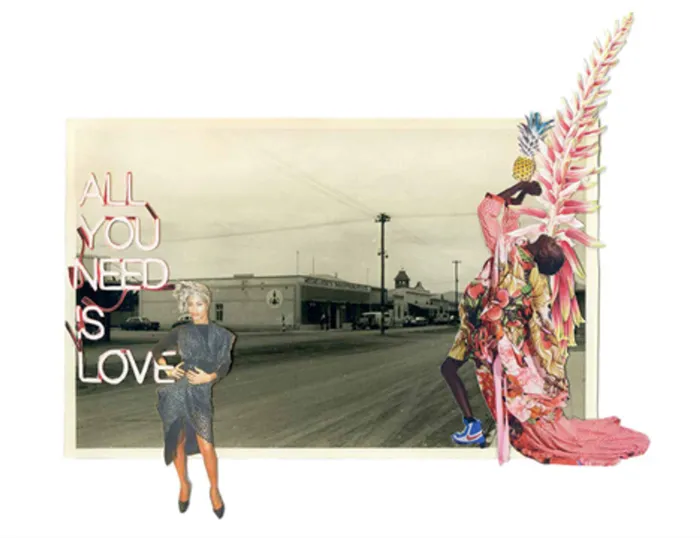
The Slow Intimacy exhibitions open at 18:00 at Gallery University Stellenbosch (GUS), IS Art and Oude Leeskamer on Wednesday 12 October and run until Friday 28 October.
Ernst van der Wal & Stella Viljoen
Cape Town - South Africans are a resilient bunch no matter the challenges we face. But every now and then, even we need a break, a moment to just slow down. We need a bit of slow intimacy.
Slow intimacy involves the non-invasive, gentle relationships that are needed as an antidote to the slow violence of, for instance, pervasive poverty, corruption, crime and environmental abuse. It is a considered but intuitive response to the cultures of instant gratification that dominate our world.
But what does intimacy mean and why do we need slow intimacy?
On intimacy
According to literary scholar and cultural theorist Lauren Berlant, we need not be alarmed by the ever-increasing representation of intimacy, as our relational enjoyment of and attachment to people and places are always mediated in some instructional way. We learn how to take care of something or how to forge a connection with someone through the politics of representation.
However, the stories we have long been told about affection, desire and care are in desperate need of critical intervention, Berlant argues, as we need to imagine and rescript intimacy beyond the narrow constraints of the materialist or hetero-patriarchal cultures that have invested our intimacies with asymmetry. As Berlant maintains, to “rethink intimacy is to appraise how we have been and how we live and how we might imagine lives that make more sense than the ones so many are living”. Intimacy, Berlant claims, has the radical potential to do and serve more.
On slowness
In his 1995 novel “Slowness”, Czech writer Milan Kundera famously remarked, “there is a secret bond between slowness and memory, between speed and forgetting.” At least since industrialisation and the resulting ‘modernity’, there has been a connection in the western collective consciousness between progress and speed. We want everything faster. Even instant gratification takes too long. But, as we now know, this need for speed has translated into cultures of dominance, abuse and exploitation to the extent that the ‘Anthropocene’, the term used to describe the era of human ascendency, is a shameful moniker.
‘Slowness’ then is a means of thinking against western oppressions and imperialisms. ‘Slowness’ is really a means of rethinking the relationships between cultures themselves and between humans and the earth. Thus, slow intimacy implies the cultivation of gentle relationships that recognise the value of doing things slowly as a way of undoing the violence of the past.
Intimacy seems to lie at the heart of our contemporary moment. Etched sharply against the isolation, retreat and wariness that crept into everyday life over the last two years, it offers hope for connection, care and understanding (whether in the form of gardening, baking, long conversations or slow cinema). At the same time, life after the COVID-pandemic has left many of us with an altered understanding of intimacy, as we had to sustain our affection for people, places, and rituals without the proximity that usually accompanies such attachments. We had to learn how to feel close without necessarily being close. The Slow Intimacy exhibitions provide spaces of intimation that hint at and cultivate gentle intimacies.
Our sense is that the artworks do some of the reparative work needed in this moment.
And, in the work of each artist, one sees a tentative answer to the question of whether pace too is a political problem.
The Slow Intimacy exhibitions open at 18:00 at Gallery University Stellenbosch (GUS), IS Art and Oude Leeskamer on Wednesday 12 October and run until Friday 28 October.
*Ernst van der Wal and Stella Viljoen are associate professors in Visual Studies in the Department
Cape Times