

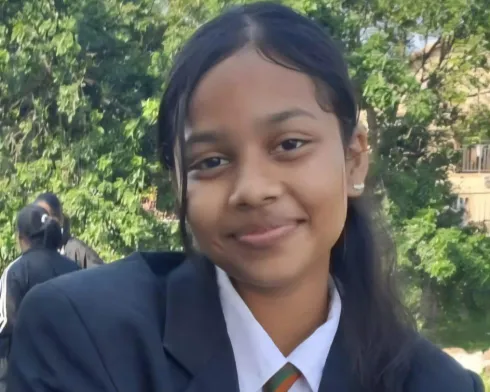
17 year old Rhea Pillay of Greenbury Secondary School in Phoenix reflects on the loss of her aunt to Cancer-which has spurred her acts of volunteerism.
Image: SUPPLIED
I always believed in human connections established through the universal experience of pain and grief. But never would I have thought that I would have front row seats to watching a person who was once "too big for the room" slowly shrink until they were thin enough to slip away.
Having to sit near my aunt's death bed, having the moments we shared together flash before me, replays like a distant memory.
For a long period of time, I visited my aunt every afternoon, bringing her the snacks she never had the energy to consume, or just soaking in her presence. In those days, my mind could only see the shadow cancer had cast. The house had become quieter when we went to visit the rest of the family, like something was missing.
In my view, I am slowly learning to gently push those images aside to make room for the person my aunt was: the way her laughter always filled her home, the specific light in her eyes when she was excited, and the sheer brightness of her spirit.
I am beginning to realise that her life was a masterpiece, and cancer was just a tragic final page. I refuse to let the ending ruin the beauty of the legacy she left behind. That is why I am turning the pain and the heartache of watching her fade into a spotlight. I am spreading awareness so that my aunt's vibrant spirit continues to speak, even though she no longer can.
Cancer is a generic term for a large group of diseases that can affect any part of the body. One defining feature is the rapid creation of abnormal cells that grow beyond their usual boundaries and can then invade other parts of the body and spread to other organs.
Cancer affects one in four South Africans through diagnosis of family, friends, colleagues or self. It is a leading cause of death worldwide. Around one-third of deaths from cancer are due to tobacco use, high body mass index, alcohol consumption, low fruit and vegetable intake, and lack of physical activity. Cancer-causing infections, such as human papillomavirus (HPV) and hepatitis, are responsible for approximately 30% of cancer cases in low and lower-middle-income countries.
I have learnt that many cancers can be cured if detected early and treated effectively. The incidence of cancer rises dramatically with age, most likely due to a build-up of risks for specific cancers that increase over time. The overall risk accumulation is combined with the tendency for cellular repair mechanisms to be less effective as a person grows older.
I spent a long period bracing for the impact of losing my aunt. When it finally happened, my body remained in a state of "high alert", making it extremely difficult to truly rest and feel at ease.
In my experience, it is not enough to only remember the legacy that one carries. I challenge you to be that light for someone else, whether through a donation to organisations such as The Cancer Association of South Africa (CANSA) or the Childhood Cancer Foundation South Africa (CHOC), a phone call to a friend or family member in treatment, or a commitment to early screening.
I am an inducted member of the Greenbury Interact Club, and I hope to play a small role in raising awareness about cancer. Every year I participate alongside the club in the CANSA Relay hosted at Northlands Girls' High School.
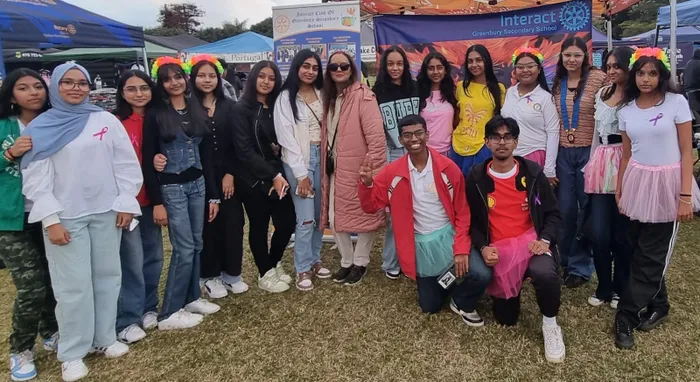
Members of Greenbury Interact Club at one of the many CANSA fund raisers that they support.
Image: SUPPLIED
In those moments, I feel surrounded by people radiating with hope, love and joy.
Participating in such events is important to me. It is my way of honouring those who fought, not by how the story ended, but by the grace, humour and courage they displayed in every chapter.
I hold onto the hope that every life remembered is a step closer to a world cured. They fought with everything they had until they could not anymore. Now, the question remains for the rest of us: how will we use the time they were so unfairly denied?