

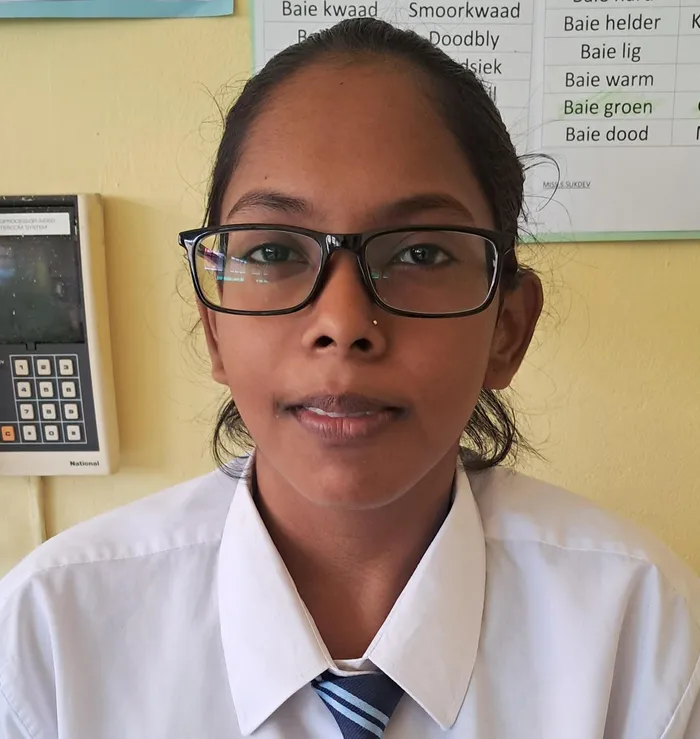
Jenevieve Papiah Grade 11 AM Moola Spes Nova
Image: SUPPLIED
In my view, climate change affects mankind globally and is characterised by shifts in weather patterns driven by reckless human activities, such as deforestation, overconsumption, pollution and the burning of fossil fuels. In simple terms, it is the irresponsible behaviour of people that contributes to the challenge of climate change.
From what I have learnt as a student at AM Moolla Spes Nova, the risks arising from climate change are intense: heatwaves, heavier rainfall, storms or flooding, and not forgetting rising sea levels. These disasters annihilate infrastructure and homes, decimate crops and trees, and affect the livelihoods of farmers. They force communities to rebuild, put pressure on government and emergency services, and strain the economy.
In my experience, climate change leaves its scars on farmers who depend on stable weather conditions to grow crops or raise livestock. Unpredictable rainfall, soaring temperatures or prolonged droughts lead to food shortages and a spike in the cost of food, increasing hunger and poverty. All suffer; climate change does not discriminate.
As a learner with spastic cerebral palsy and paraplegia, I have witnessed the added consequences on human health. Escalating temperatures boost the risk of heat‑related illnesses. The aged fall prey to heatstroke or dehydration. Children diagnosed with epilepsy have to remain indoors, away from direct sunlight because this can trigger seizures. Even in classrooms, epileptic attacks are unavoidable.
I understand that warm temperatures aid the spread of diseases, and mosquitoes thrive in humidity. Severe droughts reduce the availability of water for drinking, farming or sanitation, while flooding contaminates water. Clean water is essential for survival, but it is compromised by the effects of climate change.
In my own life, rising temperatures trigger spasms. I often use ice packs to reduce spasticity in my limbs caused by muscle stiffness and tightness. Most times, sudden muscle spasms and belly cramps are what I deal with. My parents tell me to relax, but that is something I cannot do, because each movement constricts my muscles. I always stay hydrated to help with the spasms.
Climate change brings extreme heat in summer and cold in winter, each with its own challenges. When it is cold, I have to layer up to keep my joints warm. The cold triggers muscle contraction to generate heat, and my therapists have warned me to be careful about falling. On those days, I need help to do warming‑up exercises while sitting in my wheelchair. The cold can also constrict the rib cage, a symptom sometimes called “MS hug”. So there is no win‑win situation for the spastic community. Still, I am glad to be alive.
In my experience, people with disabilities carry an added burden. Our limbs and organs respond to changes in the weather, bringing discomfort. Heat significantly affects individuals with spastic cerebral palsy by worsening muscle spasms, increasing pain and limiting mobility. I find that my movements tighten and my body temperature rises; unfortunately this is beyond my control. My advice for managing the effects of heat is to stay cool and hydrated.
From what I have observed, more concerning is that both government and citizens must take action immediately to protect our resources. It is commendable that some countries have invested in solar and wind power and have consented to agreements like the G8 summit. You may ask, what can you do to help sustain the earth? As citizens, it is our duty to recycle and reduce waste.
I believe that the spastic community is often overlooked in climate adaptation, even though climate change poses a severe risk to our safety and health. What will happen to us in the event of a climate tragedy when we need to be transported or saved?
As climate change continues, other pressing issues burden the youth: gender‑based violence, child abuse, poverty, alcohol, drugs, gangsterism and social evils. Weighing on me is the limited opportunities for people with disabilities. Sometimes I awaken at night, wondering what the future holds for me in a wheelchair. Will I ever achieve my dreams, or will they stay cocooned forever?
Jenevieve Papiah - Grade 11 AM Moola Spes Nova