

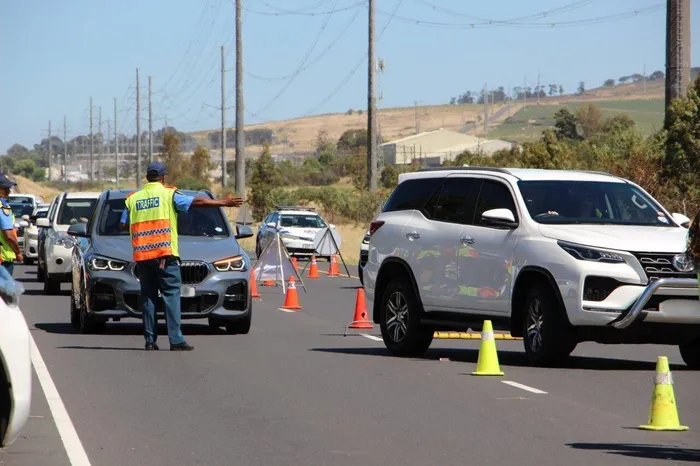
Traffic crackdown netted 88 arrests and 25 fatalities in Western Cape over the holiday period.
Image: Supplied
The Department of Transport has recorded the lowest number of festive season crashes in five years.
Transport Minister Barbara Creecy made know that 1,427 people died from 1,172 crashes over the 2025/26 festive season, which represented a 5% dip in road deaths, when compared to the previous festive season.
Creecy made known the achievement during a press briefing in Pretoria on Thursday, where insight into the statistics of road incidents during the recently completed holiday season was provided.
"This festive season, we've seen a positive trend in road safety, with the same number of fatalities recorded as in the 2023/24 holiday period, despite recording fewer crashes overall," Creecy stated.
The festive period has historically been known for a surge in road accident numbers.
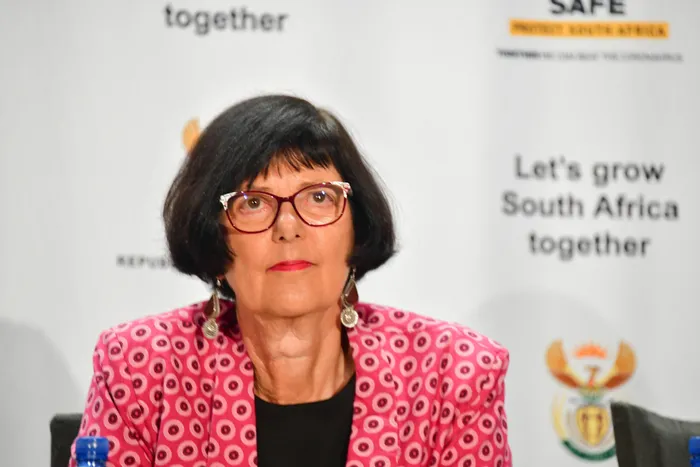
Transport Minister Barbara Creecy briefing the media in Pretoria on the 2025/26 festive season road safety report.
Image: GCIS
Analysis of the data revealed that five provinces experienced reductions in fatalities, with the Eastern Cape and the Free State showcasing the highest percentage decreases.
At the same time, Gauteng, the Western Cape, Mpumalanga, and the Northern Cape reported an increase in fatalities.
The department noted that a significant uptick in both crashes and fatalities were recorded from December 15 to 28, where over 40% of all festive season incidents occurred.
"Our data confirms that the danger on roads often escalates once travellers reach their destinations and engage in celebrations rather than merely during peak travel times," the minister said.
"In terms of specific incident types, many crashes occurred during weekends, predominantly between 7 and 9pm, and just after midnight.
"The alarming frequency of incidents included collisions with pedestrians, hit and run cases, single vehicle overturns, and head on collisions, with the highest numbers of pedestrian fatalities observed in significant urban centres such as Cape Town, Johannesburg, eThekwini, and Tshwane," said Creecy.
An analysis of the types of vehicles involved in these accidents revealed that small motor cars accounted for 55% of crashes, followed by light delivery vehicles at 20%. Minibuses and trucks were involved in 7% and 6% of incidents respectively.
This information gave the department perspective on how to shape their future safety campaigns, based on the prevalent vehicle types.
The law enforcement efforts during the festive season included 1,632 roadblocks, where 1.8 million vehicles were stopped and checked.
More than 450,000 traffic fines were issued, and 525 individuals were arrested for excessive speeding.
The relevance of the road safety initiatives that were undertaken was entrenched in the number of drivers (173,695) who were subjected to alcohol level tests.
It emerged that 8 561 drivers were beyond the permissible alcohol levels, after testing, which represented an increase of 144% when compared to the previous year's number of offenders.
A standout case was reported was in KwaZulu-Natal, where a motorist registered a breath alcohol content fourteen times above the legal limit.
A speedster was clocked doing 222 km/h with his vehicle in a 120 km/h zone in the Northern Cape, and 89 motorists were arrested for attempting to bribe traffic officers.
Apart from the enforcement statistics, the Department undertook 2 547 educational programmes aimed at influencing driver and pedestrian behaviour, which was also complemented by awareness campaigns across various media platforms.
Creecy acknowledged the collective efforts from traffic officers at all levels of government, the South African Police Service, emergency services, provincial MECs, and traditional authorities. She said: "Your hard work has been instrumental in this reduction, and we are making strides towards our goal of achieving a 50% decrease in accidents and fatalities by 2030."
DAILY NEWS