

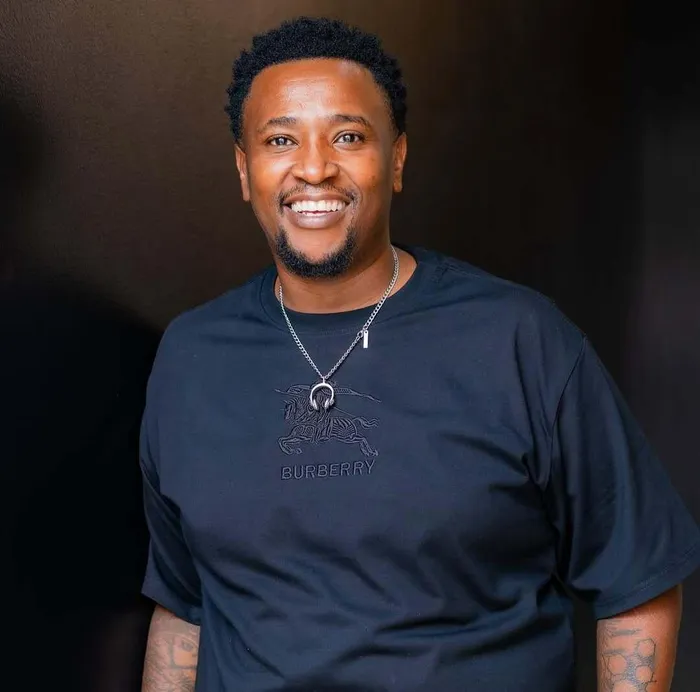
Musa’s decision to revisit "Woman Got a Right to Be" reflects both respect for Caiphus Semenya’s legacy and a commitment to using music as a platform for social change.
Image: Instagram/Musa
“I chose to cover this song because its lyrics and melody resonated deeply with the pain, resilience and the quiet strength of those affected,” said Musa about his new rendition of “Woman Got a Right to Be”.
“This cover is a mirror reflecting a necessary, difficult conversation. It’s my small contribution to saying: ‘We see you, we believe you, and you are not alone.’”
Musa’s rendition pays homage to the original classic by Caiphus Semenya while bringing the message into a contemporary context.
Semenya’s version, steeped in history and emotion, guided Musa’s interpretation.
“The original is a masterpiece,” he said.
“My approach was to respect the core emotional gravitas of Bab Caiphus’s work - the resilience and dignity in every note. At the same time, I wanted to bring a contemporary energy and my own vocal texture."
"The goal was to make the performance feel both reverent and immediate, giving it renewed relevance without losing the song’s soulful foundation.”
The timing of this release is deliberate. Gender-based violence (GBV) remains a crisis in South Africa, prompting urgent national attention. Musa hopes his version sparks reflection and action.
“Music can cut through the noise and land directly in the heart,” he explained.
“I hope this rendition acts as an anthem of solidarity for survivors and those fighting GBV, reminding them that they are seen. I also hope it prompts all listeners - men and women - to reflect on how they contribute, knowingly or unknowingly, to the patriarchal norms that fuel this violence. It’s a call for action, not just awareness.”
Musa’s career has always balanced artistry with social responsibility. Since winning “Idols SA” in 2013, he has released four albums: “The Dream”, “Mr Serious”, “MUSA” and “Backroom”.
His platinum-selling hit “Mthande”, featuring the late Robbie Malinga, remains a favourite among South African fans.
Looking back, Musa reflected on his evolving role: “When I started, it was about sharing my gift. Today, I see it as a mandate to be a voice of conscience.
"Music serves as a powerful tool for social commentary and healing. Addressing social issues through song allows me to sing not only to the people but for the values and change we want in our nation.”
By revisiting Semenya’s anthem, Musa honours the legacy of a musician who spoke out against GBV decades ago.
“The most challenging reality is that the core message remains critically urgent after nearly thirty years,” Musa said.
“As a husband, a father to two sons and a daughter, I feel compelled to amplify this truth. I pledge my respect as a husband, my protection as a father and the lesson to my sons that true strength is respect, not oppression. The cycle of GBV must end with us, through the values we instil in the next generation.”