

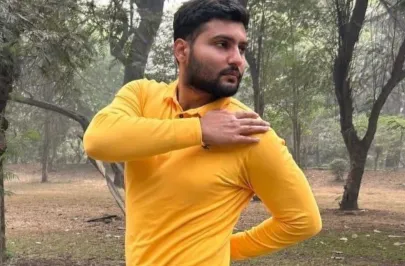
Kati Chakrasana
Image: Supplied
OUR ancients, unparalleled in their understanding of the body, had deciphered the secrets to arrest ageing. They understood that vitality and longevity arise naturally when the body functions according to its prakriti and is in a state of balance. Ayurveda states that ama, or undigested residue, is the root of imbalance as it permeates the cells, obstructing the free movement of prana.
Cleansing of the body is important not only for health but also for spiritual evolution. Rasayanas and techniques such as Agnisaar Kriya directly stimulate the manipoorak chakra, strengthening digestive fire and ensuring that waste does not stagnate in the colon - as according to Ayurveda “death begins in the colon”.
Today there are a number of treatments introduced in the market, like hydrocolon therapy for detox. However, they come with side effects such as dehydration, electrolyte imbalance, discomfort, cramps and infection with the added risk of toxicity and allergy in the event of absorption of substances from the wall of colon.
For cleansing the colon, our ancients gave us Shankh Prakashalan, which is an easy way to flush the accumulated waste from not just the intestines but also the entire lower digestive tract. A gentler version, Laghu Shankh Prakshalan, can be integrated into modern routines with ease.
For this prepare eight glasses of lukewarm water and stir in 2 teaspoons of rock salt. Drink 2 glasses of water. Now do the following 5 asanas eight times, each dynamically with breath awareness.
1. Taadasana: stand straight with your spine erect, look up, inhale and stretch your arms above the head, while balancing on your toes and then exhale bringing the arms down by your sides.
2. Teeryak Taadasana: stand straight with your spine erect and inhale taking your arms up. Then bend to your right from the waist and in the same breath bend to your left and then come back to the first position. Exhale and bring your hands down.
3. Kati Chakrasana: stand straight, put your right hand over your left shoulder and your left hand on your back. Inhale and turn from your waist to your left. In the same breath turn to your left and come back while exhaling to the starting position.
4. Teeryak Bhujangasana: lie flat on your stomach with your toes touching the floor and palms placed on the floor next to the chest. Inhale, raising your upper torso while your navel touches the floor and turn your upper torso towards your right looking at your left toe. In the same breath twist your upper torso to the left looking at your right toe. Your toes touch the floor while your heels point upwards unlike in Bhujangasana. Come back to original position while exhaling.
5. Udarakarshanasana: start in the squatting position. Inhale and take the left knee to touch the right toe, the left heel turned upwards. With the right hand push the right knee towards left while twisting the upper body towards left and turn the head to face the right the right shoulder. In the same breath take the right knee to touch the left toe, right heel turned upwards. With the left hand push the left knee towards right, while twisting the upper body towards left, head turned over the left shoulder. Come back exhaling.
The process of drinking saline water and doing asans 8 times, has to be repeated 3 times. Finish the last 2 glasses of water, relax and do not force the bowel movement. It is advisable to have a light meal like khichdi with cow's ghee after completing it. It should not be practised by pregnant women, heart patients, people with high or low blood pressure, back problems, anaemics and weak people.
Detoxification, however, does not end with physical cleansing. The ancient rishis emphasised that the mind, too, must be purified. Yogic practices bring balance, inner silence and clarity - qualities essential for sustaining a cleansed and rejuvenated system.
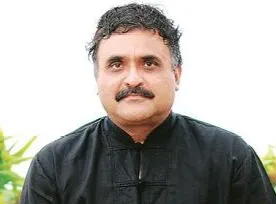
Ashwini Guru ji
Image: Supplied
Ashwini Guru ji is the guiding light of Dhyan Ashram and an authority on Vedic sciences. His book, Sanatan Kriya: The Ageless Dimension, is a thesis on anti-ageing. Log on to www.dhyanfoundation.com or email [email protected]
* It is always recommended to consult a qualified Ayurvedic practitioner to receive individualised treatment.