

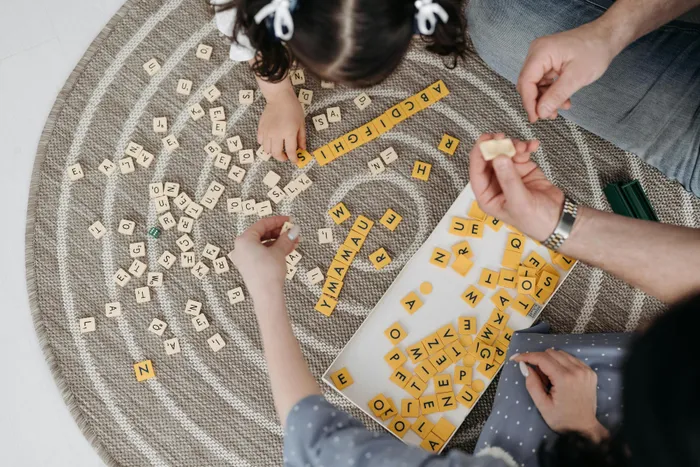
The best part about playing board games was the camaraderie; how it brought us closer as a family, both immediate and extended, helped us understand each other better, learn together and laugh a little more, says the writer.
Image: Pavel Danilyuk/pexels.com
AT THE age of nine, I was hooked on board games.
My answer, when family members would ask what gift I would like for my birthday was simple - a board game, and I would go on to list which board game was missing from my collection. It was never a demand or expectation, simply a suggestion.
The best part about playing board games was the camaraderie; how it brought us closer as a family, both immediate and extended, helped us understand each other better, learn together and laugh a little more.
Scrabble enhanced my love for literally playing around with letters and creating words to score those double or triple points. I remain the undefeated champion in my family, and, of course, if we were playing in teams, everyone wanted to be paired with me. Given my skills at Scrabble, it came as no surprise when I followed my passion to pursue journalism as a career.
Then there was Monopoly; that never-ending game we took with us on holiday. I still recall those chalet stays, often around the fire in winter, strategising and having such a wonderful time that we didn't realise we had played throughout the night into the morning. By then, someone was bound to fall asleep. Okay, I confess, it was me. Chess tested my mind power and I really enjoyed the intense focus and concentration required; a lesson in discipline like no other. And therein lies the true value of board games - the life lessons.
From patience to problem solving and building confidence, board games allowed us to grow and evolve organically. This was character development at its most beautiful because there was no pressure. The stakes were never high. However, this may not be the case for all families. There is a fine line between camaraderie and competition and sometimes when the roll of the dice doesn't go in one's favour, emotions can run high. I know of fallouts, of belittling those who don't perform as well, and repeatedly reminding them of this, often in a mocking tone. These go against everything that board games stand for, and their history.
In fact, playing board games has been a beloved activity for centuries, dating back to the ancient civilisations of Egypt, Mesopotamia, China and India. The aims then were entertainment, friendly competition and strategic thinking, while many games also carried cultural significance. With the evolution of society, board games too have evolved to become more challenging and sophisticated. They offer a much-needed relief from technological overload and an opportunity to spend quality family time, especially with young minds to help develop their cognitive skills. So in essence, the aims remain the same. It's how we play the games that matter.
I'm going to flip the rules here and argue that crossing the line between camaraderie and competition is indicative of how many people are adopting the mentality that everyone is your opponent, even family members, and you need to outwit them, in games, and in life. Let's be honest, social media has fuelled this to a large extent. Comparison and competition really are thieves of joy. And there's still so much joy to be derived from board games today.
A few days ago, my cousins and I were reminiscing about our innovative clues as we played 30 Seconds at our 2025 year-end gathering. We laughed hysterically. I love that we are carrying these memories into the new year and already planning our next board game afternoon.
Think about the legacy we will leave for future generations if we fracture relations, instead of honouring the ancient civilisations before us who were visionaries in bringing families and friends together over board games. It should never be a matter of win or lose, and divide.

Maya Jagjivan Kalicharan
Image: File
Maya Jagjivan Kalicharan is a journalist with two decades of experience in radio broadcasting. She has also lectured students in journalism, and currently works in corporate communications at a leading African company in the business process outsourcing industry. Beyond her professional role, Kalicharan serves on the management committee of the 1860 Heritage Centre in Durban. She shares her love for writing through her personal blog, inmywords.co.za.