

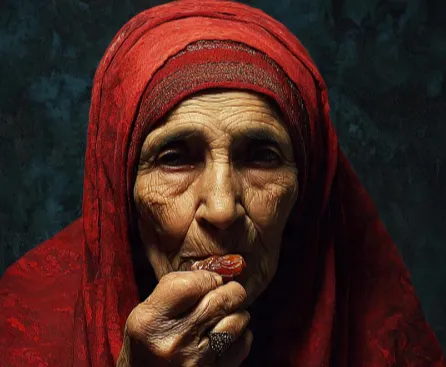
The human stomach is filled poorly when overstuffed, so have a balanced aproach.
Image: Meta AI
RAMADAAN is thought of by many as a month of fasting, restraining from food and drink from sunrise to sunset, yet Islamically, this thinking is incomplete. Fasting, a pillar of the Islamic faith, allows us an opportunity to live as though our minds, bodies and souls were an entrusted gift centred on the connection to Allah (Arabic: God), without worldly desires, and through acts of devotion, charity, and reflection to ourselves, our loved ones and to society.
It gives us the opportunity to be wholly connected to our human purpose through the teachings of the Holy Qur'an.
Ramadaan, the 9th month of the Islamic lunar calendar and the month in which the Holy Qur’an was first revealed to the Prophet Muhammad (peace be upon him), is entirely the month of the Qur'an. What does this mean in the context of the world that we are living in today? A world where time flies between unfulfilling work demands and family responsibilities; where horrific news and corrupt politicians are revealed daily, locally and globally; where the lack of service delivery and accountability manifest as frustrations vented on WhatsApp groups; and inequalities and mistrust across invisible boundaries between neighbours, suburbs, and countrymen alike deepen.
A world that is at once minute and massive. I carry the memory of my late father's reading of the Qur'an, his melodious voice beautifully articulating a classical yet instructive text, resonating through our house as we went about our daily life, while transcending physical borders and connecting him to God. As he did so imparting the stories of the creation and wonder of this world, the history of belief, and building society around principles of care, equality, justice and truth.
A way of life conveyed with love and the utmost care in connecting mind, body and soul. What a beautiful lesson in a most beautiful manner. What are the beautiful acts that we can do consciously to honour this Ramadaan – to truly harbour freedom for ourselves and us all? In the poetry of Gabeba Baderoon, we find the experience as the simple, coming to know the ways in which we are across mind, body, and soul.
Fast
To say, not now
To walk along the simple paths of the body
To taste the inside of an untouched mouth
To feel the body's surprise change
To time hunger by the sun and the moon
To remember the body before sunset and after sunset
To taste the seconds of daylight
To share food
To expand the borders of the self
To close the eyes and the lips
To reside inside the borders of the self.
How do we eat beautifully? “To taste the seconds of daylight//to share food”. The teachings of the Prophet (peace be upon him) record that “a human fills no worse vessel than their stomach”, and advises to fill with 1/3 food, 1/3 water, and 1/3 air – physically implying space to move without discomfort or greed, and spiritually to not be consumed by over-indulgence, leaving room for spiritual fulfilment.
How do we move beautifully? “To walk along the simple paths of the body/to feel the body’s surprise change”. If we see our minds, bodies and souls as the entrusted gifts that they are, then caring for them becomes a conscious and deliberate act. Nourishing our bodies through consuming whole, simple, and healing food that enables movement that builds strength, mobility and flexibility, for endurance on both prayer and exercise mats.
How do we think beautifully? “To expand the borders of the self/to reside inside the borders of the self”. By removing distractions, we can focus on what truly counts – our relationships with self, others, and God/consciousness. This doesn’t mean avoiding reality. On the contrary, we need to open our minds, and apply critical thinking to see truth, and to speak truth to power.
We need to return to our purpose here on Earth – to separate ourselves from the distractions of capitalist society; to look at our communities and community spaces with an intention to fulfill our rights to freedom and our responsibility to each other in order to attain it; and to treat our bodies as the entrusted gifts from God that they are, and honour mind, body and soul.
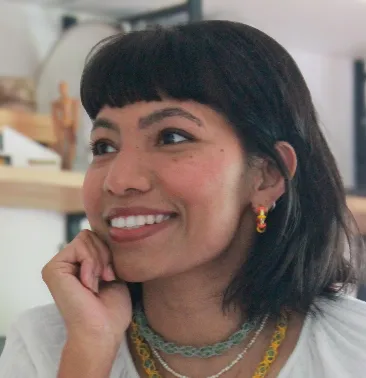
dfdfd
Image: Supplied
Adheema Davis is a professionally trained architect, PhD scholar, civic leader, yoga and Pilates teacher, and founder of Moon. She is a seasoned leader, speaker, researcher, and activist for social and spatial justice. She can be reached at www.moonchocs.co.za, [email protected] or @adheemadavis.