

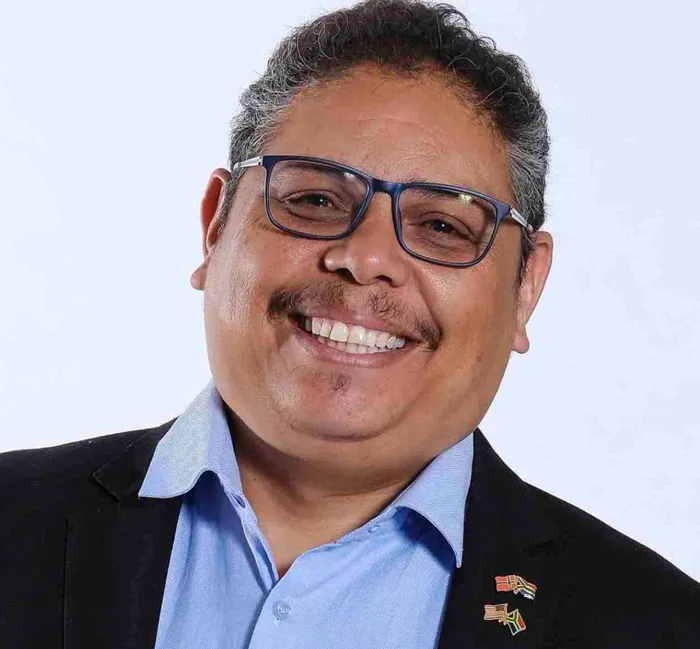
Cultural activist André Le Roux.
Image: Instagram
The Cape Town International Jazz Festival (CTIJF), celebrated as Africa’s Grandest Gathering, is gearing up to return on March 27 and 28 at the Cape Town International Convention Centre (CTICC). This festival not only draws international attention but also shines a spotlight on jazz's rich local roots through a series of free workshops, jam sessions, and discussions designed to foster community engagement beyond the allure of big-name performers.
Excitement is building for a line-up that includes Grammy-winning British musician Jacob Collier and the renowned American jazz-fusion group Yellowjackets.
In a conversation with "Independent Media Lifestyle", African cultural activist Andre Le Roux emphasised that jazz did not begin in grand ballrooms or under the glow of expensive chandeliers. Local jazz is rooted in resistance and resilience.
“Jazz is not the music of the elite. It’s the music of the people, the music of liberation and the music born in the townships,” he said.
“Jazz isn’t a sophisticated lifestyle choice. That’s just branding. It's the music of our people, born in shacks, listening rooms and the townships. It’s liberation music. It’s not about cigars and cognac; it’s about rhythm, identity and survival."
Le Roux’s perspective hits on something special: while the CTIJF definitely brings the heat with heavy hitters, the magic goes way beyond the star power.
At its core, jazz is really about the human connection; it’s about storytelling and community. Think of it as a "sonic democracy," a space where every instrument and every voice carries the same weight, creating a conversation where everyone is truly heard.
“The Cape Town International Jazz Festival isn’t just about the big stage. It’s the jam sessions where locals and international stars collaborate. It’s the jazz appreciation societies in townships. It’s the music that echoes our history and connects us as Africans," he said.
This year’s theme, "Honour the Legacy, Celebrate the Future", exemplifies that mission.
The festival’s organisers have woven the city’s cultural fabric into the event, offering free community concerts and panel discussions to ensure jazz remains a shared experience, not a luxury commodity.
For Le Roux, the festival’s magic lies in its ability to elevate local talent alongside global icons. He highlights the work of artists like Muneeb Hermans, a young jazz pioneer who curates jam sessions and bridges generations of musicians.
“Muneeb represents the future of South African jazz. He brings in international artists, collaborates with veterans like Nduduzo Makhathini, and creates spaces for young musicians to shine. It’s this intergenerational exchange that keeps jazz alive," he said.
Le Roux believes that jazz’s power lies in its expansiveness, its ability to absorb and evolve. From gqom-infused beats to Cape Minstrel rhythms, South African jazz continues to redefine itself, drawing inspiration from both the streets and the stage.
Go to the sessions before the festival begins. Stay for the ones that happen after. Walk into spaces you didn’t plan for. Listen to artists you’ve never heard of.
“Don’t only go to the popular stages. Go to the different ones… that’s how we build taste.”
“Jazz in South Africa isn’t just American jazz with a local twist. It’s Jonas Gwangwa, Miriam Makeba. It’s the sounds of migration and the call of the slave rhythm Ghoema. It’s about our history, our struggle, and our future," Le Roux noted.
For him, jazz is the ultimate metaphor for equality. He described it as a "perfect democracy" where no single instrument takes over, and every player has to truly listen to one another just to keep the song alive. It’s a beautiful way to look at South Africa’s own journey, a constant, collaborative effort to find unity.
He often thinks back to a powerful moment during the 2008 xenophobic attacks, when music stepped in to do what words couldn't. It became a bridge, bringing people together during a time of deep division and showing just how much we need that shared "rhythm" to heal and move forward.
“We walked through Hillbrow playing music. Oliver Mtukudzi's ‘What Shall We Do’ echoed through the streets, reminding us of our shared humanity. Jazz dissolves borders; it’s a language that unites.”
This ethos is embedded in the CTIJF’s DNA.
With panel discussions featuring global voices, jam sessions open to the public, and performances that blend local and international styles, the festival transcends its luxury image to become a cultural meeting point.
The CTIJF isn’t without its challenges. As Le Roux noted, funding and accessibility remain hurdles. But the festival’s commitment to integrating Cape Town’s diverse communities sets it apart.
“Jazz is about access. It’s not just for the elite; it’s for everyone. The CTIJF creates spaces where the poorest of the poor and the richest of the rich can stand together, united by the music," he said.
This year’s festival promises to be a celebration of jazz’s legacy and its future. From Abdullah Ibrahim’s timeless melodies to the experimental sounds of rising stars, the CTIJF offers a tasting menu of global and local jazz, inviting audiences to explore its many layers.
“For those of us who love jazz, the Cape Town International Jazz Festival is a pilgrimage. It’s a reminder of where we’ve been and where we’re going.
It’s about standing in the rhythm of Ghoema, hearing the call of our ancestors, and celebrating the music that connects us all," Le Roux concluded.
More information about the festival is available at www.capetownjazzfest.com. Tickets are available through Ticketmaster.