

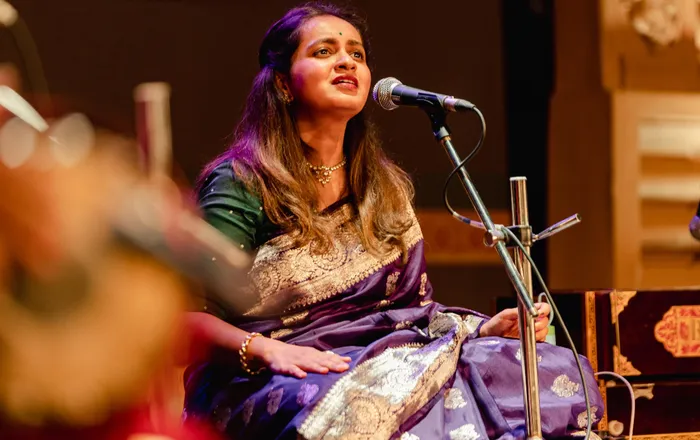
Grammy-nominated Indian singer and flautist Varijashree Venugopal will perform at the Cape Town International Jazz Festival.
Image: Supplied
GRAMMY-NOMINATED Indian singer and flautist Varijashree Venugopal is looking forward to experiencing the cultural highlights of Cape Town when she arrives in Mother City next Wednesday ahead of the Cape Town International Jazz Festival (CTIJF) where she will perform in what has been described as Africa's Grandest Gathering.
The festival, on March 27 and 28 at the Cape Town International Convention Centre, is a platform where global jazz legends, contemporary performers and rising South African stars showcase their talents in celebration of culture, music and community.
Venugopal, who was born in Bangalore, has performed at numerous festivals over the years, including the GroundUp Music Festival (Miami, USA), Gaume Jazz (Belgium), Festival Jazz Al Parque (Bogotá, Colombia) and Quebec Jazz Festival (Canada).
Following her Cape Town performance, she will return to India for performances and recordings sessions before heading to Europe on tour with EYM trio, a French trio that she collaborates with. They have a new album set for recording with BC Manjunath.
"Another exciting thing that I get to do this year is a music workshop in upstate New York, named ‘Rabbit Hole’, curated by Snarky Puppy, scheduled for August 3 to 6," said Venugopal.
She said she had heard fascinating things about the CTIJF, the open-minded and open-hearted audience that attends, and the wonderful concept of the festival that brings together a massive schedule featuring artists and acts from around the world, creating a melting pot of creative beings and cultural confluences.
"I am also looking forward to the educational activities that the festival is conducting, through master classes and talks. I am extremely delighted and eager to present a set of my original compositions from my recent record, VARI, for the first ever time in South Africa. And it is very special that this is happening as part of the CTIJF."
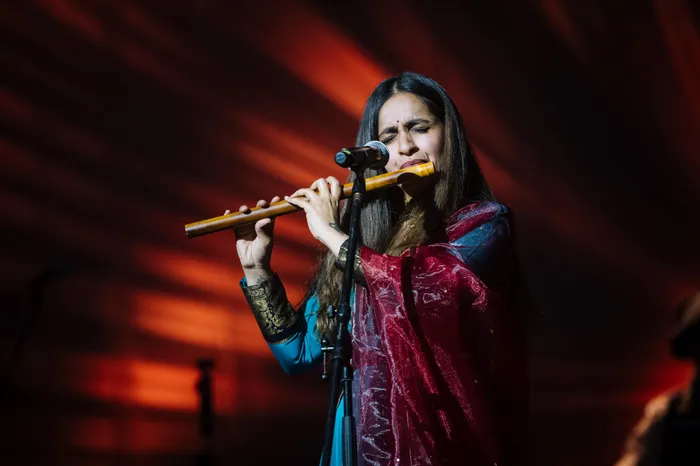
Varijashree Venugopal said she was a singer first and then a flautist.
Image: Supplied
In this Q & A Venugopal, who has also featured in movies as a singer, reflects on her journey from a child prodigy to a global sensation.
Q: How did you begin your journey in Carnatic music, and who was your biggest influence?
A: Both my parents are musicians. My father, Vidwan HS Venugopal, is a very well known Carnatic flautist and a guru. My mother, Vidhushi Rama Venugopal, is a singer and a teacher. My parents were my first gurus, and my introduction to music.
Music was pretty much my first mother tongue, I must say. I would sit through the lessons that my father gave to his students. Being around well-seasoned musicians, and listening to concerts, expanded my ears. At one such concert that I was taken to, my father heard me screaming out something, which happened to be the name of the Carnatic raga "Hamsadhwani". Later, my father sang many other compositions to me, to discover that I was able to recognise the form and names of about 50 ragas (modes).
I was 18 months old then. Soon after, my parents started teaching me the fundamentals of Carnatic music and few beginners lessons and prominent compositions. I later trained under gurus Vidhushi H Geetha, Vidhushi Vasantha Srinivasan and Ganakalanidhi Vidwan Salem Sundaresan. I started rendering short performances at the age of 4 and later on presented my full-fledged Carnatic vocal debut at the age of 7. Ever since, I have continued my journey of music as a student, and as a performing artist.
Apart from my journey, as a student of Carnatic music, I later started expanding into various other allied classical styles of music, applied into television, movies, and recordings of music score for dance and theatre productions, where I participated as a vocalist and a flautist, and later started exploring composing music myself for such projects. Many prominent musicians and composers that I have met during the years have inspired me and expanded my mind immensely.
Q: How important is family roots and your parents in all that you have achieved?
A: My parents are my portal to the world of music, which is the universal language of harmony, love, and peace. Music is my first mother tongue that I inherited from them. Everything I do today, is because of them, and what they are to me. They have done everything to provide me with the right atmosphere and education, to nurture my talents, and have helped me flourish in the most organic way. And today, they celebrate the fact that I’m a daughter of the world, and cherish my dreams and special moments with me.
Q: Can you share a valuable lesson a guru taught you that goes beyond just music?
A: The time I spent taking lessons from Guru Vidwan Salem Sundaresan is one of the best phases of my studenthood. His teachings were not just about the tradition and repertoire of Carnatic music, but was accompanied by his philosophy and spiritual living. Without saying it out loud, he taught me many things about being a good human first.
The discipline he had in his life, even at the ripe age of 80 and counting, was fascinating and inspiring. Despite having a rich experience in life and the library of music that he had collected in his mind throughout his musical journey, he showed how being humble, curious, and dedicated, are the most important aspects of being a student of music.
Every early morning, he would turn on the radio to listen to the concerts being aired on that day, and would personally call the artists to congratulate them on their performance, with the details of the highlights of the concert that he loved. He would later make a list on his calendar of the upcoming concerts for the week that he would listen to on radio, or go in person to watch. I had the fortune of being one of the students who would go very early in the morning, to not just take music lessons, but to observe the dedicated, child-like, and magnificent human being that he was.
Q: What is your process for preparing for a live performance, both mentally and vocally?
A: Apart from the specific vocal warm-ups that I do, I focus more on the mental preparation of the music that I am set to be performing. Being an artist that performs in various musical settings, including the traditional Carnatic repertoire and global music collaborations and concerts, I have been figuring out the best way to get in and out of the zone, depending on the music that is to be performed. Though it is quite challenging, I enjoy the process of fully being present in every situation that I have the opportunity of being a part of.
Q: How do you perceive the evolution of Carnatic music among younger artists in recent years?
A: I would say that we are living in a golden period for any traditional music in the world to collide and collaborate with other styles of music. Specifically, with respect to Carnatic music, it is heart warming to see it being celebrated in its traditional format, as well as in the global music stages through many meaningful cross cultural collaborations. While the younger generation is definitely following the footsteps of the many legendary artists from India who have paved the path, they are also finding their own unique voices and directions.
Q: What is your opinion on using technology and amplification in modern Carnatic concerts?
A: Technology is definitely a boon to the world of music. Though I am an admirer of the old school, analogue methods and the warmth that it brings, I equally appreciate the vast arena of possibilities that today’s technology brings to enhance the quality of performing, documenting, and listening experiences. It has contributed much to the world of Carnatic music, by helping artists understand sounds, frequencies, and dynamics in a detailed way, and, of course, amplification has brought in more comfort for the performers and has been helping them observe the delicate nuances of the sound of music, both in studios, and on stage.
Q: How can traditional musicians make Carnatic music more accessible to a global audience without losing its authenticity?
A: There have been a huge number of Carnatic musicians performing it in its traditional format, in our country and across the world. Now, with the gift of the internet, it has become more convenient to be accessible, and to make the music available for a larger audience. This has created more opportunities for people from across the world to discover the world of Carnatic music and it’s intricately beautiful aspects, and has paved way for the presence of Carnatic music in different platforms and cultural conversations.
Authenticity is something that is related to both tradition, and self expression. The right balance of both of these, is always bound to shine in any kind of a musical situation.
Q: Do you have any specific vocal care tips or regimens?
A: I do have a set of exercises that help me explore my voice. But they also keep changing and expanding with every new piece of music that I get to learn, or compose myself. I would say vocal warm-ups and regimen become a personal practice after a while, as we get to figure out our strength areas and areas that need more stabilising.
Q: If you were not a Carnatic musician, what career path do you think you would have followed?
A: Definitely some form of design, or a culinary related career.
Q: What is the best piece of advice you were given when you were starting out?
A: To hold on to my roots, to reach out to the skies of innumerable possibilities, and to be a student for life.
Q: Is it ever too late for a young adult to start learning Carnatic music?
A: It is never late to start anything from scratch.
Q: Are you a singer first and then a flautist?
A: Yes, I’m a singer first and then a flautist. I always feel like my voice is my first instrument, and the flute is my second voice.
For more information about the festival log on to www.capetownjazzfest.com. Tickets are available through Ticketmaster.