

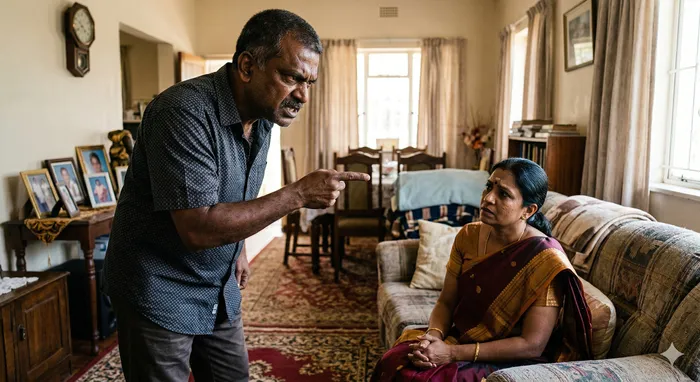
Strength must be redefined. A strong man is not one who dominates, but one who is self-aware, emotionally present, and able to ask for help, says the writer.
Image: Google Gemini
OVER the past few months, the POST, an iconic voice in the South African Indian community, has carried a series of deeply-unsettling stories. Reports of men and children dying by suicide; and accounts of women murdered by their husbands, often in the aftermath of separation or divorce. These are not isolated incidents. Beneath many of these stories lie a common thread: individuals and families grappling with mental health struggles that were never acknowledged, never spoken about, and ultimately, never supported.
As a third-generation South African Indian psychologist, these stories disturb me. Not because they are surprising, but because they reflect a silence our community continues to hold.
I think to my childhood growing up in Tongaat. That is where I first encountered what we then called “madness”. I remember hearing the cries of women who were beaten by their husbands. I saw men numbing their pain through substances. I witnessed the quiet despair of unemployment, poverty and fractured dignity.
My own father struggled with alcohol addiction and depression. At the time, these were simply fragments of life around me – unexplained, unnamed and unprocessed. Only later, through the lens of psychology, did I begin to understand what I had seen: trauma, gender-based violence, addiction, child abuse, and profound emotional suffering. Yet growing up, we did not have the language for these realities. More significantly, we did not have permission to speak about them.
Instead, we inherited silence. Women were often taught to endure, to “shut up and put up”. Children learnt that silence was a form of acceptance. Older men were to be respected, irrespective of their behaviour. And overarching all of this was a powerful, unspoken rule: “what will people say?”
Family reputation became a form of social currency. Maintaining appearances mattered more than confronting truth. Divorce was frowned upon, abortion hidden, and mental illness treated as taboo. Children who were different were often kept out of sight. While today we speak more openly about neurodiversity, stigma remains deeply entrenched. Many parents still internalise blame, viewing a child’s condition as a personal failure or even a form of punishment.
At the same time, a parallel pressure emerged – one tied to success and upward mobility. For many South African Indian families – particularly in the post-apartheid context – education, professional achievement and material stability became markers of worth. Good degrees, high-status jobs, property ownership and visible wealth came to represent not only individual success, but parental accomplishment.
Yet behind these markers often lie a more complex emotional reality. Anxiety, burn-out, depression and unresolved trauma are frequently hidden beneath the surface. Children carry the weight of expectation. Parents carry the burden of proving that their sacrifices were worthwhile. And when individuals falter, families are left to manage the consequences, often quietly, and without external support.
We also need to speak directly about men. Many of our boys are raised within a quiet, but powerful script: be strong, don’t cry, be the head of the house, carry the burden.
Masculinity is often defined by control, provision and emotional silence. The reality is many men are unemployed, retrenched or struggling with ill health. This model is failing our men, and it is costing lives. The “tough” man who suppresses emotion, avoids vulnerability and refuses help is not equipped for the psychological demands of this time. That silence turns inward as depression, addiction and despair; or outward as anger, jealousy and violence.
Strength must be redefined. A strong man is not one who dominates, but one who is self-aware, emotionally present, and able to ask for help. Leadership in the home is not control – it is shared responsibility. When men learn to lead with their partners rather than over them, families become safer, healthier and more resilient. There is no value in the “macho man” if it comes at the cost of emotional and relational breakdown.
Today’s younger generations face a different, but equally significant, set of pressures. Teenagers and young adults are navigating identity, belonging, self-worth and social comparison in an increasingly complex world. While older generations may respond with “we had it harder”, such comparisons overlook the reality that these are fundamentally different times, with different psychological demands.
We are also witnessing a generational divergence. On one end, there are young people shaped by access and privilege, who may exhibit entitlement and a lack of social awareness. On the other, there is a growing number of young adults who appear disengaged, uncertain and disconnected from meaning or purpose. Across both groups, there is an undercurrent of emotional strain.
The Covid-19 pandemic further exposed these vulnerabilities. It brought into sharp focus rising rates of depression, anxiety, suicide and profound loneliness. Yet even in the aftermath, many individuals continue to carry unprocessed grief. Historically, Indian cultural and religious practices provided structured spaces for mourning and collective support.
Today, these rituals are often abbreviated or replaced, with an implicit expectation to “move on” quickly. But grief that is not acknowledged, does not disappear. It manifests elsewhere, in the body, in relationships, and in mental health.
There is also a persistent cultural narrative that discourages reflection on the past. Phrases such as “don’t dwell on it”, or “just move on”, are common. While resilience is important, avoidance comes at a cost. Unresolved experiences do not remain contained; they resurface in other forms, often more disruptive and difficult to manage.
Religion, which has historically served as a source of strength and community, occupies a complex role in this landscape. Across Christian, Hindu and Muslim contexts, faith has the potential to offer meaning, connection and healing. However, it can also contribute to silence around mental health. In some spaces, particularly those influenced by prosperity-oriented teachings, there is limited room for suffering, vulnerability or psychological struggle.
Emotional distress may be spiritualised, minimised or misunderstood. Our places of worship should be sanctuaries for honesty and healing. Instead, they sometimes reinforce the very stigma that prevents individuals from seeking help.
This brings us to a critical point of reflection: the need to redefine what we mean by pride, honour and respect within our community. If these values are rooted in concealment, image management and avoidance – they ultimately perpetuate harm. But if they are redefined to include honesty, accountability and care – they can become powerful foundations for healing.
The South African Indian community is also evolving. Interracial marriages, hybrid identities and shifting cultural norms are reshaping what it means to belong. This presents both a challenge and an opportunity: to discern which aspects of our cultural inheritance are life-giving, and which may need to be reconsidered.
The question is no longer whether mental health exists within our community. The evidence is before us. The question is whether we are willing to respond differently. At an individual level, this begins with acknowledging that it is acceptable not to be well, and that seeking help is not a sign of weakness. Within families, it requires creating space for open, compassionate conversations.
Among friends, colleagues and partners, it involves noticing and responding to signs of distress with care, rather than judgement. For religious and community leaders, it calls for a more informed and intentional engagement with mental health, including collaboration with professionals and the integration of psychological insight into pastoral care. There are also numerous organisations and practitioners offering mental health support. Access to these resources must be normalised and shared widely.
Ultimately, the work ahead is both collective and deeply personal. It requires courage to speak, humility to listen, and willingness to change. The silence that has shaped previous generations does not have to define the next. We have an opportunity to move from silence to voice, from shame to dignity, and from mere survival to genuine healing. We can break the unhelpful intergenerational cycle. The question is whether we are ready to begin.
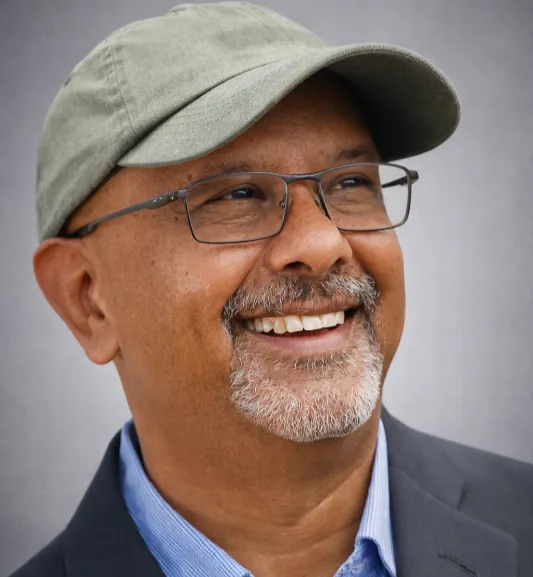
Dr Stanley Arumugam
Image: Supplied
Dr Stanley Arumugam is a psychologist specialising in trauma, mental health, and organisational well-being. A third-generation Indian South African, he integrates cultural insight, faith and clinical practice in his work. He writes on mental health, leadership and community healing, with a focus on breaking stigma and fostering emotionally-healthy societies. Email: [email protected]