

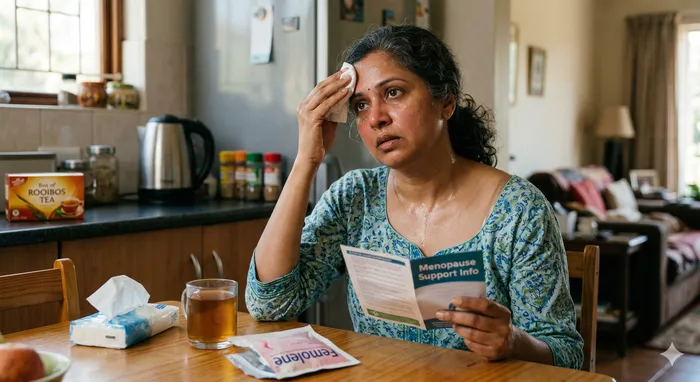
Understanding the changes that can be expected can help women feel more prepared and hopefully, less alone.
Image: Google Gemini
“I just don’t feel like myself!” – a common phrase used by women experiencing perimenopause.
Perimenopause is the transitional period leading up to menopause and usually begins in the forties (sometimes earlier). It can last several years as oestrogen and progesterone levels fluctuate. While perimenopause is a biological process, its impact can be physical, psychological and relational.
Understanding the changes that can be expected can help women feel more prepared, and hopefully, less alone. While not everyone experiences the same challenges and the same intensity, there are no doubt common struggles that women in this phase can relate too.
Common physical symptoms include irregular menstrual cycle, hot flashes, night sweats, sleep disturbances, fatigue, weight changes (especially around the abdomen), achy joints and genitourinary symptoms.
Behaviour modification is crucial to navigate these symptoms. This includes good sleep hygiene, regular movement, connecting with your village, chatting to your doctor for advice on managing your difficult symptoms, and acceptance.
Good sleep hygiene means maintaining regular sleep-wake times, natural light in the morning, some exercise during the day, reducing caffeine or consuming only in the morning, addressing your stress and anxiety during the day (so these don’t keep you up), reducing stimulation at night, no screen-time for at least one hour before bedtime, creating a comfortable sleep environment, and relaxation exercises before bed.
Some type of movement is helpful on most days of the week. The best exercise is the one you are most likely to do. However, be mindful of your joints when exercising. A simple walk does wonders for the body and mind.
It is natural to feel distressed when your body feels like it won’t co-operate with you. However, accepting what we cannot change will help us deal with these symptoms better. If any of these symptoms seem to be impacting on your daily activities of living, please speak to your doctor or gynaecologist.
Hormonal fluctuations during perimenopause can impact on our mood and cognition. Common psychological symptoms during perimenopause may include: brain fog (difficulties with memory and focus), increased irritability, reduced stress tolerance, increased anxiety (even for those with no history of anxiety), and low mood or depressive symptoms.
Oestrogen plays a role in regulating neurotransmitters such as serotonin and dopamine, which may explain difficulties with emotional regulation, attention, motivation, anxiety and brain fog.
A vital part of coping with these changes is acceptance. Acceptance doesn’t mean approval, but rather acknowledgement of the changes. Practise becoming aware of your emotions and trying to understand them. Approach this with curiosity instead of judgement. Emotional awareness is a building block to emotional intelligence. Pay attention to your thoughts.
While the symptoms are really challenging, how we think about them can intensify how we feel. It helps to shift our focus to what is in our control. Because irritability and impatience tend to increase during perimenopause, carve out time to regulate. This can take the form of meditation, grounding exercises, journaling, time in nature, therapy or other mindfulness practices.
For the brain fog and cognitive challenges, I find it necessary to replace multitasking with single-tasking. I know that many women will struggle with this as our to-do lists seem to be never-ending. However, multitasking can lead to further overwhelm, anxiety and chances of error. Simplify or automate whatever tasks you can. I have found it helpful to go back to basics of automating weekly menus, so there is a reduced mental load of planning. Delegate what you can, and let go of the need for everything to be perfect. Rather do the best you can with the capacity you have at any point in time. Lists become helpful in all areas of your life.
Because of increased irritability and tolerance, the chances of conflict are higher. Women may withdraw due to fatigue or overwhelm, and this may be misinterpreted. There are often other challenges that coincide – raising teenagers, workplace stress, ageing parents, health challenges, etc. Many couples report experiencing disconnection, which is often due to the women’s reduced need for physical contact. This can set off a chain reaction in the relationship, leading to further conflict. So it is important for men to also do their homework to understand this transition better, to have open conversations about needs, and how each partner can support the other better.
If perimenopause is causing distress in your life, you do not have to suffer in silence. Please reach out to your doctor, a psychologist or friends who are also experiencing this transition.