

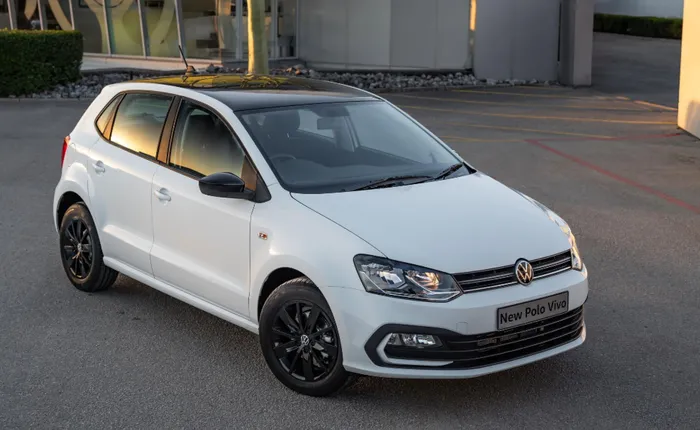
Acting Judge Yakea granted summary judgment in favour of FirstRand Auto.
Image: Sigciniwe
After a protracted five-year legal battle with FirstRand Auto Receivables (RF) Limited, the Western Cape High Court has ordered an unemployed man to return his 2012 Volkswagen Polo.
Acting Judge Yakea granted summary judgment in favour of FirstRand Auto, which sought cancellation of the instalment sale agreement and immediate return of the car from Kenneth Langeveldt.
The legal battle traces back to January 2017 when Langeveldt entered into a written instalment sale agreement with WesBank to purchase the vehicle for a total price of R198,235.
Under the contract, he committed to 60 monthly instalments of R3,303 with the final payment slated for January 2022. Ownership of the Polo was contractually mandated to remain with the bank until the final payment was settled.
According to the evidence before the court, Langeveldt stopped paying in June 2020 after his employment contract was terminated. His last payment amounted to R3,637.82. By the time the case was launched, arrears had accumulated to over R96,000.
Langeveldt informed the bank that he had lost his job and was contesting his dismissal in the Labour Court. He also submitted a claim to his credit insurance policy with Hollard Insurance, hoping the policy would cover his instalments. However, Hollard advised that the claim depended on the outcome of his labour dispute.
The dispute was later referred to both the Insurance Ombudsman and the Banking Ombudsman. The Banking Ombudsman ultimately found that Langeveldt’s contractual obligations to the bank remained unchanged regardless of his employment dispute or insurance claim.
FirstRand Auto sent a notice in October 2022, giving Langeveldt an opportunity to remedy the default. When he failed to do so, summons was issued in April 2023.
In his defence, Langeveldt argued that the bank had engaged in "reckless lending" by granting a 59-year-old a loan that he claimed spanned ten years, despite him only holding a five-year employment contract.
He further claimed the loan was unlawful under the Matrimonial Property Act because his wife, who was receiving a disability grant, had never given mandatory written consent for the credit agreement. To compound his resistance, Langeveldt sought a R2 million damages claim against the financial institution, alleging that the aggressive litigation amounted to severe harassment, family distress, and psychological hardship.
Judge Yakea examined each argument in detail and rejected them all.
On reckless lending, the court found that an affordability assessment had been conducted and that Langeveldt was employed and financially able to afford the vehicle when the agreement was signed. The judge also rejected Langeveldt’s claim that the loan extended over ten years, confirming that the contract was for five years only, and that a proper affordability assessment had been performed at its inception when Langeveldt was employed.
The court's analysis of the missing spousal consent raised notable legal nuances.
Judge Yake agreed that because Langeveldt was married in community of property, the bank's failure to secure his wife's signature technically rendered the underlying credit contract void and unenforceable. However, the judge clarified that the invalidity of a credit agreement does not magically erase a bank’s property rights or allow a consumer to keep a vehicle for free.
Furthermore, Langeveldt’s attempt to claim R2 million in damages was dismissed because he had not properly pleaded a legal basis for the claim in his counterclaim.
While expressing profound empathy for the harsh realities of sudden job loss, Judge Yake emphasised that courts cannot allow personal misfortune to completely dissolve binding contractual risks, especially as vehicles rapidly depreciate during multi-year periods of non-payment.
Acting Judge Yakea ruled that Langeveldt had not disclosed a bona fide (in good faith) defence and that none of the issues he raised created a triable dispute requiring a full trial.
Moreover, the court dismissed the R2 million counterclaim and ordered Langeveldt to immediately return the Volkswagen Polo and pay the legal costs of the application