

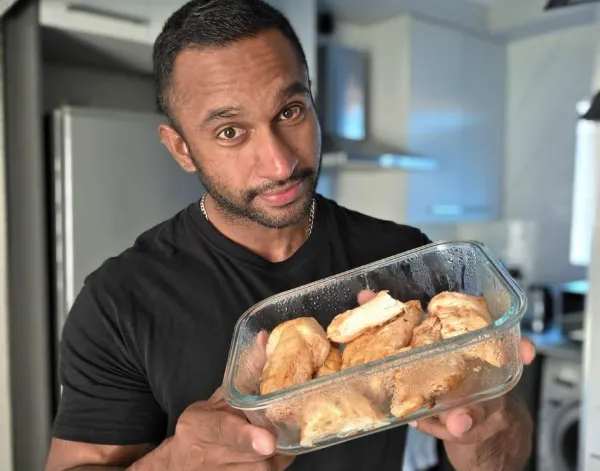
Rahul Govender believes calorie tracking is one of the best habits a person can learn because it creates awareness and accountability.
Image: Supplied
HEALTH and fitness is not just about looking good. It’s about improving the quality of your life, staying independent as you age, and protecting your long-term health.
One of the biggest mistakes people make is waiting for a health scare before they start exercising. The truth is, the earlier you start taking care of your body, the better. It is also never too late to begin.
For both males and females of all ages, combining resistance training and cardiovascular exercise is one of the best things you can do for your body. Weight training helps build and maintain muscle mass; strengthens bones and joints; improves posture, balance and daily functional movements; and boosts metabolism.
Cardio training improves heart health, circulation, endurance and lung function while helping reduce the risk of lifestyle diseases such as diabetes, high blood pressure and obesity.
As Indians, we also need to have honest conversations about our health. Heart disease, diabetes and high blood pressure have affected generations in our community. Many of us grow up around foods high in sugar, oil and refined carbohydrates, while also living increasingly sedentary lifestyles.
Exercise and better nutrition are no longer optional, they are essential if we want to improve the health of future generations.
Many people also ask about body mass index (BMI) and basal metabolic rate (BMR).
BMI is a simple calculation using your height and weight to estimate whether you fall into categories such as underweight, normal weight, overweight, or obese.
To calculate BMI, divide a person's weight in kilograms by the square of their height in meters.
For example, if an individual weighs 70kg and is 1.75m tall:
1.75 x 1.75 = 3.0625
70 divided by 3.0625 = 22.86
BMI = 22.9
The World Health Organization uses the following classifications for adults by BMI range and category:
- Under 18.5 is underweight
- 18.5 – 24.9 is a healthy weight
- 25 – 29.9 is overweight
- 30 or higher is is obese
BMR estimates how many calories your body burns at rest just to keep you alive and functioning.
While BMI can be useful for the general population, it is not always accurate for people who do resistance training because muscle weighs more than fat. Someone with high muscle mass may have a “high BMI”, but still be healthy and lean. This is why body composition and overall health markers matter more than just the number on a scale.
Another important topic is calorie counting.
A calorie is simply a unit of energy from food. Learning to track calories, along with macronutrients such as protein, carbohydrates and fats, can completely change the way people understand nutrition. Micronutrients like vitamins and minerals are equally important for overall health, recovery, and immune function.
I believe calorie tracking is one of the best habits a person can learn because it creates awareness and accountability. Most people are shocked when they realise how calorie-dense certain foods and drinks actually are. For fat loss, there is no magic solution. To lose fat, your body needs to be in a calorie deficit, meaning you consume fewer calories than you burn. To gain muscle or body weight, you generally need a calorie surplus, where you consume more calories than you burn.
The key is doing this in a balanced and sustainable way rather than through extreme diets or starvation. Fast results usually do not last. We also need to become smarter consumers. Try to avoid buying highly-processed food products that are loaded with sugar, unhealthy fats, and unnecessary calories.
Learning how to read a nutrition label in South Africa is a powerful skill. Pay attention to serving sizes, calories, sugar content, protein, fibre and ingredients. The more whole and natural the food is, the better it usually is for your health. I believe schools should teach children from a young age how to read nutrition labels, understand calories and macros, and develop healthy habits. If we educate children earlier, we can improve the health of future generations and reduce the burden of preventable diseases in our society.
Finally, none of this works in isolation. Exercise, nutrition, sleep, hydration, stress management, and daily activity all work together. You cannot train hard but sleep four hours a night, drink very little water, and expect optimal health. Consistency with the basics will always beat quick fixes and trends. Your health is your greatest investment. Start where you are, improve slowly, and remember that small daily habits create massive long-term results.
Rahul Govender is an elite personal trainer at Virgin Active and an online fitness coach helping beginners transform their bodies with simple, sustainable methods. Email: [email protected]