

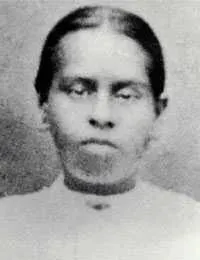
Valliamma Munuswamy Mudaliar
Image: Sahistory.org.za
PURSUANT to the unanimous resolution adopted at the inaugural National Hindu Convention convened by the South African Hindu Dharma Sabha (SAHDS) in Durban, in October 1981, calling unequivocally for substantial inclusion of Indian history in school curricula, we demand that the current content on the history of Indians be at least doubled across all grades.
Minorities matter. The history of Indians in South Africa cannot and must not be airbrushed away.
The present level of representation is nothing short of an affront: an unbridled insult, a denial of respect, and a blatant erasure of the monumental contributions Indians have made to the building of our beloved nation. In every sphere of human endeavour, be it economic, cultural, political and social, the Indian community has laboured for the benefit of all South Africans. To diminish this legacy in our textbooks, is to diminish the truth itself.
The current level of content constitutes an unbridled insult, disrespect and non-recognition of the monumental contributions by Indians to the development of our beloved country in all spheres of human endeavour for the benefit of all South Africans.
The SAHDS believes that our reasonable and fair request for increased authentic historical content would enhance interracial understanding, appreciation, goodwill, harmony and peaceful co-existence leading to unity in diversity, social cohesion, nation building and human solidarity.
Furthermore, a substantive volume of historical facts would eradicate the false notion and narrative that Indians were born with the proverbial “silver spoons in their mouths”.
It must be recorded that our great indentured ancestors toiled tirelessly, and lived in slave-like conditions, incessantly suffering from torture and trauma, deprivation and discrimination.
However, down through the generations Indians survived and thrived by prioritising educational advancement with the sense of vision and mission, turning adversity into advantage, and doing more with less. Our forebears trudged dusty roads barefoot to beg for pennies to build schools so that their future generations could progress from plantation to Parliament, and become business titans through a sense of self-belief, self-discipline, self-sacrifice and self-determination.
With regard to content, the SAHDS recommends that the following aspects of Indian history be duly emphasised:
RAM MAHARAJ
President of the South African Hindu Dharma Sabha
** The views expressed do not necessarily reflect the views of IOL or Independent Media.