

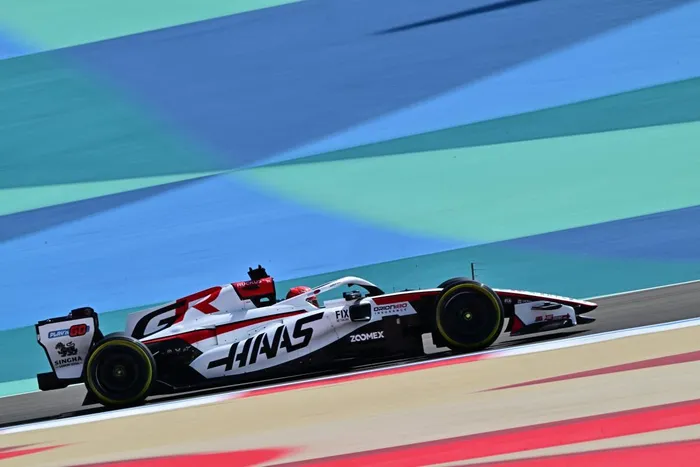
"The car does not feel ready to go immediately." — Esteban Ocon is warning that F1’s new 2026 power units have turned race starts into a high-stakes guessing game. Photo: AFP
Image: AFP
The new Formula One season has arrived with fresh challenges, and this time the biggest hurdle might not be corners, strategy, or top speed. It is the very first moments of a race.
Getting off the line has emerged as a true dilemma for drivers and teams, and pre-season testing in Bahrain has made it clear that a bad launch could have immediate, dramatic consequences. With the 2026 regulations shaking up engines, aerodynamics, and hybrid systems, the opening meters of every GP could determine the outcome before the first corner.
The core of the problem lies in the new power unit architecture. The removal of the motor generator unit-heat (MGU-H) means drivers can no longer rely on the turbo being instantly ready. In previous seasons, the MGU-H kept the turbo spinning and delivered power to the wheels immediately.
Without it, drivers must carefully manage turbo lag while coordinating energy from the motor generator unit-kinetic (MGU-K), which recovers kinetic energy during braking. One wrong move, and the car could spins its wheels, leaving positions on the grid for rivals to snatch.
The MGU-K was originally introduced to make the cars more efficient and recover energy that would otherwise be lost. Now it has an even more critical role in race starts. Drivers must juggle clutch, throttle, and brake inputs while managing energy deployment.
The system is unforgiving. Even minor mistakes at launch can turn a strong grid position into a nightmare by the time they reach the first corner. Every start is now a high stakes calculation that could rewrite a race before it truly begins.
Esteban Ocon was among the first drivers to warn about the dangers.
“It is a very strange situation. The car does not feel ready to go immediately, and if you make the slightest mistake, you could lose multiple positions in the first few seconds. It is something we have not had to think about to this extent in the past.”
Ocon described the new combination of low downforce at slow speeds and hybrid system quirks as unpredictable and nerve racking.
“You are constantly worrying about whether the turbo is spooled correctly and if the energy deployment is synchronised. It adds an extra layer of pressure before the lights even go out.”
The challenge is compounded by new aerodynamic rules. Reduced downforce at low speed means cars are prone to wheelspin if drivers apply too much throttle. Testing has shown that even the most experienced drivers are struggling to get clean launches consistently.
Teams are experimenting with clutch maps and throttle strategies, but the margin for error remains razor thin. Oscar Piastri reinforced the warning.
“A bad start could cost you six or seven places before you even reach Turn 1. It is massively punishing, and it is going to make starts one of the most critical moments of the race,” Piastri said after Bahrain testing.
“We are going to see drivers lose positions not because of strategy or speed, but purely because of the launch. It is a challenge unlike any we have faced before.”
As the season opener draws near, mastering the intricacies of the 2026 start procedure may be just as important as mastering the track.
With Ocon and Piastri highlighting the problem, the first few seconds of every Grand Prix could become the most dramatic and decisive moments of the year.
Races may now be won or lost before the cars even reach the first turn, and drivers will need nerves of steel to survive the grid drama that awaits.
Jehran Naidoo is a Sports reporter with a focus on motorsport for Independent Media and social media editor for our YouTube channel The Clutch.