

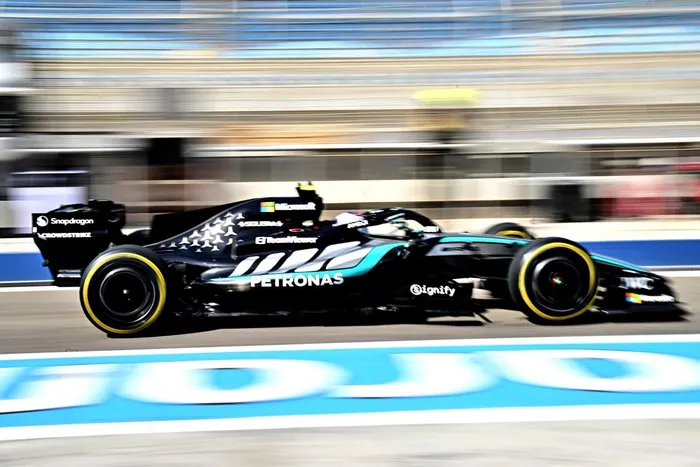
The FIA has officially triggered an e-vote to close a controversial compression ratio loophole before the new engine era even begins. | AFP
Image: AFP
The FIA has formally triggered an e vote among Formula 1’s five power unit manufacturers in a bid to close a controversial compression ratio loophole in the 2026 engine regulations.
The electronic ballot has been sent to Mercedes, Ferrari, Honda, Red Bull Powertrains and Audi, asking them to approve a regulatory clarification that would tighten how compression ratio compliance is measured under the incoming rules cycle.
The timeline is significant. With 2026 power units already deep into development and homologation deadlines approaching, any rule tweak carries weight. The proposed amendment would not rewrite the fundamental 16 to 1 compression ratio limit set out in the regulations, but it would alter how that limit is verified.
Instead of assessing compliance solely at ambient temperature, manufacturers would also need to demonstrate legality at a defined operating temperature once the engines are up to race conditions.
Should the vote pass, the change is expected to come into force from August 1, 2026, effectively mid season. That gives manufacturers a narrow window to adapt designs if required. For engines already built to exploit the current wording, the adjustment could force recalibration or even hardware revisions.
For others, it offers reassurance that no rival will carry a hidden thermal advantage into the new era. The vote came about after rival manufacturers raised concerns that one power unit had been designed to take advantage of how the rules are currently written.
Under the spotlight has been Mercedes and Red Bull, whose engine program has drawn scrutiny amid whispers that its interpretation of the compression ratio measurement could deliver extra performance once the engine reaches racing temperatures.
At the heart of the controversy is a technical nuance. The 2026 regulations define a maximum geometric compression ratio of 16 to 1, measured at ambient conditions.
Critics argue that thermal expansion characteristics inside the combustion chamber could allow the effective compression ratio to increase when the engine is hot, while still passing the mandated cold test.
In simple terms, the engine could be legal in the garage yet operate closer to the edge, or beyond it, on track. Those pushing for change insist this was never the intention of the rules.
The FIA’s proposed clarification would require compliance both at ambient and at a representative operating temperature, closing the gap between laboratory measurement and real world.
Jehran Naidoo is sports reporter with focus on motorsport for Independent Media and editor of the social media channel The Clutch.