

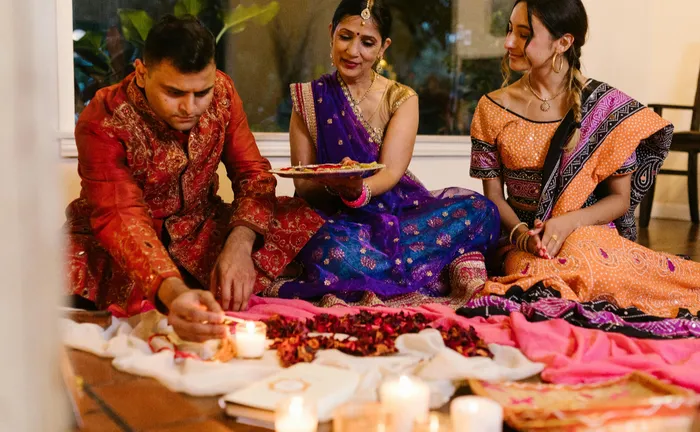
Ram Maharaj, the president of the South African Hindu Maha Sabha, said the measure by Unesco would "impact the world" and South Africa positively and pragmatically.
Image: RDNE Stock Project/Pexels.com
Deepavali, the festival of lights celebrated by millions, has officially been inscribed on the Unesco Representative List of the Intangible Cultural Heritage of Humanity. This recognition at the 20th session of the Intergovernmental Committee for the Safeguarding of the Intangible Cultural Heritage in Delhi, India, last week, highlights the festival’s cultural richness and its role in fostering unity among communities worldwide.
Ram Maharaj, the president of the South African Hindu Dharma Sabha, subsequently wrote to President Cyril Ramaphosa, to declare Deepavali a public holiday consistent with Unesco's official inscription of Deepavali in its intangible cultural heritage registry.
"In South Africa and throughout the world, devotees of the eternal Hindu religion, universal in essence, are instilled with profound pride and deep delight with the historic and epoch-making honour bestowed on Deepavali, glorifying it with global significance. Deepavali, the soul of Indian culture and civilisation, has now been acknowledged and accredited as a world cultural treasure to be protected, preserved and promoted on an international scale," wrote Maharaj in his letter to Ramaphosa.
He said the measure by Unesco would "impact the world" and South Africa positively and pragmatically.
"The South African Hindu Dharma Sabha trusts that you will grant Deepavali due recognition by accommodating it in our new, democratic and inclusive calendar as a public holiday in appropriate alignment with international trends and apex lodestar provisions enshrined in the Constitution of the Republic of South Africa, Act No. 108 of 1996 enhancing unity in diversity, inter-faith appreciation, peaceful co-existence, social cohesion, nation building and human solidarity."
According to Unesco's website, Deepavali has been inscribed under the “Social practices, rituals and festive events” domain and marks the 16th element on Unesco’s Lists of Intangible Cultural Heritage from the Republic of India.
"Deepavali is celebrated annually as one of the most popular festivals, uniting communities, families and individuals across the length and breadth of India and the diaspora. Within communities, elders, inclusive of all genders, play a vital role as custodians of Deepavali and the conduits of intergenerational transmission, while the young adults and children inherit this living heritage. This living heritage provides livelihood support to creative communities and cultural practitioners who continue to enrich it through their diverse artistic expressions," said Unesco.
Vivek Aggarwal, the Secretary, Ministry of Culture, Government of India, said: "Deepavali commemorates the victory of good over evil, the triumph of light, and the unity and diversity of the Indian diaspora around the world, as well as all those who appreciate Indian culture. In the spirit of Vasudhaiva Kutumbakam – the Indian belief that the whole world is one family, this festival celebrates our shared identity as a global family."
Tim Curtis, the Director and Representative, UNESCO Regional Office for South Asia, said: "Deepavali is more than just a festival – it is deeply rooted in Indian culture, and celebrated across India and all around the world. It unites people across India and the global diaspora. This inscription is a recognition for all people who keep this heritage alive – the elders who safeguard and pass on this knowledge and young people who carry it forward with creativity and pride."
The 20th session of the Intergovernmental Committee for the Safeguarding of the Intangible Cultural Heritage (20.COM) took place last last week in New Delhi. To enrich and complement the 20.COM, a series of exhibitions and side events on the theme of living heritage safeguarding were organised at the Red Fort, or Lal Qila, the official venue of the intergovernmental meeting.