

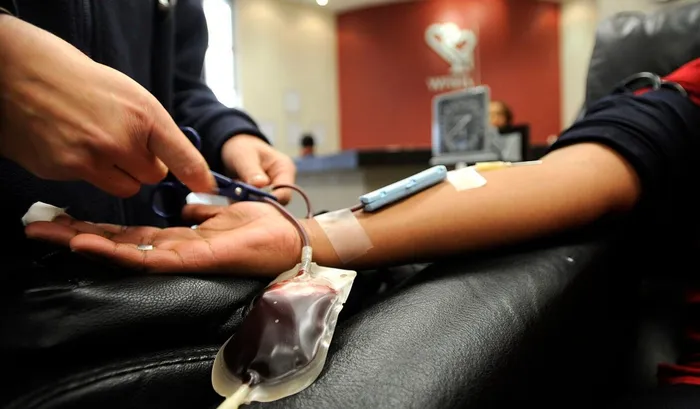
The SANBS said with current blood stocks sitting below optimal levels, a collective effort is needed to ensure that hospitals can continue providing essential services to patients in need.
Image: File
In commemoration of Blood Donor Month observed globally every January to honour blood donors and raise awareness about the critical need for blood donations, the POST spoke to two people who shared their journey of receiving life-saving blood transfusion. In addition, the South African National Blood Service (SANBS) is urging the public to become donors due to the blood stocks being critically low.
THE South African National Blood Service (SANBS) has urged the nation to consider the profound impact of a simple act: donating blood.
The SANBS said with current blood stocks sitting below optimal levels, a collective effort was needed to ensure hospitals coulg continue providing essential services to patients in need.
Neelashan Govender, the head of donor relations at the SANBS, said while a person donating just one unit of blood could save up to 3 lives, only 1% of the population in South Africa were donors.
“The SANBS is required to collect 3 500 units daily. While we are able to maintain a steady blood supply, we do experience challenges during certain periods of the year such as the festive period,” he said.
Govender said the SANBS was required to have a five day blood supply readily available.
“The blood is used for cancer patients, during operations, victims of accidents and gynaecological and paediatric cases, among others.
“By donating blood a donor is contributing to SANBS maintaining sufficient blood stock levels to cater for patients in need,” he said.
Govender said the blood types which were most needed were the O-negative and O-positive.
“O-negative blood can be given to any patient, regardless of their blood type. In accidents, surgeries, or childbirth emergencies, there’s often no time to test blood type, so O-negative is used immediately. However, only about 7 or 8% of South Africans have O-negative blood, making it rare but critically important.
“O-positive blood is the most common type. Around 35 to 40% of South Africans are O-positive. Because so many people have this type, hospitals use it constantly for routine transfusions, surgeries, and chronic conditions. However, all types are needed as every blood group saves lives,” he said.
Govender said there were various myths about blood donations.
“It is often said that donating blood is painful. However, you feel only a small prick when the needle goes in. Most donors say it’s less painful than a flu injection. Another myth is that ‘I might get sick or catch a disease’. The truth is that blood donation is 100% safe as sterile, single-use needles are used. There is no risk of HIV or infections.
“Some people think they don’t have enough blood to donate, but the body replaces the donated blood within 24 to 48 hours, and red cells within a few weeks,” he said.
Govender added that donating blood brought about a strong sense of purpose and fulfilment.
Thandi Mosupye, the senior manager of marketing, communication and brand at SANBS, said January was a challenging month for collections.
“As the new year begins, we are raising awareness about a familiar seasonal pattern, a dip in national blood collections during and immediately after the festive season.
“While this is expected, rebuilding healthy stock levels early in the year is essential to ensure the continuous availability of blood products for patients who depend on them,” she said.
Mosupye said while many households returned to normal rhythm, thousands of patients across the country began 2026 with a very different hope.
“Their new year is not defined by goals or celebration, but by the quiet wish for strength to return, for treatments to work, and for the simple, life-giving gift of blood to reach them in time.”
Requirements to become a donor:
Source: SANBS