

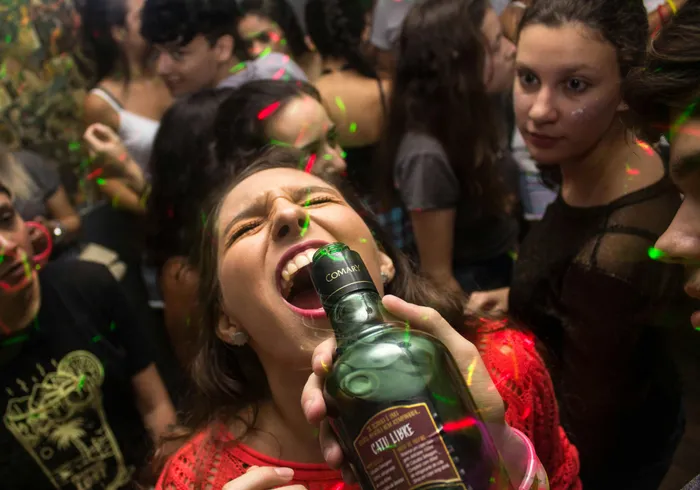
As youth drinking reaches crisis levels, would changing the law actually solve the problem?
Image: Maurício Mascaro/Pexels.com
A PROPOSAL to increase South Africa's legal drinking age from 18 to between 21 and 23 has ignited fierce debate among civil society groups, economists, and young adults.
Gatekeepers SA - a faith-based non-profit organisation - has petitioned President Cyril Ramaphosa for stricter alcohol regulations, while experts warn of potential economic impacts and enforcement challenges.
As youth drinking reaches crisis levels, would changing the law actually solve the problem?
Lizelle Maurice, director of Gatekeepers SA, said the organisation was compelled to act after witnessing alarming patterns of underage drinking in East London.
“We wrote this letter to the president because we have seen in our local setting here in East London that it’s not just pens-down parties or rage parties. At any given time, young people come together in their hundreds, pick a spot, buy alcohol and arrive with cooler boxes, often assisted by taxis delivering them to these spaces,” Maurice said.
She said underage drinking had become widespread and increasingly dangerous.
“It is not only the 18-year-olds. It is 16-year-olds and even younger. Underage drinking has gotten out of hand,” she said, adding that scientific research showed the human brain was only fully developed between the ages of 25 and 26.
“Allowing young people to drink at 18, when their brains are not fully developed, is not healthy. It sets them up for addictive behaviour into adulthood and has long-term health consequences."
She also highlighted the risks associated with young drivers.
“At 18, young people can get a driver’s licence and legally drink alcohol at the same time. Drunk driving has taken many lives over the years, especially between the ages of 18 and 21."
The organisation proposed raising the drinking age to at least 21, with 23 being “ideal”.
“By then, people are more settled, possibly finished with their first degree and making more responsible life choices,” Maurice said, noting that several countries, including the United States, had already set the legal drinking age at 21.
The organisation further linked alcohol abuse to gender-based violence, road carnages and foetal alcohol syndrome.
According to the Foundation for Alcohol Related Research, about six million South Africans are affected by foetal alcohol syndrome, while the World Health Organization ranked South Africa among the countries with the highest per capita alcohol consumption globally.
“Alcohol has contributed to high levels of gender-based violence, murders and road deaths. We are also ranked among the highest for foetal alcohol syndrome,” Maurice said.
“Teenagers are debuting sexually from as young as 10 years old, and there is a high rate of teenage childbirths. Allowing young mothers to continue drinking only worsens the problem.”
They are also calling for a complete ban on alcohol advertising.
“We banned cigarette advertising because it was harmful, yet alcohol has an even more damaging effect on society. Alcohol has become part of our culture, initiation ceremonies, weddings, parties, as if we cannot enjoy ourselves without it. That drunkenness culture needs to stop.”
It also urged the government to restrict liquor outlets to industrial and town areas, rather than residential suburbs.
This proposal has sparked differing views from experts and the public.
Economist Sanisha Packirisamy cautioned that raising the drinking age and banning alcohol advertising would have economic consequences.
“It would have material fiscal and sectoral consequences for South Africa. Alcohol excise duties alone generated R40 billion in revenue in the 2022/23 fiscal year (all ages), making the industry a meaningful contributor to the public purse.
“Any sustained reduction in consumption would therefore weigh on excise and VAT collections in the short term, while also affecting employment and turnover across the hospitality, retail and advertising value chains,” Packirisamy said.
She said that lower alcohol use could yield longer-term economic benefits through reduced healthcare costs, lower crime and injury rates, lower road fatalities and improved labour productivity.
“There could also be a redirection of consumer spending into healthier alternatives, in which case the overall effect on the fiscus and economic growth could be offset. The World Health Organization has cited a number of success cases (for example Lithuania) where alcohol-attributable life years lost came down after the ban,” said Packirisamy.
She also warned that overly restrictive regulation could fuel illicit trade if enforcement was weak.
“In South Africa, overly restrictive alcohol regulation can unintentionally fuel illicit trade if enforcement capacity and pricing incentives are misaligned. It can increase incentives for unregulated producers and distributors. But the scale of any black-market response would depend critically on enforcement, pricing policy and the availability of legal substitutes,” she added.
Road safety organisation Arrive Alive echoed concerns around enforcement.
Johan Jonck said drunk driving among young adults remained a major problem.
“There is a significant issue with fatal crashes in the 18 to 23 age group. They have cars, but they drink and drive. However, changing the age limit will not make much difference if the laws are not enforced. We need stricter enforcement and effective punishment, rather than only increasing the age limit,” said Jonck.
Young South Africans themselves are divided on the proposal.
Roxanne Moonsamy, 18, from Yellowwood Park, said raising the drinking age would be unfair.
“I am 18 years old, which means I am legally an adult in South Africa. I can vote, work full-time, sign contracts, and even serve my country, but now there is a proposal to tell me I am not responsible enough to drink alcohol. That does not make sense. Instead of raising the drinking age, the government should focus on education, responsible drinking campaigns, and stricter enforcement of existing laws. Punishing all young adults because some abuse alcohol is unfair,” said Moonsamy.
Ryan Govender, also 18, supported the proposal.
“As an 18-year-old, I see how alcohol affects people my age. Many of us are still in school or just starting life, and alcohol abuse leads to accidents, violence, and poor decisions. Raising the drinking age to 21 could protect young people while our brains are still developing. It is not about taking away freedom, but about giving us a better chance to grow up healthier and safer,” said Govender.
Samara Rajgopal, from Verulam, said the issue required balance.
“I understand why people are upset about raising the drinking age, but I also see the damage alcohol causes in our communities. If raising it to 23 can reduce drunk driving, abuse, and addiction, then it’s worth considering. However, the law must be enforced properly. If the government raises the age but does not control illegal sales or provide support programs, then nothing will change,” said Rajgopal.