
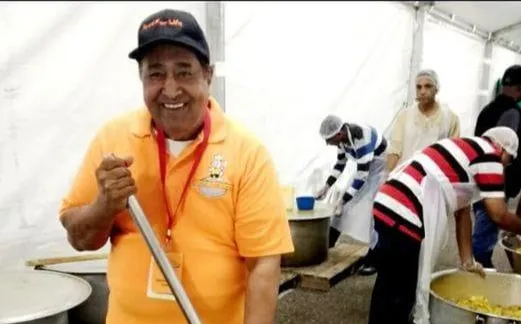
Kasopersad Heeralal stirs one of the 30-kg pots of biryani served during one of the International Society for Krishna Consciousness's (ISKCON) annual Ratha Yatra, or known as Durban Festival of Chariots.
Image: Supplied
FOR over three decades, 78-year-old Kasopersad Heeralal has dedicated his life to feeding hungry children through Food for Life South Africa.
From his humble beginnings as the descendant of indentured labourers to becoming a respected lightning protection expert working for local leaders, Heeralal's story is one of service, perseverance, and faith.
Now featured in a new book documenting South African Indian history, his remarkable journey shows how one man's dedication can impact thousands of lives.
Born in Springfield on August 20, 1947, Heeralal said his paternal great-grandparents and grandparents were from India and worked at a sugar mill in Mount Edgecombe.
He said his maternal great-grandparents were also from India. His maternal grandfather, who was born in South Africa, worked as a gardener.
Heeralal said his father, Heeralal Feerungee, was a driver for Natal Coke and Coal, and later became a self-employed builder. His mother Kalispathi was a housewife.
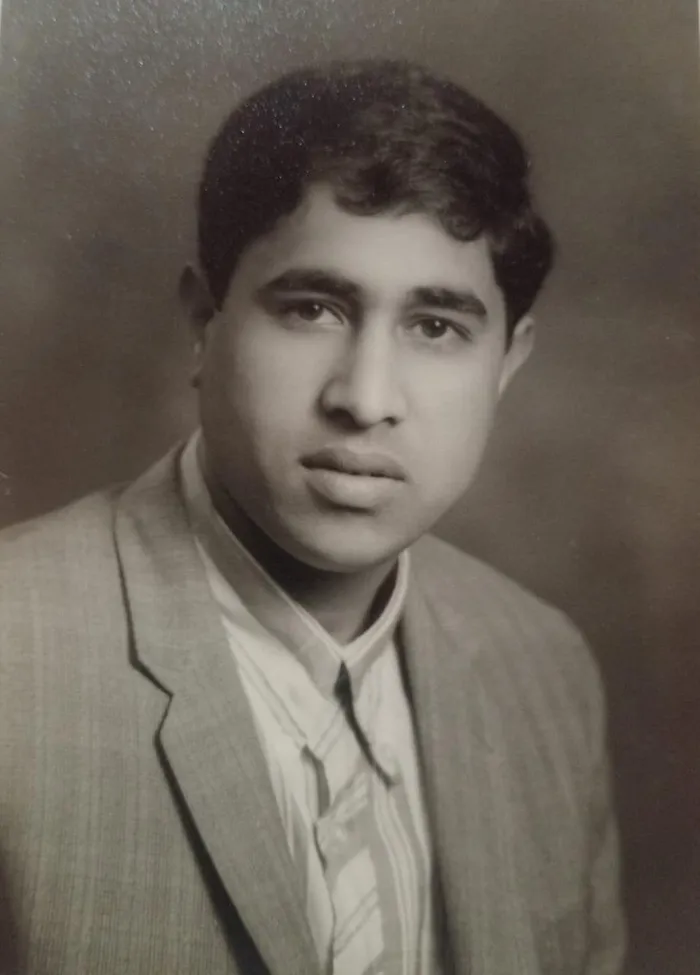
Heeralal during his younger days.
Image: Supplied
Heeralal, the fourth of 10 children, said one of his fondest memories was “taking the cows to the dip”.
“I must have been about six years old when I started helping the Maharaj family take their cows to the dip, which was a long stream with chemicals used to kill fleas and ticks. Under British rule, the cows had to be dipped. I remember it cost one tickey (threepence) per cow.
“This was quite exciting for us as we led the cows. However, it was a long walk. While walking to the dip, we climbed various mango and avocado trees along the way. As a young boy, I spent hours splashing around in the river. It was where I learnt to swim."
He helped his paternal grandparents, who were subsistence farmers.
“During the school holidays, my siblings and I helped our grandmother plant vegetables such as peas and tomatoes. The rain never stopped us. We used sacks to cover our heads. Those were exciting times and we rarely got sick.
“My grandparents grew a variety of vegetables such as cauliflower, beetroot, turnips, carrots, and mielies, which they sold. We left home early on a Saturday morning, travelling by horse-and-cart and with a small lamp on narrow dirt roads to go to the Victoria Market to sell the produce."
Heeralal added that they lived a simple life.
“We did not have much while growing up. Our home was made of wood-and-iron and there was no piped water or electricity. However, every home had its own pond, which was used only for drinking water. We washed our clothes in the river.
“My mother started chopping wood for the coal stove at 4am. Our meals were also basic such as mielie rice, dhal and potatoes. Meat was a luxury. We used coconut coir to make mattresses to sleep on."
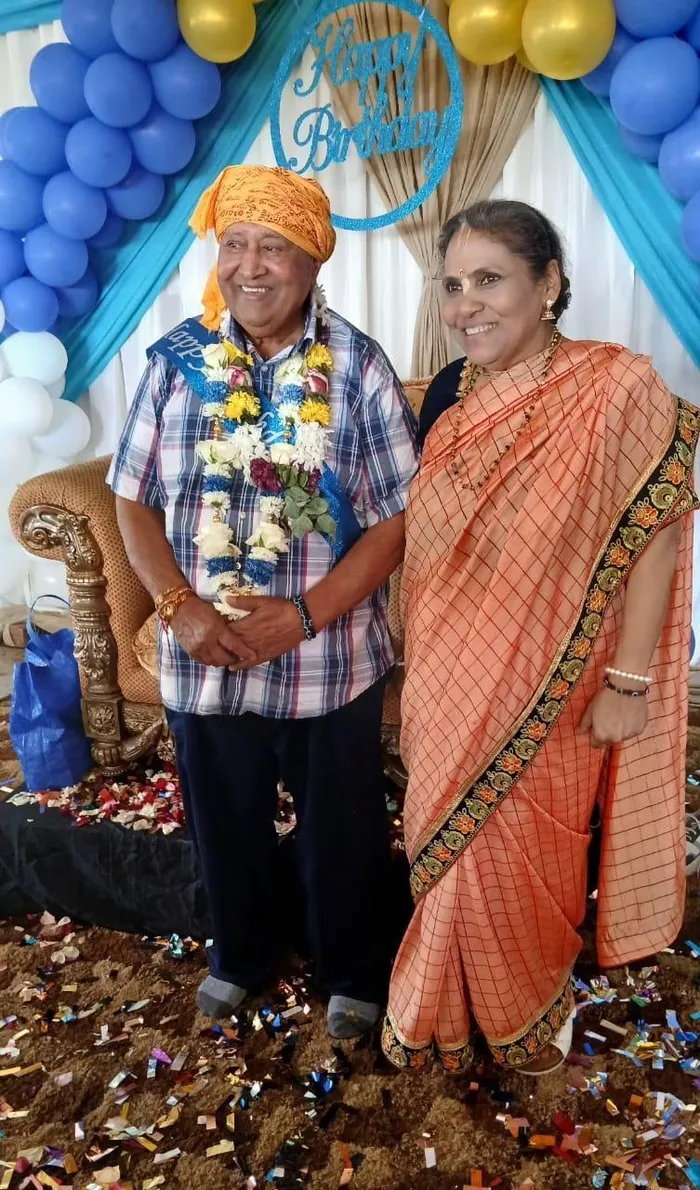
With his wife, Akashnee. They have been married for 53 years.
Image: Supplied
At age six, he started Class one at Baboolal Government-Aided School in Clare Estate.
“We used to walk about 5km to school barefoot every day. There was a guava bush along the way, which we ate from. There was one incident I will never forget. One morning, while walking, my sister, who was wearing a red dress, was chased by a bull. She sustained serious injuries to her forehead and has a scar."
Heeralal said he was a class monitor and helped serve meals to his classmates.
“They used to give us a meal every day. I was tasked with going to the kitchen and collecting the enamel plates and bucket of food. I dished out the meal while the teacher watched over me. During the week, it would be a vegetable dish such as beans and potato curry, or a jam sandwich. We had a meat dish on a Friday.”
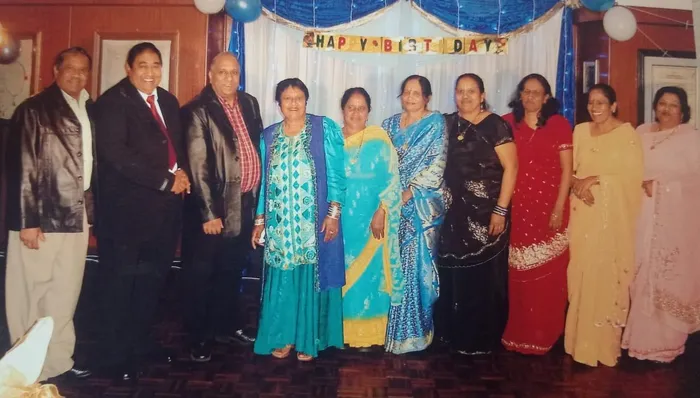
Heeralal, second from left, with his nine siblings.
Image: Supplied
After completing Standard 6, he decided to look for a job to help support his family.
“We were a big family with many mouths to feed and little income. As one of the eldest siblings, I felt it was my duty to help my parents. I started doing general work. At age 18, I got my heavy-duty motor vehicle licence and a job as a truck driver. I drove horse-and-trailers.”
During this time, he read various books, including on earthing and lightning protection.
“I was self-educating and took an interest in earthing and lightning protection. However, back then, Indians weren’t allowed to work as plumbers or electricians. That was for the whites. Indians worked in shoe and clothing factories. But I found it interesting and unusual. I got some books on it, and started learning.
“Later, a friend, who worked as a clerk for a steam, mining, and earthing company told me there was a vacancy for an earthing and lightning protection technician. I applied and got the job. During this time, I travelled around South Africa and parts of Africa. I took earthing equipment to the mines in Johannesburg. I also designed a lightning mast.
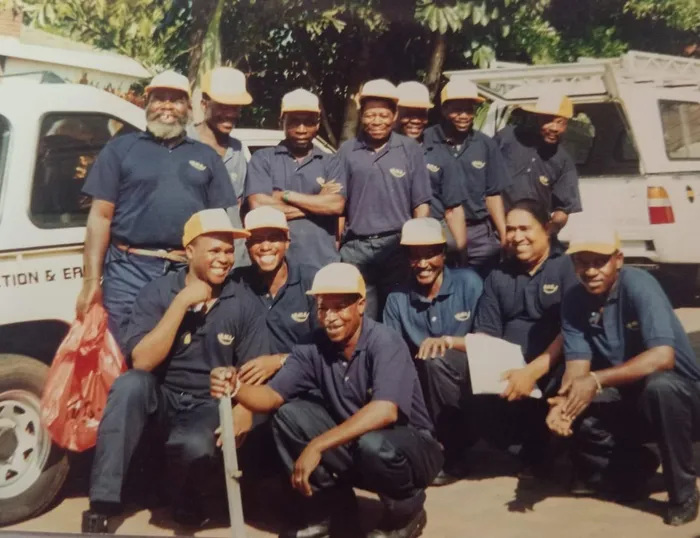
Heeralal, kneeling, second from right, with his colleagues while working as an earthing and lightning protection technician.
Image: Supplied
“Word spread fast about the work I was doing. I was called to put masts around thatch houses in the Drakensberg. Because the houses are made from thatch, when it rained it gave off methane gas, so when there was lightning, the houses used to explode. I put high masts on either side of the houses, so the lightning would strike the mast and dissipate.
“I was contacted by many high-profile people such as the late Prince Mangosuthu Buthelezi in the 1970s. I installed lightning protection around the IFP offices and his home in Ulundi. I also earthed a bronze King Shaka Zulu sculpture. I did work for Jacob Zuma prior to him becoming president. I stayed at his home in Nkandla. I also worked for the late King Goodwill Zwelithini at both his and his mother’s homes."
As a service to the community (seva), he installed lightning protection at no cost to prominent buildings and places of worship such as temples, mosques and churches around KwaZulu-Natal.
After more than four decades of service, he retired in 2012.
At age 35, he joined the International Society for Krishna Consciousness (Iskcon), also known as the Hare Krishna Movement.
“While working as a truck driver, often saw a lady in a sari walking along the road in Cato Ridge. I gave her a lift to the temple and she invited me to attend. I took my family to visit, and my children loved it. I was also inspired by AC Bhaktivedanta Swami Srila Prabhupada, the founder of Iskcon."
He also joined the movement’s food relief programme known as Food for Life South Africa.
“When the temple opened in Chatsworth, I saw a devotee cooking under a tree on the premises. When I asked him who he was cooking for, he said the underprivileged people in the community. I was instantly drawn to help. I asked if I could join him and he agreed.
“At the time I was still working, so I volunteered on the weekends. However, after my retirement I became more involved and started cooking meals regularly, which were provided to school children. Prior to the Covid-19 pandemic, went to the schools in the rural areas to deliver the meals. It was a heartwarming experience and it felt like a full circle moment, thinking back to how I felt when we were given that meal in school.
“Nowadays, I cook meals at least twice a week for disadvantaged school children and people in neighbouring townships, old-age homes, and homeless shelters, among others. I also help the other branches when I can."
He also assisted with the maintenance of the temple.
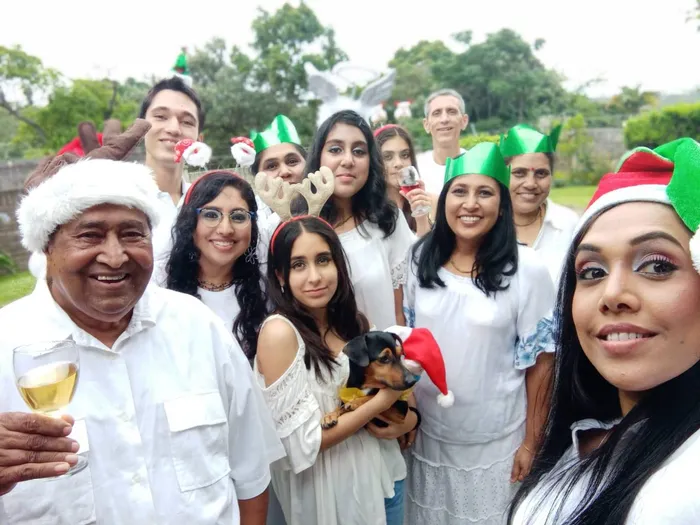
With his family.
Image: Supplied
For the past 34 years, he has coordinated the distribution of hot vegetarian meals provided during Iskcon's annual Ratha Yatra, or known as the Festival of Chariots.
“I initially used to cook during the festival. However, the swamis saw the work I was doing and told me that I must ensure the food was not contaminated and distributed properly. I made sure everyone wore the proper protective wear and proper hygiene was maintained during preparation and distribution.”
He has been married to Akashnee, a housewife, for the past 53 years. They have four daughters, Nirvana Peres, 53; Alvina Hiralal, 51; Shivani Singh, 46; and Kavita Heeralal, 42. The couple also have four grandchildren.
He added that when he was not cooking or assisting at the temple, he went to the gym, enjoyed swimming, and spent time with his family, especially his siblings.
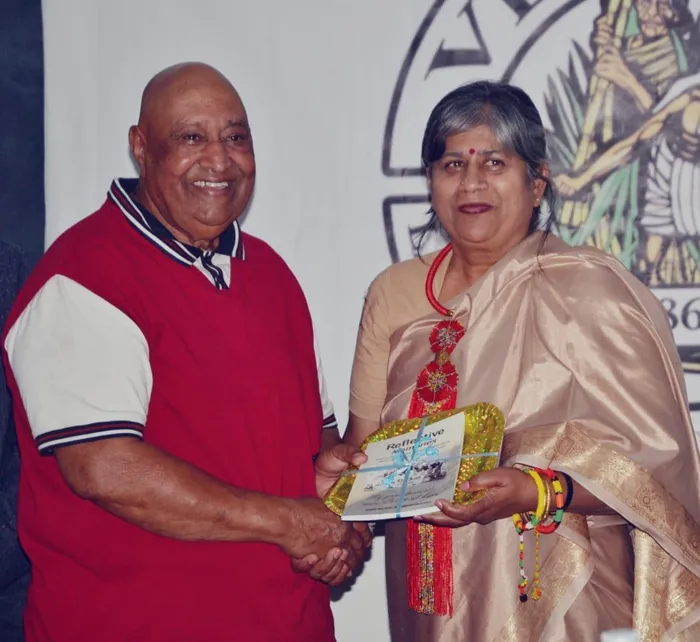
With Dr Kogielam Archary at the launch of the book, Reflective Memories - Voices of Indentured Labourer Descendants - South Africans born between 1935 and 1955, Volume Two.
Image: Supplied
Heeralal is one of the eight trailblazers, who shared their stories in the book, Reflective Memories - Voices of Indentured Labourer Descendants - South Africans born between 1935 and 1955, Volume Two.
In the book, which is authored by Dr Kogielam Archary, a research associate at Unisa, the individuals share their personal testimonies and reflective memories of their parents, grandparents and/or great-grandparents, who either hailed from India or were colonial-born.
Heeralal is also featured in volume one the book, The Unsung Heroes.