

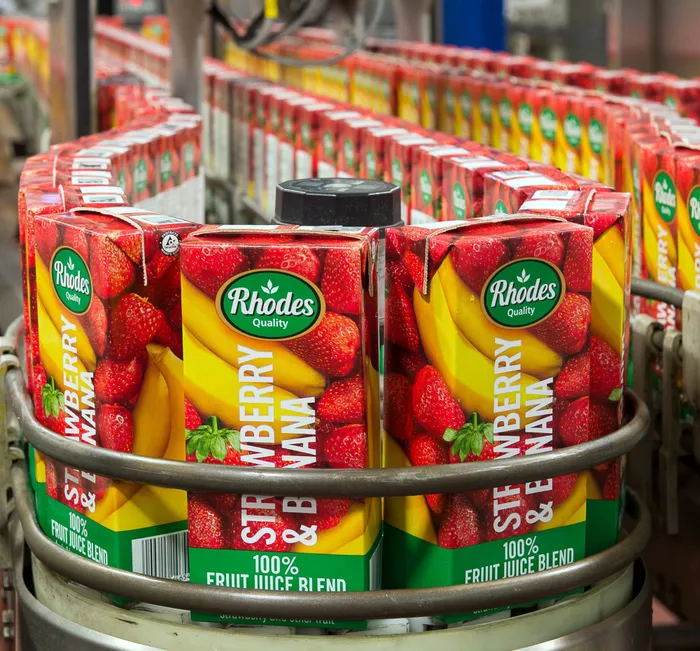
Consumer tribunal rejects compensation claim over mouldy Rhodes juice.
Image: Supplied
A GAUTENG woman's bid for compensation over allegedly mouldy Rhodes fruit juice – manufactured by RFG Foods - has been dismissed by the National Consumer Tribunal, which ruled it lacked jurisdiction to award damages for pain and suffering.
The tribunal rejected an application by Aluwani Caroline Madia for leave to directly refer her complaint, citing both procedural defects and a lack of jurisdiction to grant the relief sought.
Madia told the tribunal she had purchased a one-litre Rhodes Tropical Juice from a Pick n Pay store in Kelvin, Johannesburg, in January 2024. She claimed that after drinking the juice she noticed mould inside the carton, and that she and her daughter later experienced diarrhoea and vomiting.
RFG Foods arranged for the carton to be couriered from Gauteng to its juice plant in Wellington in the Western Cape.
However, the company said the carton arrived too damaged for a seal integrity test to be conducted. Retention samples from the same production batch were tested and found to be within specification, with no anomalies detected.
The manufacturer denied liability but offered Madia a R300 mobile voucher redeemable at Shoprite or Checkers stores.
Disillusioned with this outcome, Madia approached the National Consumer Commission (NCC), seeking compensation for pain and suffering.
RFG Foods opposed the claim and requested that Madia substantiate her allegations, maintaining that any mould could not be attributed to a manufacturing defect.
In June 2025, the NCC issued a notice of non-referral. While the reasons were not detailed, such notices are typically issued when a complaint is considered frivolous, lacks merit, or falls outside the commission’s jurisdiction.
Madia then applied to the National Consumer Tribunal for permission to pursue the matter directly, seeking damages for emotional distress and pain and suffering. The tribunal, however, found that her application could not succeed.
One of the key issues was that the manufacturer was incorrectly cited as “Rhodes Quality (Pty) Ltd”, a company that does not exist. The tribunal ruled that it could not correct this defect on its own and that the matter could not proceed until the correct legal entity was properly cited.
Beyond the technical defect, the tribunal emphasised that it does not have the authority to award general damages, including compensation for pain and suffering. While the Consumer Protection Act allows the tribunal to order refunds or replacements, claims for personal injury and emotional distress fall within the jurisdiction of the civil courts.
"The tribunal has the power to order a refund of the purchase price or a replacement of the goods. However, it does not have the jurisdiction to award compensation for pain and suffering. Such an order would constitute an award for general damages and incidental costs,” tribunal member Dr Maria Peenze said in her ruling.
Dr Peenze concluded that Madia had no reasonable prospect of success before the tribunal and refused the application for leave to refer the matter. No costs order was made, but she noted that Madia was free to submit a new application correcting the citation error or to pursue a civil claim in court if she believes she can prove harm caused by a defective product.