

“Our position is clear: fix the water, fix the infrastructure, fix the governance. Only then can the city speak of logos.”
Image: File Picture
THE eThekwini Municipality's R2.8 million logo redesign has sparked outrage among Durban residents who face daily water outages and crumbling infrastructure.
While officials claim the new branding symbolises unity and improved service delivery, community activists call the timing 'wasteful, insensitive and indefensible' as some areas endure up to seven consecutive days without water
Last week, the city announced a branding transformation journey which included redesigning its logo, popularly known as “the Dome”.
The current logo, introduced around 2000 following the consolidation of Durban’s local councils into the eThekwini Metro, features a stylised image of the Durban City Hall dome. Over the years, several internal sub-brands were developed, many of which no longer visually align with the main municipal identity.
According to the municipality, the rebranding aims to modernise the City’s image and better reflect unity, diversity and future aspirations.
Council approved the rebranding process on June 28, 2017, and members of the creative community have now been invited to contribute to the new design at an estimated cost of R2.8 million.
While some residents have welcomed the initiative, others have expressed frustration, arguing that the focus should be on improving basic services.
Speaking to residents in the Durban CBD concerns were raised about crumbling infrastructure and persistent service delivery issues.
“How about they fix potholes, ageing infrastructure, the water crisis, sewage problems and the beachfront first?” asked resident Bheki Ngwenze.
Another resident, who asked to remain anonymous said: “They can’t upgrade pools or fix toilets, but they can spend money on a logo? That money should be used to refurbish buildings that are falling apart and clean up our streets.”
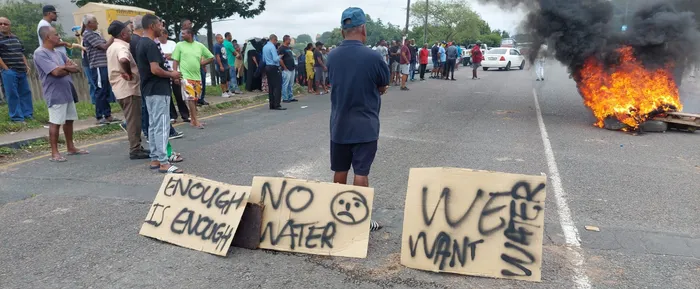
The Verulam Water Crisis Committee also condemned the rebranding project and described it as “wasteful, insensitive and indefensible.
“This decision is not merely misguided - it is an insult,” said Roshan Lil-Ruthan, spokesperson and liaison for the Verulam Water Crisis Committee.
“It is a slap in the face to every resident who has stood in queues for water, who has gone to work unwashed, who has watched their children miss school, and who has been forced to buy water privately because the City has failed to deliver what the Constitution guarantees.”
Lil-Ruthan said residents in Verulam, particularly areas supplied by the Mountview TP1 and TP3 reservoirs, had endured up to seven consecutive days without water, with no tankers, no communication and no accountability.
“This is not a service delivery failure - it is a humanitarian crisis created by sustained neglect and administrative indifference,” he said.
He dismissed the city’s claims that rebranding complimented service delivery as “tone-deaf”, adding: “A new logo would not fill empty pipes. A new colour scheme would not flush toilets. A redesigned emblem will not restore dignity to communities forced to live like this for years.”
The committee has once again escalated the matter to the South African Human Rights Commission, arguing that residents’ constitutional right to access water was being violated daily.
In response to the criticism, the eThekwini Municipality maintained that the rebranding initiative was about more than a visual overhaul.
It said the new logo was intended to symbolise unity, improved service delivery and a more responsive municipal administration.
Head of the Communications Unit, Mandla Nsele, acknowledged communities concerns and stressed that the municipality remained committed to addressing service delivery challenges.
“The municipality is serious about service delivery and has allocated over R10 billion towards rebuilding and upgrading water, electricity and solid waste management infrastructure,” said Nsele.
He added that the rebranding process was also aimed at improving organisational culture.
“It is about instilling Batho Pele principles as the cornerstone of better service delivery,” he said.
However, Lil-Ruthan said the communities were not seeing the impact of those allocations on the ground.
“Residents are not seeing R10 billion worth of anything. They are seeing dry taps, collapsing infrastructure and officials who disappear when accountability is required,” he said.
“Our position is clear: fix the water, fix the infrastructure, fix the governance. Only then can the city speak of logos.”