

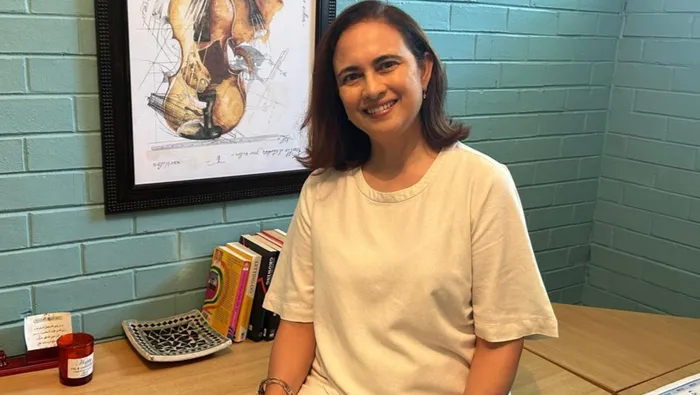
Raeesa Soraya Mahomed, who recently retired from Lotus FM, is now focusing on her career as a transformational life coach.
Image: Nadia Khan
FROM being the first Indian female television presenter to a beacon of inspiration during her three decade-long career at Lotus FM, Raeesa Soraya Mahomed has cemented her place in the country’s media landscape.
Mahomed, 58, of Essenwood, shared her journey with the POST following her early retirement from the station in December.
Both her paternal and maternal grandparents hailed from Gujarat in India.
“They did not come as indentured labourers, but as passenger Indians.”
Mahomed said her parents, now late, were her greatest inspiration.
“My mother, Amina (Mahomed), was a well-known teacher in Durban. She taught Afrikaans at the then-Durban Indian Girls' High School and was an incredible woman; a trailblazer of her time. She insisted on getting a tertiary education when it was rare for Indian/Muslim women to pursue further studies. She later lectured at the Springfield College of Education until her retirement.
“She has been the greatest inspiration in my life, contributing so much towards who I am today. She passed away many years ago, but there is not a day that goes by that I don’t miss her,” she said.
Mahomed said her father, Ahmed Vally Mahomed, a businessman, also left an indelible mark in her life.
“My father had great character. He was pious, calm, kind and compassionate. His loss is still fresh as he passed away last year, but he lived until the good age of 93. I feel blessed to have had them as my parents.”
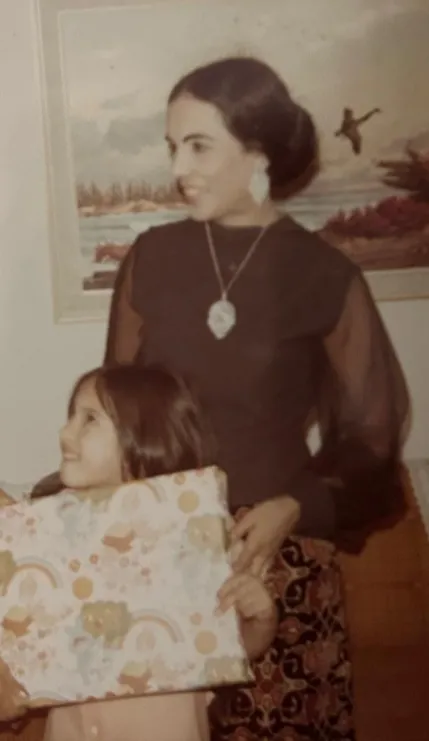
At age four with her mother, Amina Mahomed.
Image: Supplied
Mahomed, who has an elder sister, was born in the vibrant Durban Casbah.
“We lived in a block of flats at the corner of Beatrice and Grey streets. My extended family also lived in the Casbah. My maternal uncle, Aziz Hassim, wrote the book,The Lotus People, in which he described the vibrancy of the area.”
At age four, her family relocated to Merebank.
“There was such a wonderful sense of community. Our neighbours were of different religions, and we enjoyed each other’s celebrations such as Eid and Diwali.”
The children of the community, she said, spent hours playing together.
“Back then we had massive yards and we hopped from one to the next, playing different games such as hide-and-seek or 'catching'. We also played cricket, tennis and swingball with homemade bats and balls, and climbed fruit trees. We spent hours outside and went home only before sunset.
“I also maintained a good balance between outdoor and indoor time. I spent hours reading, and it was encouraged in our home. Being an avid reader, from even before I attended school, kept me in good stead for my future.”
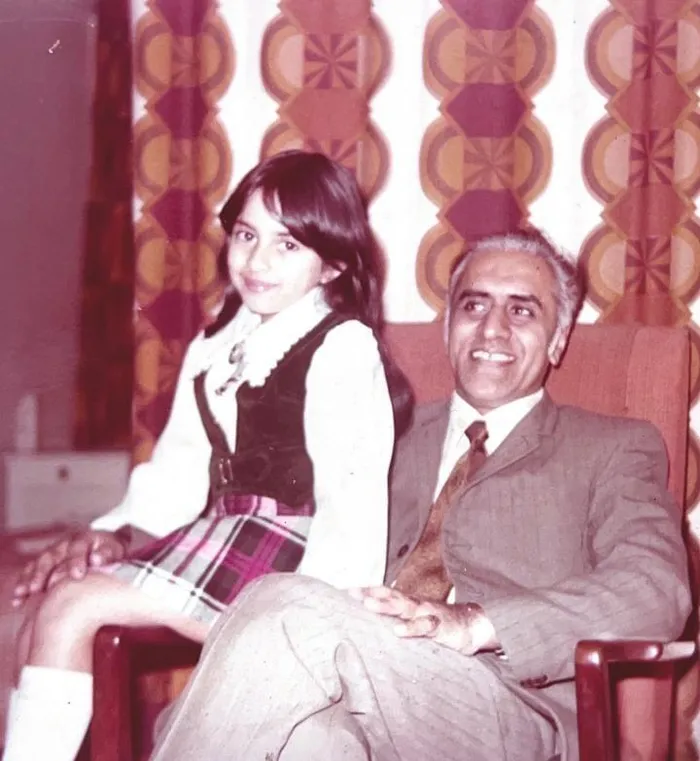
At age five with her father Ahmed Vally Mahomed.
Image: Supplied
At age six, she started Class 1 at Anjuman Islam Primary School and from standards 3 to 7 she attended St Anthony's Primary School. She thereafter attended PR Pather Secondary in Merebank and matriculated in 1985.
“While in high school, I was part of the debating team and was also selected to participate in the Alan Paton Literacy Competition. It was an unusual time as we were at the height of apartheid and a few non-white pupils were allowed to participate in such events. I made it to the final leg of the competition and placed third.
“I competed against pupils from white schools across the province, so it was quite an achievement for my school. I also was involved in sport and developed my passion for tennis, which I still enjoy playing to this day.”
She qualified with a Bachelor of Art degree, majoring in English, French literature, and Speech and Drama at the then-University of Natal.
“Since childhood I have loved singing, dancing and acting. I was drawn to Indian culture and music at a young age. My family was also close to their culture. We used to watch Hindi movies at the cinema, and I used to learn the songs and dances. During my teenage years, I wrote plays and roped my friends into acting in it. During the school holidays, we gathered all the children in the road and charged them one or two cents to watch us perform. We had a lot of fun.
“When the time came to decide what to study, I knew it would be speech and drama. However, there was some skepticism from my parents, as expected, but there wasn’t much resistance and they gave me all of their support,” she said.
While studying, she was the Culture Editor for the university’s magazine, Dome.
“It was a progressive student magazine. It was during apartheid, so a lot of the articles were resistance-focused. We often got into trouble with the government. During that time, I also wrote articles on the arts and entertainment.”
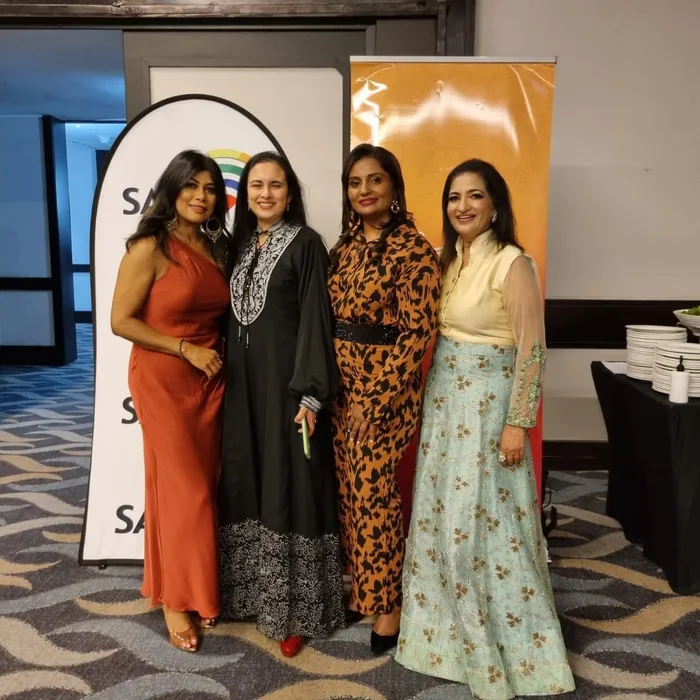
Mahomed, second from left, with Jailoshini Naidoo, Magesh Pillay and the now late Zakia Ahmed Siddiqi at the Lotus FM Woman of Substance Awards.
Image: Supplied
After completing her degree, she took a gap-year in 1989 and got her first big break in broadcasting.
“I wanted to travel for a bit, as well as learn to play the piano, which I did as a child. However, during that year, there was an advertisement in the newspaper by M-Net. They were looking for a presenter for a new programme, East Net. At that time there were no programmes for Indian people in the country.
“My initial thought was ‘Wow, this is something I always wanted to do’. My friends called me and asked if I saw the advert and encouraged me to apply. I sent my letter and audition tape, which was an audio cassette, via mail.
“I thought to myself, ‘This job is mine. I am the perfect person for this job’. However, a week later, I received a letter that read ‘Thank you for your application, but we regret to inform you that you were unsuccessful’. I looked at the letter and thought it was obviously a mistake, I should phone them,” she said.
After countless calls, Mahomed said she spoke with the executive producer of East Net, Ron Moodley, who is now late.
“I called every day asking to speak to him, and I think they got so fed up that they eventually put me through to him. The first thing I said to him was, ‘I don’t think you listened to my audition tape’. I said it was a good audition and I think I will be good for the position, please listen to it. There was silence before he said, ‘okay fine, I will listen to it’. But I didn’t think he was going to.
“I was in for a big surprise. I received a call the next day from the personal assistant to the then editor of the POST, Mr Bobby Harripersad. She said Mr Moodley had asked Mr Harripersad to talk to me, and if I could go to their office.
“When I met with him, he told me Mr Moodley listened to my audition and he was impressed. He asked me many questions about myself such as what I studied and why I wanted this position. He said he would like to do an article on me. I asked him why as I only applied for the job. He said he just wanted to. Their photographer came in and I was put on the front page of the newspaper. The story was about me applying for the position, but the way it was written was as if I had already got the job,” she said.
Mahomed said soon thereafter she received a call to go for an audition in Johannesburg.
“I was nervous, but when I got behind the camera I was comfortable, even though they asked me to speak off the cuff about things.”
However, after the audition, she did not get the job.
“One of the directors for M-Net said they were impressed, but they were not accepting anyone from Durban. He said it didn’t make financial sense to fly someone up every week when they could get someone from there. I was disappointed but understood.
“Weeks flew by and then I got a call from Mr Moodley. It was the last day of Ramadaan. He told me he had an Eid gift for me. I got the job. He said my audition was the best and they were prepared to invest the extra money to fly me up. From then, I can say my career took off and I never looked back. I was on air every Sunday,” she said.
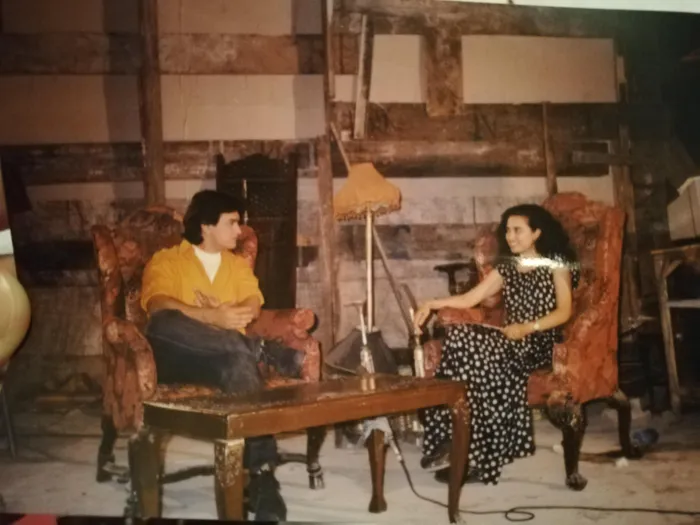
Mahomed doing an interview with Bollywood star, Aamir Khan, while presenting on TV Asia, a pioneering South Asian satellite channel in the UK, launched in 1992.
Image: Supplied
After almost a year of presenting, she returned to her studies.
She said after completing her Honours degree in Culture and Media studies at the then-University of Natal, she moved to London after acquiring a job with TV Asia, a pioneering South Asian satellite channel in the United Kingdom (UK), in 1992. The station was started by legendary Bollywood star, Amitabh Bachchan in that same year.
“Working for the channel was a great experience, and it reached all of Europe. I worked with many international artists. I read the news and co-presented a magazine programme.
“I also produced and presented a series on Bollywood, which I shot in Mumbai. I interviewed many stars and featured each in a separate episode, together with footage of them shooting for their movies,” she said.
Mahomed returned to South Africa in 1995.
“My mother became ill, so I decided to come home.”
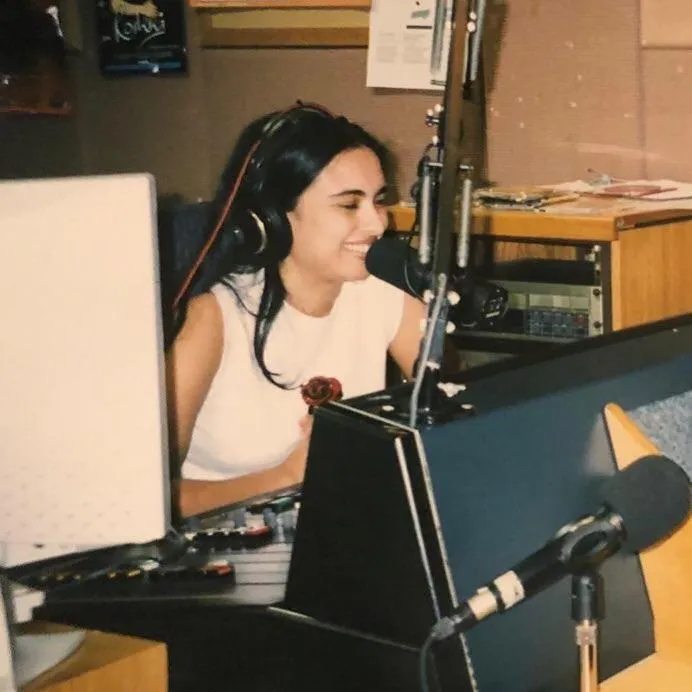
Mahomed on air during her early years at Lotus FM.
Image: Supplied
Upon her return, she produced inserts for Good Morning South Africa, an SABC morning magazine TV show.
Mahomed said it was also during this period that there was change happening in South Africa.
“It was in early 1995 and the SABC was following that change in a positive way to shed its apartheid image and become more democratic as a public broadcaster. They were introducing talk and current affair shows throughout the public broadcasting service radio stations, and Radio Lotus, which later changed to Lotus FM, was one of them.
“As a child I spent hours listening to Radio Lotus. It was something I grew up with in our home. I also thought how great it would be to work on radio because you can reach so many people. I also loved Indian music. There was a position for a current affairs presenter and producer, and a presenter for the Viewpoint talk show. I applied and was successful.
“I am often asked how I spent 30 years at the station, and I always say it was because it allowed me room for creativity and expression on a variety of platforms, including anchoring the primetime lunch show,” she said.
She later started the station’s radio drama department, which she headed from 2006 to 2021.
“All of the SABC stations were starting radio dramas. I was asked to start the drama department because of my studies (speech and drama). It was an amazing experience even though it came with some challenges as it was all new to me. I had to learn to run a department, get writers and actors, and produce and direct the shows. At the time, we had an old drama studio and we were using reels. I used reels for a while until the studio became digitised.
“After 15 years in the department, I was promoted to senior producer of the portfolio of religion, language and drama, which was something I loved. I stayed in this position until I took an early retirement in December,” she said.
Mahomed added that during her time at Lotus FM, she also presented on Eastern Mosaic, which was the SABC's eastern programme. In addition, she wrote opinion pieces and Bollywood reviews for various publications, including the POST.
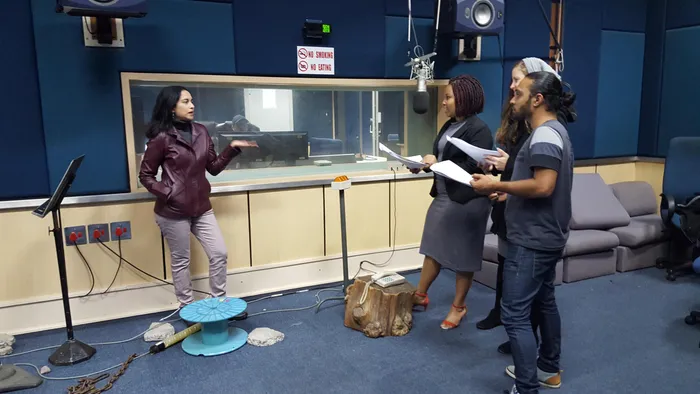
Mahomed headed the Lotus FM drama department for 15 years.
Image: Supplied
Among her highlights was interacting with the community.
“During my early years at the station, our listenership was high. We were at our peak and visible in the community. We had bhangra events every second or third week, drawing in crowds of between 20 000 and 30 000 people in KZN and Gauteng.
“The love that the station and I received was phenomenal. Just before I retired, I was interviewed on the Breakfast show and I received messages from so many people who still remembered all my shows and presenting from the past. It was the most rewarding experience knowing I positively impacted so many people's lives,” she said.
She also realised one of her dreams, which was to make her own movie, For Better For Worse, in which she played the lead role. It was released in 2010.
“I wanted to tell a story that was different. I started doing research on what would sell, and decided on a comedy, which, from an entertainment perspective, always works. However, it ended up being a romantic-comedy.
“In 2007, I started writing the script. However, the challenge was finding funding. It got to a point where I thought this movie was never going to be made if I didn't fund it myself, so that is what I did.
“In 2009, the Durban Film Festival asked for it to be included in their lineup, and that is also where the distributors go to choose films. Videovision, who were present, asked to distribute it, so I was fortunate. They took it over and then it was showcased in cinemas in 2010.
“However, the problem was that as soon as it went onto DVD, it was pirated and being sold at the Blue Lagoon. I didn't make any money, including my investment. It was later showcased on DStv. Everyone who watched said they loved it. The main thing was that I fulfilled my dream, but would have loved to have made a sequel,” she said.
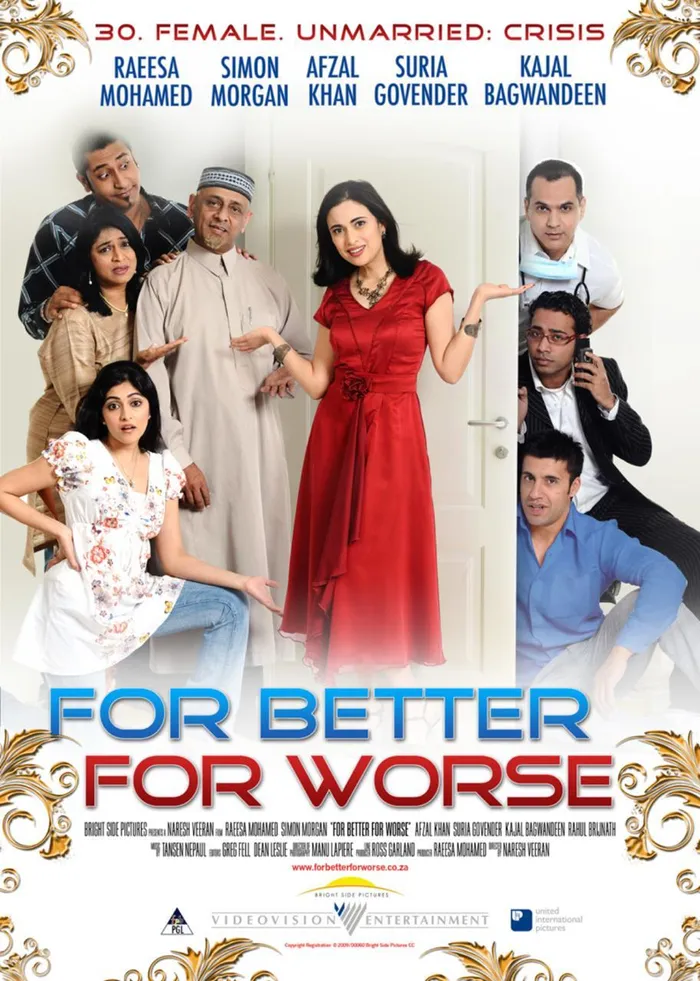
The movie, For Better For Worse, which she scripted and played the lead role.
Image: Supplied
Mahomed said she was now focused on her career as a transformational life coach.
“I have been doing coaching during my free time since 2016. It has been successful and rewarding. As a transformational life coach, your role is to help people become better versions of themselves, and to do that you have to first start with healing. You cannot move forward before you heal from past trauma, negative emotions and beliefs. My niches are depression and anxiety.
“Being a transformational life coach is a great responsibility as you deal with people’s lives and mental health. You have to be so careful and have respect for your client and handle them with care throughout the coaching process,” she said.
She now hopes to publish her first book.
“I started writing my book more than 20 years ago as I went through different phases in the broadcasting industry. Back then I could not find a publisher but I feel now, since I have made my exit from the broadcasting industry, it would be the best time to get it out there.
“Furthermore, the book is not just about me or my career, but a documentation of Indian broadcasting. I talk about TV, radio and film in South Africa as well as broadcasting in the UK, ” she said.
Mahomed, who has two daughters, Zahra, 27 and Amira, 20, said she always maintained a balanced lifestyle.
“It is important to create a balance between your career and personal life. I enjoy reading, travelling, spending time with my family and friends, watersports and playing tennis. I am also happy that I have more time now to do outreach work and give back to the community.
“Lastly, I must say that I am grateful to the Almighty for all that I have achieved as nothing is possible without Him,” she said.