
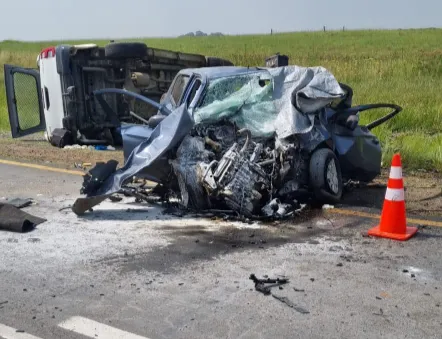
Transport Minister Barbara Creecy said human error, drink-driving and reckless behaviour were behind more than 1,400 road deaths over the festive season.
Image: Supplied
A policy-shift long overdue
Transport Minister Barbara Creecy’s announcement that she intended on amending the National Road Traffic Act to impose a zero-alcohol limit is not just another policy tweak from Pretoria. It is a long-overdue moral intervention. In a country bleeding quietly, steadily, and routinely from preventable road deaths, the current allowance for “a little drink” before driving has become an indefensible relic.
It belongs in the same museum as leaded petrol, indoor smoking and the idea that you can “just nurse one beer and be fine.”
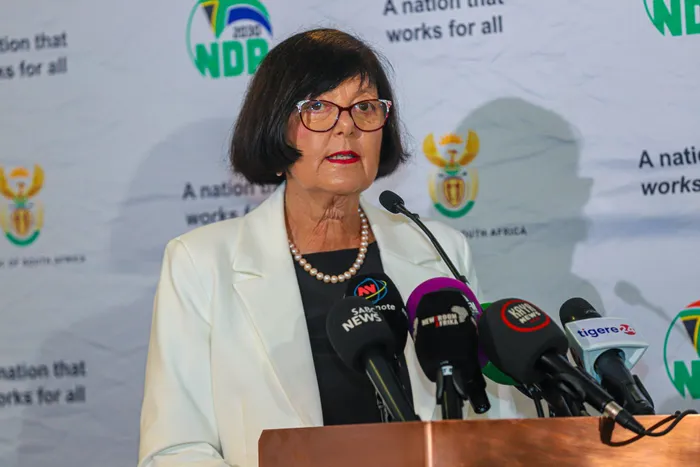
Transport Minister Barbara Creecy is set to amend road regulations to prohibit drinking alcoholic beverages while driving.
Image: Supplied
A nation still in crisis
The statistics released by Creecy are sobering, and not in the metaphorical sense. While a 5% decline in festive-season fatalities is welcome, the larger picture remains grim: 1 427 people killed and 8,561 drivers arrested for drunk driving, a 144% increase from the previous year.
That is not sudden moral collapse. It is simply the truth peeping out from behind a permissive law that has given South Africans the false comfort of thinking there is a safe way to mix alcohol and a two-ton weapon. If numbers could speak, they would sound like a traffic officer in Chatsworth on New Year’s Eve, shaking his head slowly and wondering why nobody ever listens. A culture of dangerous confusion one statistic leaps off the page.
A motorist in KwaZulu-Natal was found with a breath-alcohol reading 14 times over the legal limit. Fourteen times. That is not “I misjudged after a braai.”
That is not “the beer was stronger than I thought.”
That is “I should have Ubered, phoned my cousin, slept in the car, or reconsidered my life choices.”
Yet our current law encourages precisely this confusion. It creates a grey zone where
people play amateur chemist with their own blood-alcohol levels. Two beers? Three?
A tot? A tot poured by who? A Durban tot, it must be said, is not the same as a tot in
Sandton. In our homes, we understand there is no grey zone.
You cannot have “just a little curry leaf” in breyani.
You either put it in or you don’t. You cannot have “one leg out” of the house when your mother says be home by eight. And you certainly cannot tell your aunty at a funeral that you only cried a bit. The rule has always been simple: if you do something, you do it properly. Which is why the rule for driving should be equally clear. If you drive, you do not drink.
The minister’s moral appeal
Creecy’s frustration has the weary ring of someone who has seen too many families shattered. “I have never understood this,” she said. “I cannot explain this to anyone who has lost their parents, a brother, a sister, or a child.”
She is right. Try explaining to a grieving mother that the law allowed the driver to be “a little drunk.” There is no comforting footnote to that sentence. The current limit does not protect people. It negotiates with death.
The human stories behind the statistics
Literature has warned us for years. In The Great Gatsby, a drunken drive triggers tragedy. In Durban, we do not need novels. We have headlines. Every December, the same photographs, the same roadside debris, the same questions asked too late. Nearly half of South Africa’s road fatalities are pedestrians. These are not reckless thrill-seekers. They are the factory workers waiting for the taxi at dusk. The domestic workers walking to the bus stop. The people simply going to the shop, or home.
Learning from global successes
Other countries have already made up their minds. Sweden, Norway and Russia enforce a 0.02% BAC, which is effectively zero tolerance. Sweden’s “Vision Zero” philosophy treats road deaths not as inevitable, but as preventable failures. As a result, they have some of the lowest fatality rates in the world.
Brazil, Uruguay and Saudi Arabia go further, enforcing outright bans on drinking and driving. The World Health Organization confirms that reducing the legal limit from 0.05% to 0.02% or lower cuts alcohol-related road deaths by at least 10%. In South Africa, that would mean thousands of people still alive to argue about politics, complain about Eskom, and attend too many family weddings.
Dismantling the Counterarguments Critics cry “nanny state”. They worry about the hospitality industry. This argument always surfaces somewhere between the bar counter and the cash register. But protecting life is not government overreach. It is government duty. The economic cost of road crashes runs into tens of billions annually. That figure does not include the uncosted grief, the empty chairs at Sunday lunch, or the WhatsApp messages that stop forever.
Bars will survive. Breweries will survive. What does not survive is the pedestrian walking home at 9pm, which Creecy rightly identified as the most dangerous hour on our roads. Clarity, Enforcement and the Road to 2030
Amending Section 65 to impose a zero-alcohol limit removes ambiguity. Drivers will know the rule. For this to work, traffic officers must enforce it without debate, and without exception. A zero-tolerance policy on drink-driving must be matched by a zero-corruption policy in its application. This clarity is the indispensable first step to move the country closer to Creecy’s goal of halving road deaths by 2030. Targets are not met with half-measures. They are met with resolve.
The future demands zero
This policy is not about punishment. It is about protection. It honours those already lost and shields those still walking, driving and cycling on our roads. It finally dismantles the deadliest South African phrase of all: “I only had one.”
The road ahead is clear.
Zero alcohol.
Zero ambiguity.
Zero excuses.
South Africans, practical people when the rule is simple, deserve nothing less.
Jerald Vedan
Image: Supplied
Jerald Vedan is an attorney, community leader, and social commentator based in KwaZulu-Natal.
** The views expressed do not necessarily reflect the views of IOL or Independent Media