

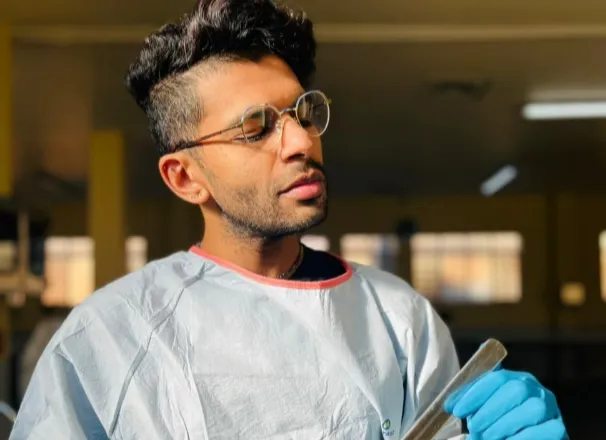
Dr Yaseen Bismilla.
Image: Supplied
Dr Yaseen Bismilla, one of South Africa's few specialist forensic pathologists, has transformed from a child who feared death to a TikTok sensation with nearly 200 000 followers. Through his quirky yet informative videos, he's breaking taboos around death while advocating for justice and giving a voice to those who no longer have one.
SPECIALIST forensic pathologist, Dr Yaseen Bismilla, quickly became a Tik Tok sensation, as he shared his daily life through his quirky, yet informative videos.
Bismilla, 34, who lives in Johannesburg, said he feared death as a child, and never imagined that he would be in his current job.
He is currently employed by Forensic Pathology Services, and based at a medico-legal mortuary in Pretoria West.
“Ironically, as a child, I was terrified of death. I could not walk past a cemetery without holding my breath, funerals unsettled me, and I feared silence and endings. Life, to me, was loud and colourful, and death felt like the ultimate interruption.
“If I had told my younger self that one day I would spend my life working with the dead, I would have laughed nervously, changed the subject, and probably run away,” he said.
Bismilla, who hails from Potchefstroom in the North West province, said his career was sparked by his biology teacher while in high school.
“It was there that a passionate biology teacher, Mrs De Vos, lit the spark that never went out. Science made sense to me, and anatomy fascinated me. I went on to achieve the highest mark in life sciences in the province. It was my first quiet ‘okay maybe this isn’t accidental’ moment.”
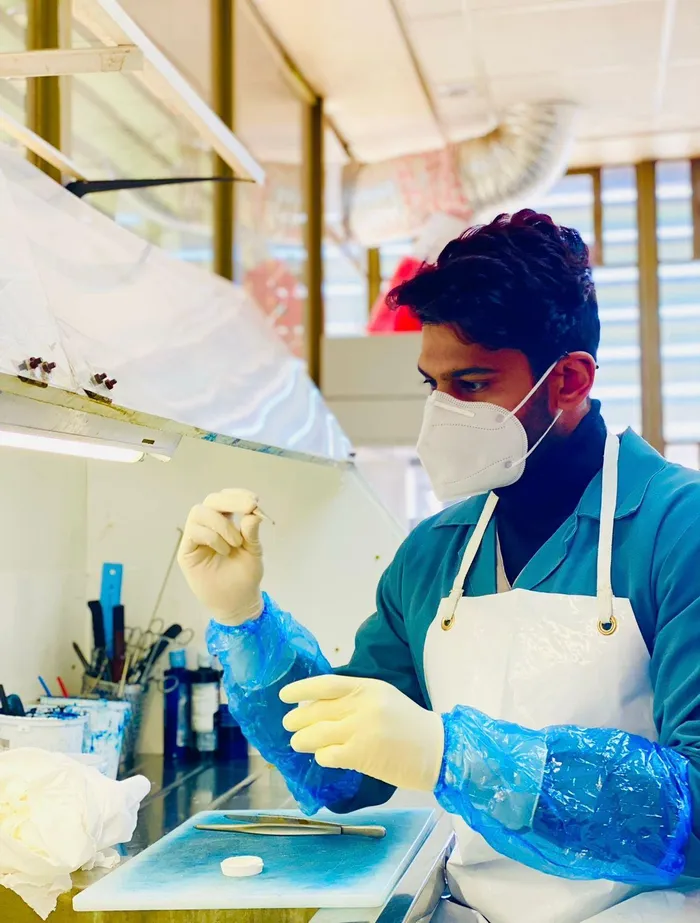
Dr Yaseen Bismilla.
Image: Supplied
Bismilla said he was accepted into medical school at the University of the Free State, which offered the MBChB degree over five years.
He described it as an intense, accelerated journey into medicine.
“Medical school was tough, but the internship humbled me, it broke me. Internship said, ‘You thought you were strong? Cute’.
“I completed my internship at Charlotte Maxeke Johannesburg Academic Hospital, one of the busiest trauma centres in the country. There were endless shifts, overflowing casualty units, and burnout dressed up as resilience. I watched medicine become transactional, rushed consultations, impossible workloads, and moral injury.
“I also realised something uncomfortable but important. I was not built for traditional clinical medicine. I cared deeply, maybe too deeply and the system left no space for that. So, the internship did not just exhaust me, it redirected me,” he said.
Bismilla said after completing his internship, he was placed “almost accidentally” at a Thuthuzela Crisis Centre in Pretoria for community service.
“In truth, I was unemployed for two months before securing the post, simply because no one wanted it. I arrived fearful, underprepared, and slightly dramatic. I left transformed. The rape centre exposed me to the rawest version of South Africa. Sexual violence, domestic abuse, child assault, and alcohol-fuelled brutality. It was confronting, but for the first time in my medical career, I felt useful.
"I was not just treating symptoms, I was documenting the truth. I was writing reports that mattered in court. I was standing right at the intersection of medicine and justice. For the first time, I believed justice could be served using my medical degree.
“I also noticed quickly that many doctors were not trained to examine and document injuries in a way that would survive legal scrutiny; that gap bothered me. So naturally, I filled it. I completed a postgraduate diploma in Clinical Forensic Medicine, a qualification held by only a handful of doctors in South Africa.
“Suddenly, my medical life looked very different, there were courtrooms instead of wards, prisons instead of clinics, and roadblocks drawing blood from suspected drunk drivers. I spent hours testifying under oath,” he said.
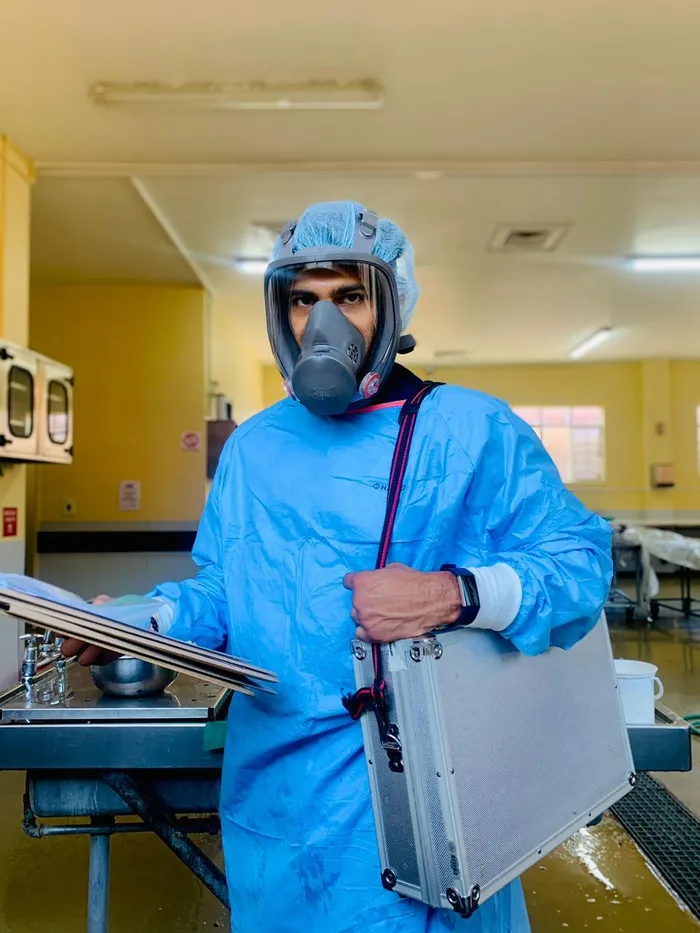
Dr Yaseen Bismilla.
Image: Supplied
Bismilla said along his journey, he was fortunate to be guided by mentors who saw something in him.
“They saw it long before I fully saw it in myself. Professor J Vellema, who was the head of forensic medicine at Wits University at the time, recognised my passion early on and encouraged me to pursue it academically. Her belief in me planted the seed that eventually led to my master’s degree. I completed my master’s degree, a ten-year study on femicides in South Africa, later published in a British journal. It was a full circle moment, taking me back to the violence that first changed me, now analysed through data, policy, and the cold truths written on bodies.
“My current head of department, Dr KK Hlaise, has been equally instrumental, teaching, mentoring, challenging, and trusting me every step of the way. He still insists I should do a PhD one day, and I still pretend I didn’t hear that part,” he said.
Bismilla, who specialised at Sefako Makgatho Health Sciences University, added that forensic pathology was not just another medical specialty, it is one of the rarest.
“Fewer than 80 specialist forensic pathologists serve a country of over 60 million people. We are elite not because we are better, but because the work demands precision, resilience, and a deep respect for life and death.”
Bismilla said today, his days were spent investigating unnatural and suspicious deaths.
“These include homicides, assaults, gunshots, motor vehicle accidents, poisonings, sudden unexplained deaths, and mass disasters. An average day sees each doctor handling between three and five bodies. We review police dockets, medical histories, and scene photographs before beginning. We conduct external and internal examinations, X-rays, evidence collection, and reconstruction. No two days are ever the same.”
Bismilla said through his journey thus far, there was one case that “changed him”.
“It involved a young woman whose injuries told a very different story to the one initially reported. The truth was not obvious at first glance, but it revealed itself slowly, layer by layer. By the time I testified in court, her voice was gone, but her body had spoken clearly. Justice followed. That was the moment I truly understood what it means to speak for the dead.”
Bismilla said healthcare often ended with death, however, in forensic pathology, that was where it began.
“This work changes you. You see society without filters. Gender-based violence cases, child homicides and LGBTQ+ hate crimes; these stay with you. I was unfortunately held at gunpoint during a house robbery a few years ago, an experience that landed me in a mental health facility for two weeks and stripped away any illusion of invincibility. It taught me how thin the line between life and death really is.
“Today, I cope intentionally, attend therapy, debrief, and lean on my partner, my family, and my colleagues. I also go home to what can only be described as a zoo, there are plants everywhere, two parrots, a hedgehog, three fish tanks, and a chinchilla. Life has to be loud when you work in silence,” he said.
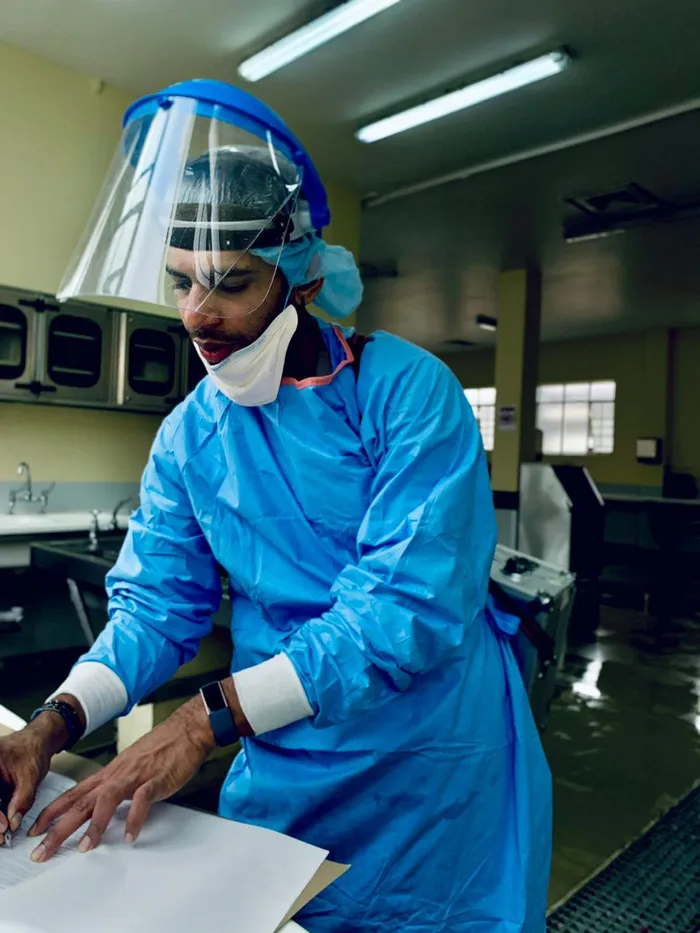
Dr Yaseen Bismilla.
Image: Supplied
Bismilla added that social media became an “unexpected form of therapy”.
“Not just for me, but for my team. What started as an educational TikTok account has grown into a community of nearly 200 000 followers in under a year. I explain causes of death, debunk myths, and sometimes joke, from banging on fridges to ‘wake up’ bodies, to the team doing dance trends in the mortuary.
“Some may say my videos are morbid, I say maybe, others say healing, absolutely. During mass disasters and particularly heavy periods at work, that shared humour and online support have helped boost morale and remind us we are human first.
“I also believe humour disarms fear, education empowers, and death, when handled with respect, teaches the living how to live better,” he said.
Bismilla added that he was living out his childhood dream.
“I dreamed of making a difference and giving back to people who needed it most. That dream never left me, it just found its way into medicine, justice, education, and advocacy.
“I started out terrified of death, but today, I work with it daily, not because I am numb, but because I understand it. Also, sometimes, the dead still have something very important to say, and I will keep listening. One of the greatest benefits of the job was being able to give a voice to those who no longer have one,” he said.