

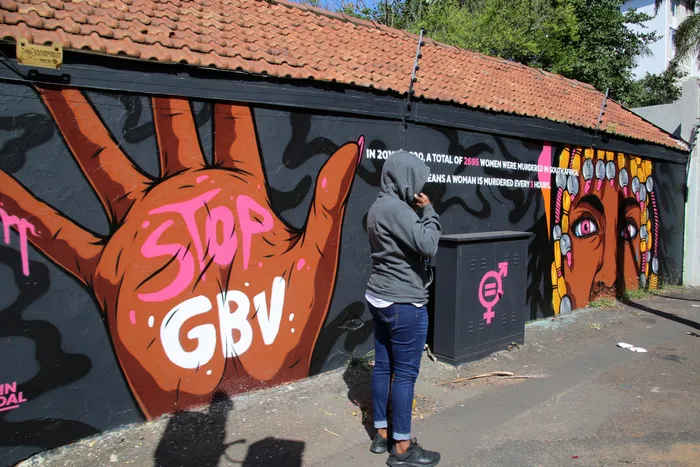
Despite GBVF being declared a national disaster, it remains a growing crisis.
Image: Tumi Pakkies/ Independent Newspapers
DESPITE government declaring gender-based violence and femicide (GBVF) a national disaster two months ago, frontline organisations report minimal impact on the ground with cases increasing in severity.
They said women and children continue to suffer without adequate protection, while support services remain chronically underfunded and overwhelmed
In November, President Cyril Ramaphosa declared GBVF a national disaster, under the Disaster Management Act, recognising it as a severe crisis requiring urgent, coordinated national action.
This also included the unlocking of resources, expanding support such as shelters and counselling, and mandating all government bodies to report on progress.
However, organisations on the ground have highlighted the reality of this crisis as dire, with many victims continuing to suffer in silence and without adequate protection or support.
REACTION
Adeshini Naicker, the director of Childline KwaZulu-Natal, said the declaration was an important step and showed that the government recognises the seriousness of violence against women and children.
She said while there have been policy commitments and increased public awareness since then, the impact at community level has been limited.
“Women and children are still experiencing high levels of violence, and the systems meant to protect them remain under-resourced and slow to respond. For many victims, especially children, help does not come quickly enough.”
Naicker said from December to date, the organisation has seen a noticeable increase in calls and reports related to child abuse, domestic violence, sexual abuse, and neglect.
“The festive season is traditionally a high-risk period for children. While final figures are still being confirmed, we have received hundreds of calls during this period, many of which required urgent intervention.”
Naicker said the cases they dealt with were often severe and traumatic.
“We have children reporting ongoing sexual abuse by someone known to them, often a family member. Children are also exposed to extreme domestic violence in the home, including cases where caregivers were seriously assaulted or killed by intimate partners. These cases have long-lasting emotional and psychological effects on children.”
Naicker said from the organisation’s experience, GBVF and child abuse remained “unacceptably high”.
“Whether the numbers are increasing or reporting has improved, the reality is that violence against women and children is still widespread and deeply entrenched in many communities.”
Naicker said there needed to be quicker and more effective protection for victims, stronger police action against perpetrators, and increased funding for prevention, counselling, and child protection services.
“To truly address GBVF and child abuse, frontline organisations must be better resourced, supported by government, and recognised as essential partners in protecting women and children.”
Pranashen Pillay, the director of Child Welfare Chatsworth, said the declaration was an important and necessary step, as it acknowledged the severity of violence affecting women and children in South Africa.
“However, from a frontline service delivery perspective, the tangible impact at community level has been limited. While there has been increased public awareness and policy discussion, organisations such as Child Welfare Chatsworth have not experienced a meaningful increase in resources, staffing or coordinated government support.
“In communities like Chatsworth, violence continues largely behind closed doors, with women and children bearing the greatest burden,” he said.
Pillay said between December and the current period, the organisation managed seven reported cases involving seven adult female victims and a total of 14 children.
“These cases primarily involved domestic violence, intimate partner abuse, and situations where children were either directly abused or exposed to ongoing violence in the home. This number does not include all investigations conducted, but specifically included cases where both elements of child abuse and GVBF were evident.”
Pillay said the cases they managed were severe and often involve complex trauma.
“In one case, a 19-year-old mother of three, was violently assaulted by her partner and subsequently forced out of the shared home. With no family support in the province and limited community-based resources available in Chatsworth, the children had to be placed in temporary care within the community, while the mother was admitted to a shelter. The emotional trauma, separation and disruption to the family unit will have long-term psychological consequences for both the mother and her children.”
Pillay said GBV and child abuse was worsening
“From our experience on the ground, these cases are not decreasing and, in many instances, appear to be escalating in both frequency and severity. Factors such as poverty, overcrowding, substance abuse, limited access to mental health services and social stressors significantly contribute to this trend, particularly during high-risk periods such as the festive season.”
Pillay added that the demand for welfare services far exceeds what organisations are currently resourced to provide.
“High population density, elevated incidence rates of violence, and limited funding opportunities place immense strain on NGOs, many of which are struggling to remain operational. This is further compounded during the festive period, when statutory stakeholders operate with reduced capacity, making it extremely difficult to meet legal and child protection prescripts regarding placements and court processes.
“To meaningfully address GBVF and child abuse, there must be sustained investment in welfare services, expanded shelter and placement options, stronger intersectoral coordination, and long-term funding commitments to NGOs. Without this support, vulnerable women and children will continue to fall through the cracks of an already overstretched system,” he said.
Aroona Chetty, the director of Phoenix Child Welfare, said they had 20 child abuse cases from December to date.
“Most of them were emotional abuse and circumstantial neglect. Many of the parents have mental health problems, battling drug addiction or unemployment, which leads to children being neglected and abused.”
Nadia Munsamy, centre manager for The Sahara Shelter for abused women and children, said while the declaration is acknowledged as an important symbolic step, meaningful impact on the ground remains limited.
The shelter is a project of the Phoenix Child Welfare.
“There has been increased public awareness, and some government interventions, such as the National Strategic Plan (NSP), specialised police units, and fast-tracked courts, but implementation remains
slow and inconsistent. So while the declaration signalled urgency, the lived reality for most women and children has not changed fast enough.”
Munsamy said they received over 30 calls relating to domestic violence and intimate partner abuse, and emergency shelter requests from December to date.
“We noted a visible spike between the festive season and mid-January, which is consistent with national trends.”
Munsamy said most of the cases they handle are high risk, involving imminent harm.
“A woman with one young child arrived at our shelter after surviving an assault by her partner who threatened to kill her if she left.”
Munsamy said based on their intake and conversations with partner organisations, the severity and frequency of cases continue to rise, especially intimate partner violence.
She added that there was a need for immediate action.
“There is a need for proper funding and expansion of shelters and safe houses, faster prosecution and mandatory sentencing for repeat offenders, and emergency protection for children, including temporary places of safety.
“Public education, while important, is not enough, survivors need systems that protect them the moment they reach out. Furthermore, declaring GBVF a national disaster was a crucial step, but survivors cannot live on declarations. They need protection, swift justice and properly funded support systems right now,” she said.
Daniel Chettiar, founder of the Rapid Response Team (RRT) North Coast, said while the declaration was welcomed, it was not enough to address the scourge of violence against women and children.
He said from December 25 to January they had 78 cases of GBV reported to them.
“On New Year’s Day alone we had 13 cases. In one case the woman was being beaten by her husband, and her child managed to get out of the house and run for help. In another case, a man threw a boiling hot pot of food at his wife.
“But, the challenge is the wait time for the police to respond. We arrived at the scene before them. More than an hour later, just as we were about to take the victim to the police station, they arrived, stating they didn’t have any available vehicles. So, while the declaration is a brilliant move, it can only work if the necessary people, such as the police, are given the resources,” he said.
Chettiar said GBV was escalating.
“The perpetrators have this mindset that nothing will happen to them because their partner either depends on them in situations where they are the breadwinner, or they won’t leave because of what society will think. So the abuse continues.
“However, my advice to women in abusive relationships is to get out; you can rebuild your life as there are organisations such as ours who will help you. In addition, families stop worrying about ‘what will the people say, my daughter is divorced’. It will be too late when you no longer have your daughter. We need to start changing mindsets, it is okay to walk away from a relationship, especially one where there is abuse.”
Dr Lubna Nadvi, a board member of the Advice Desk for the Abused, said: “Simply declaring GBVF a national disaster does not mean that the problem will automatically begin to resolve itself by just activating funding or other government level initiatives.”
She said there had to be a holistic short, medium and long term strategy put in place to address what was a scourge that had been around forever, but had in recent times become an epidemic.
“The process of responding to GBVF has to be dealt with like one deals with a public health crisis or building a house from scratch. One has to start off by ensuring that the basic foundational steps are in place such as the correct and appropriate education and information, as well as effective ways to disseminate and implement it.
“Just as the public health system encourages people to wash their hands to advance basic hygiene or ensure their children are vaccinated to prevent future illnesses, people have to be encouraged to treat the opposite gender with respect and dignity, and instil these values in their children from a young age,” she said.
Nadvi said there had to be greater communication between the government and organisations, who are first responders in cases of GBV.
“There needs to be communication in terms of what the organisations’ needs are such as funding, training, access to logistical, legal and technological support, among other things. Many first responder organisations battle to survive and function with virtually no funding and other forms of support.
“In addition, the recent efforts by government and other role players to implement the NSP and set up the National Council on GBVF has not brought about the desired outcomes or rather it is a case of slow implementation, while the cases of abuse, assault and femicide pile up.
There has to be a revised approach to dealing with GBVF issues as the traditional ones don't seem to be working,” she said.
Charlene Singh, the spokesperson for WomanPACT, said while the declaration was an important and symbolic step, the lived realities of women and children suggest that implementation has not yet matched the urgency of the crisis.
“There have been policy discussions, task teams, and increased awareness, however on the ground we are still seeing significant gaps in prevention, protection, and rapid response.
“Survivors continue to face delays in accessing justice, shelters remain under-resourced, and coordination between departments is often inconsistent. The declaration must translate into sustained action, funding, and accountability to be truly effective,” she said.
Singh said WomanPACT received a noticeable increase in reports, averaging multiple cases per week, particularly during the festive season and early January.
“These include disclosures of intimate partner violence, emotional and economic abuse, sexual violence, and cases involving children. While we may not be the first point of contact in every instance, many survivors reach out seeking guidance, referrals, counselling support, and safe pathways to report abuse.
“These cases also highlight how GBV and child abuse are not isolated incidents but patterns of violence that escalate when intervention is delayed,” she said.
Singh said immediate priorities to address GBV must include faster protection mechanisms for survivors, including safe shelter placement and emergency response; stronger enforcement of protection orders and swift consequences for perpetrators.
“There is also a need for increased funding for community-based organisations that are directly supporting survivors; trauma-informed training for police, social workers, and frontline responders, and continuous public education that addresses harmful social norms and encourages early reporting. In addition, ending GBVF requires a whole-of-society response; civil society cannot carry this burden alone.”