Six Nipah Virus deaths: could South Africa be at risk?
HIGH FATALITY RATE
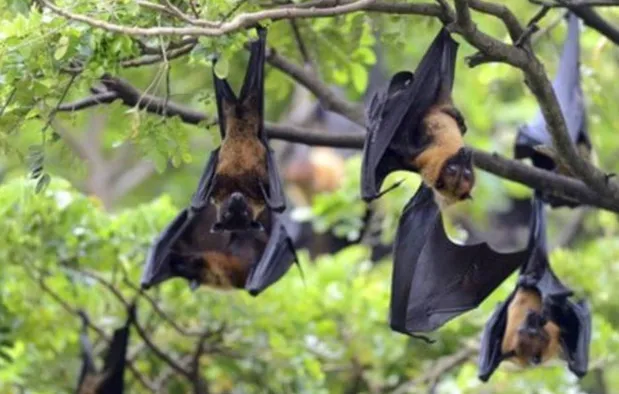
Nipah is a zoonotic disease that is primarily transmitted from bats to humans, either directly or through contaminated food.
Image: WHO
THE deadly Nipah virus has claimed six lives globally since 2025, prompting concerns about international spread. With its high fatality rate and simple transmission method, could South Africa be vulnerable?
As news of the deaths spread, anxiety followed close behind.
Could this deadly virus cross borders? Could it reach South African shores? And if it did, how prepared would the country be?
IOL spoke to health experts to cut through the fear and the facts, asking the question on many South Africans' minds: should they be worried?
Among them was Dr Angelique Coetzee, former chairperson of the South African Medical Association (Sama), who stressed that while the virus is dangerous, it remains far from becoming a local threat.
"NiV is a serious but currently highly localised viral infection that mainly occurs in parts of South and Southeast Asia.
"Particularly in Bangladesh and India."
She explained that the virus was zoonotic and linked mainly to fruit bats, sometimes spreading through infected pigs or contaminated food.
Coetzee said she understood why global health authorities remained on high alert.
"Health experts take it seriously because if you get it, the mortality rate is really high. There is no specific antiviral treatment or approved vaccines available," she said.
However, she emphasised that the virus did not spread easily between people, unlike Covid-19.
And for now, she said, it remained contained to specific regions like Bangladesh and India.
"South Africans should not be concerned at this point as there are no cases in the country."
Dr Jo Barnes, a renowned epidemiologist and retired senior lecturer from Stellenbosch University's Faculty of Medicine and Health Sciences, explained why the virus remains a distant threat rather than an imminent danger at home.
She pointed out that the virus depended on an animal host that did not naturally exist in South Africa.
"The natural host of the virus is the fruit bat (Pteropus spp) – also called flying foxes. These animals are not native to South Africa."
Barnes said this absence plays a critical role in limiting the virus’s ability to take hold locally.
While Nipah's high death rate makes it frightening, she cautioned against panic, stressing that it does not currently pose the kind of threat that would shut down the world.
"It does not seem as if Nipah virus at present has a large potential to become a global pandemic."
Department of Health spokesperson Foster Mohale said the situation was being closely watched but stressed that the country is not under threat.
"There is no immediate risk to South Africa and there is no need for public to panic."
Mohale said authorities are not taking chances, working hand in hand with disease experts as the outbreak unfolds abroad.
"The department is working closely with the National Institute for Communicable Diseases (NICD) which is closely monitoring the situation as the outbreak evolves and will keep the public informed of any new developments."
He added that international scientific advice confirms that drastic measures are unnecessary at this stage.
"The scientists have advised that at this stage there is a very low risk outside the affected countries and there is no need for screening at ports of entry."
While the deaths overseas have sparked fear and heartbreak, health officials say vigilance - not panic - is key.
The department has also reiterated basic safety advice for those who work closely with animals, urging the use of protective clothing when handling sick livestock or during slaughtering and culling procedures.