SIU welcomes tribunal ruling on R646 million irregular water contract in KZN
PROCUREMENT IRREGULARITIES
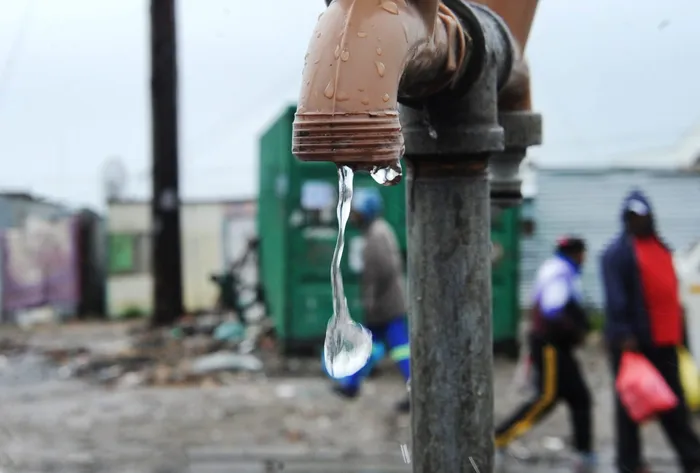
THE Special Investigating Unit has welcomed a Special Tribunal ruling that declared a R646 million KwaZulu-Natal water infrastructure contract unconstitutional due to procurement irregularities.
Image: Cindy Waxa
THE Special Investigating Unit has welcomed a Special Tribunal ruling that declared a R646 million KwaZulu-Natal water infrastructure contract unconstitutional due to procurement irregularities.
AECOM must now provide financial documentation as authorities seek to recover profits from the irregular contract that resulted in over R429 million in losses to the State
The contract, awarded to AECOM for the emergency upgrading of the Thukela–Goedertrouw Transfer Scheme, was intended to prevent the Richards Bay area from running out of water. But the project’s cost escalated from an initial R407 million to R646.5 million, resulting in irregular expenditure and significant losses to the State.
The Tribunal found that the procurement process violated Section 217 of the Constitution, which requires public procurement to be fair, equitable, transparent, competitive, and cost-effective.
According to the ruling, AECOM was not formally invited to participate in the closed tender process but was nevertheless included and ultimately appointed. The Bid Adjudication Committee did not support the recommendation to appoint the company, yet the Acting Director-General proceeded with the award.
The irregularities resulted in expenditure exceeding R357 million and losses totalling R429 million.
SIU spokesperson Kaizer Kganyago said the ruling reaffirmed accountability in public procurement.
“The Special Investigating Unit (SIU) welcomes the judgment handed down by the Special Tribunal, which declared the R646 million contract awarded to AECOM SA (Pty) Ltd for the emergency upgrading of the Thukela–Goedertrouw Transfer Scheme in KwaZulu-Natal, constitutionally invalid, reviewed and set aside,” Kganyago said.
An SIU investigation, supported by findings of the Department of Water and Sanitation’s Risk Management Committee, found that senior officials failed to discharge their legislative responsibilities.
Kganyago said Acting Director-General Sfiso Mkhize approved AECOM’s appointment despite “clear procedural irregularities and without proper adjudication”.
He said former Chief Director of Supply Chain Management Zandile Makhathini bypassed the competitive bidding system and submitted the request directly to the Acting Director-General, while Chief Financial Officer Mpho Mofokeng signed off on submissions despite being aware of irregularities.
The Chief Director of Strategic Asset Management and the Chief Financial Officer also failed to implement controls to prevent irregular expenditure, in contravention of Section 45 of the Public Finance Management Act.
“These failures directly contributed to unlawful procurement, irregular expenditure, and the undermining of constitutional procurement principles,” Kganyago said.
''The Tribunal ordered AECOM to, within 30 days, provide audited financial statements, invoices, and supporting documents relating to the R646 million contract. While the SIU must, within 60 days, determine the profits earned by AECOM and inform the company of the amount to be repaid.''
If AECOM fails to repay the determined profits, the matter may be re-enrolled before the Tribunal, Kganyago said.
The company was also ordered to pay the SIU’s legal costs, including the costs of two counsel. The Tribunal reserved jurisdiction to make further orders to ensure recovery and compliance.
Kganyago said the SIU was authorised under Proclamation R.28 of 2019 to investigate maladministration and irregularities linked to the project and to recover losses suffered by the State.
“The SIU remains committed to protecting public resources, advancing clean governance, and reinforcing constitutional values in the management of state contracts.
''The Tribunal’s ruling strengthens the principle of legality in public procurement and ensures that wrongdoing by officials and service providers does not go unchecked,” he said.