

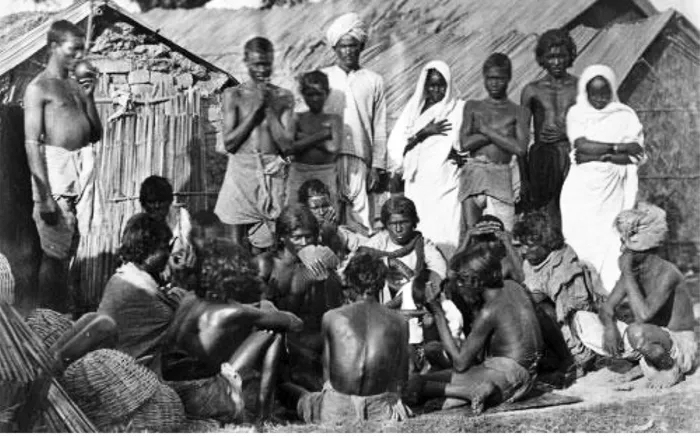
Recreational games were part of Sunday's break from the oppression of plantation work, 1897.
Image: 1860 Heritage Centre
IT IS NOT uncommon to see boys from diverse backgrounds playing thunee during break time across the many ex-model C schools in KwaZulu-Natal. These processes of acculturation with the game of thunee being absorbed as part of an evolving collective South African identity is cause for celebration.
Wikipedia lists the origins of thunnee as “Tani", after the Tamil word for water, as a popular trick-taking card game of the Jack-Nine family that originated in Durban. It is believed that there are variations of the game found in India and Mauritius.
Thunee is mostly confined to the former Indian townships, where it is popular as a family game, but to some extent it has spread to other South Africans and to Indians in other countries. The game was brought to South Africa by indentured labourers from India, specifically popularised among the Tamil community, often played during social gatherings and, traditionally, during Ammen prayers.
It is believed to have been adapted during the sea journey from Asia to Port Natal (Durban) or soon after arrival in the sugar cane fields. Card games may have been harmless recreation, but the 1885 Wragg Commission reported that dhakka was readily consumed by indentured workers.
In some instances, the Protector of Indian Immigrants was informed that some employers plied their workers with copious amounts of dhakka to create dependency and simultaneously increase their production levels on the plantations.