
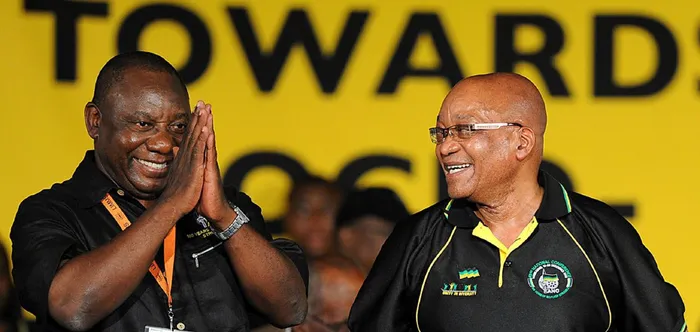
A detailed comparison between President Cyril Ramaphosa's 2026 State of the Nation Address and that of Jacob Zuma from a decade earlier reveals significant economic improvements despite ongoing challenges.
Image: Bongiwe Mchunu
A detailed comparison between President Cyril Ramaphosa's 2026 State of the Nation Address (Sona) and that of Jacob Zuma from a decade earlier reveals significant economic improvements despite ongoing challenges. From a stabilising economy to improved electricity supply, South Africa appears to have turned a corner – but how much credit can Ramaphosa truly claim?
THE balcony at the Cape Town City Hall is a popular tourist destination.
It was here that Nelson Mandela delivered his first speech as a free man. That was 36 years ago, a time when he was very much the man of the moment.
Back then Cyril Ramaphosa was the support act – holding the mic as Madiba addressed the gathering.
Since then, Ramaphosa has embarked on a long walk himself. It is one that has seen him become president. It’s not been an easy walk, with challenges including an inquiry into state capture, Covid-19 and the July 2021 riots.
How effective a president he has been remains a subject of debate. But if you compare his latest State of the Nation Address (Sona) with the one delivered 10 years ago by Jacob Zuma, one thing becomes clear: South Africa is in a far better place today than it was a decade ago.
Admittedly, not all of it has been Ramaphosa’s doing.
In 2016, the economy was starting to tank when former president Zuma took to the podium to deliver the Sona.
The International Monetary Fund and the World Bank had both predicated the economy would grow by less than 1% that year. As a result, there were fears that South Africa would need to borrow more money to make ends meet.
In his address, Zuma rightly pointed out a more ominous development.
“Our country seems to be at risk of losing its investment grade status from ratings agencies. If that happens, it will become more expensive for us to borrow money from abroad to finance our programmes of building a better life for all, especially the poor.”
Ten years later, Ramaphosa has every reason to be more optimistic.
The South African economy has shown four quarters of growth and is projected to grow at just under 2% this year. It’s an improvement although still not enough to create a substantial number of jobs. But that’s not all.
“Our credit rating has improved, interest rates are coming down, and inflation is at its lowest level in 20 years. We are on a clear path to stabilising our national debt,” said Ramaphosa.
He pointed out that the rand had strengthened against the dollar which had reduced the cost of borrowing money.
This is true, but only partially so. In 2016, the rand averaged R14.50 to the dollar. In the last few weeks, it has hovered around R16 to the dollar.
Furthermore, much of the rand’s strength has been the result of a weaker dollar – something US President Donald Trump favours.
Ramaphosa also pointed out that the Johannesburg Stock Exchange had performed exceptionally well over the past year.
True but, again, only partially. Once more Ramaphosa has Trump to thank. The American president has caused uncertainty which has spooked financial markets. Money is flowing into so-called safe havens like gold and platinum.
This has resulted in gold and platinum prices skyrocketing, which in turn, has caused mining shares to rise, lifting the overall bourse.
Ramaphosa’s government has done its bit. It has kept a tight rein on government spending and worked hard to get South Africa off the financial action task force grey list. As a result, international ratings agencies are a lot more optimistic about the country.
As Ramaphosa pointed out: “This growth reflects broader economic recovery, investor confidence and increasing interest in South African equities.”
There is also growing demand worldwide for many of the minerals South Africa has. However, little progress has been made in the last decade to create an environment that is conducive to investors wanting to do business here.
In 2016, Zuma said: “Compatriots, only a few years ago, our mining sector was in turmoil especially on the platinum belt. The situation has improved, and we commend business and labour for the progress made.”
But a decade later, there is no substantial investment in mining even though we have some of the largest reserves of critical minerals and rare earth minerals.
“Our ore reserves are valued at more than R40 trillion, making mining a sunrise industry,” said Ramaphosa in his 2026 address.
“After many years of declining investment in exploration, we are dedicating funds towards geological mapping and exploration to harness our critical mineral reserves.
“Confidence in the future of South African mining was very evident during the Mining Indaba this week here in Cape Town. New gold, copper, rare earths, platinum and coal mines are being opened.”
But to put things into perspective, despite the spike in the gold price, only one new mine has opened in South Africa in the last decade.
Broad-based black economic empowerment is one of many reasons why foreigners don’t want to invest in South Africa.
But the government is changing its approach. Recently it announced that black empowerment would not be necessary for exploration projects. There’s still a long way to go but it was a step, however small, in the right direction.
Electricity is another area where there has been improvement.
In 2016 and 2017, the lights stayed on. By 2018, the country recorded 15 days without electricity, and it got worse from there.
At the time, Eskom was still investing in Medupi and Kusile. In 2016, the electricity utility forked out R83 billion towards the two coal-powered stations.
These days, loadshedding seems to be a thing of the past and the focus is on generating cheaper energy.
“Now, with the far-reaching changes we are making to the sector and with our abundant solar and wind resources, we will be able to drive down the cost of electricity,” said Ramaphosa.
Water is the latest challenge to grip the country. But it was an issue that Zuma warned about a decade ago in his Sona address.
“The building of water infrastructure remains critical so that we can expand access to our people and industry.”
To help fix leaks, Zuma said the Department of Water and Sanitation had begun its programme of training 15 000 youngsters as artisans.
Clearly, the training never happened or those who were trained were never employed because there are now more leaking pipes than a decade ago.
But lessons were learnt and, according to Ramaphosa, those lessons will be implemented to overcome water-shedding.
Over the last decade, South Africa has started to win the war against HIV/AIDS. It comes despite the US reducing grants to the country.
In 2009, South Africa began a massive roll-out of HIV testing and treatment for 3.2 million people living with the virus.
In 2016, Zuma pointed out: “This has contributed immensely to healthier and longer lives for those infected.”
These days Ramaphosa imagines a country without Aids. And with improved medication like Lenacapavir, it is possible.
What’s also changed in the last 10 years is the mood in Parliament.
Under Zuma, Sonas were chaotic, and 2016 was no different.
That year, the EFF walked out of Parliament, chanting “Zupta must fall”. This was in reference to his alleged corrupt relationship with the Gupta family.
This year’s Sona was a more distinguished affair. It was the first full year that the Government of National Unity had been in place.
Even Julius Malema, the EFF leader, praised Ramaphosa’s decision to deploy the army to the ganglands in the Western Cape and Gauteng.
But perhaps what’s most telling about how South Africa’s fortunes have changed in the last 10 years is the closing lines of 2016 and 2026 address.
Zuma said: “Let us work together to turn the situation around. It can be done.”
Ramaphosa said: “We have indeed turned a corner. Now we must look ahead and move with speed.”
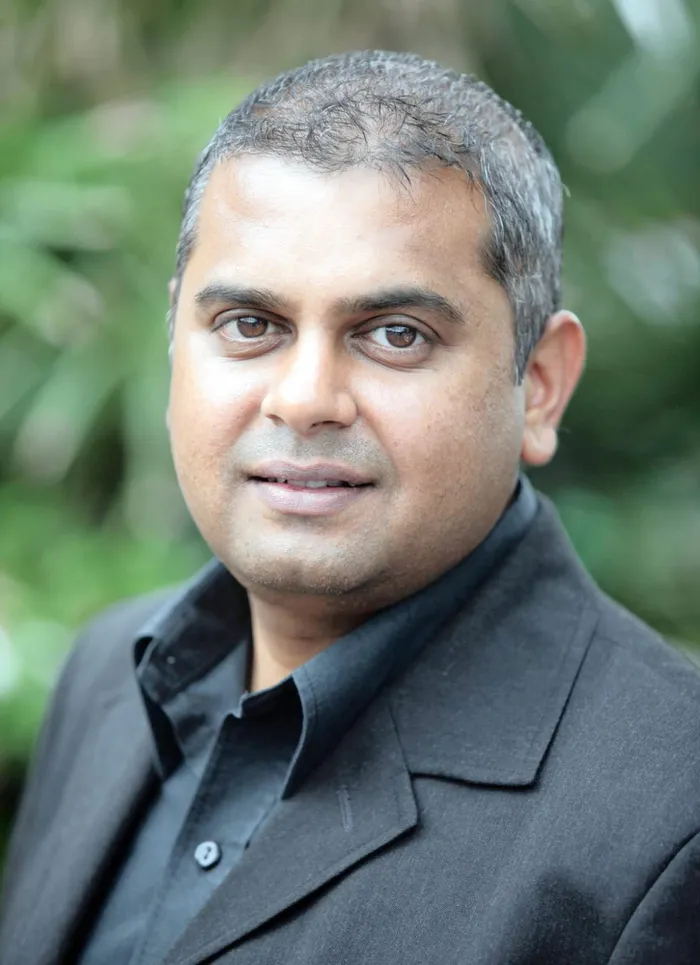
Aakash Bramdeo is the Content Editor at eNCA. File
Image: SUPPLIED
Aakash Bramdeo is the eNCA politics and business editor.
His views do not represent those of the POST or IOL. This opinion was first published by enca.com