Visually impaired resident wins Supreme Court battle over washing machine rights
LANDMARK RULING
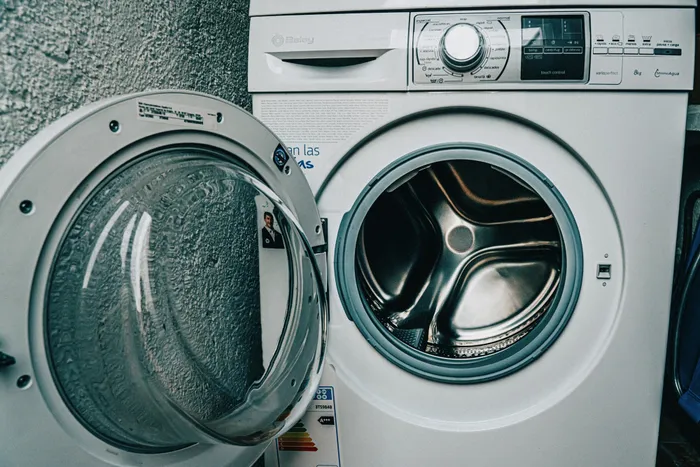
A blind resident turned to the SCA after the body corporate refused him permission to install his washing machine on communal property.
Image: File
AFTER years of struggle, a visually impaired resident has won his Supreme Court (SCA) appeal against his body corporate, securing the right to install a washing machine on communal property in his Johannesburg residential complex.
The landmark ruling highlights the importance of reasonable accommodation for people with disabilities in sectional title schemes.
The SCA last week found that the Park Avenue Body Corporate had to allow Melusi Ncala to install his washing machine on common property in light of his disability. He owns a ground floor unit in this sectional title block of flats. Shortly after he had moved in, he made modifications to cater for an outside washing machine to accommodate his safety in light of his disability.
But this was erected on the common property, along with other modifications, such as a roof over the washing machine and a security door leading to the communal washing area.
The body corporate said it had, on several occasions, told Ncala to take down these alterations because the washing area was not only his but communal property.
The body corporate eventually turned to the Community Schemes Ombud Service to try to resolve the issue. The adjudicator mostly found in favour of the body corporate and ordered Ncala to remove the washing machine and fittings.
Unhappy with this finding, Ncala turned to the High Court. He said when he bought the flat, the estate agent assured him the washing line area formed part of his section and that he could thus make alterations to it.
He explained that he could not erect his washing machine inside his unit, as he could not see if water was spilled onto the floor, which would render it dangerous for him.
It could also not be expected of him, Ncala said, to walk outside to the washing line while holding a bundle of wet washing. He said if the washing machine was installed outside, the danger of him slipping on a wet surface would greatly be reduced.
But the body corporate maintained that it was a sectional title scheme and that rules and regulations had to be followed for common areas.
Ncala claimed his disability was not being taken seriously enough by the body corporate. He said he asked for an exemption from the conduct rules on account of his visual impairment, but this was refused.
Eventually, the body corporate removed the gate and the plastic roof sheeting over his washing machine.
During the proceedings before the Ombud, the adjudicator found that the conduct rules were fair and that the body corporate was required to apply them fairly to all residents. Ncala was told to relocate his washing machine to the inside of his home.
He eventually turned to the High Court, where he also did not have much luck. This, in turn, caused him to appeal to the SCA.
The appeal court said the adjudicator ought to have assessed his complaints against the standard of substantive equality and not formal equality. She ought to have found that the body corporate’s conduct was unfair and that his complaint was well-founded, the SCA said.
It found that there are at least three provisions that permit relief appropriate to Ncala’s complaint. These include that if an owner reasonably requires exclusive use rights over a certain part of a common area, the adjudicator is empowered to issue a declarator to this effect.
The adjudicator could have directed that the relevant common area outside his unit be used, with the necessary modifications, to reasonably accommodate Ncala’s reasonable needs, the SCA said.
It added that although one can sympathise with Ncala’s disability, ultimately leading to the financial loss he suffered as a result of the removal of the plastic sheeting cover and degradation of his washing machine over time, his request for restitution in this respect resides more appropriately within the arena of the equality court.
It declared that Ncala reasonably requires exclusive use rights of that portion of the common wall necessary for the installation of the washing machine. The body corporate is required to permit him to install, at his own cost, a washing machine in the common area adjacent to his flat, together with such covering necessary to protect the washing machine.