50 years of trade: elderly vendors fight for survival at Tongaat Morning Market
Tongaat Morning Market
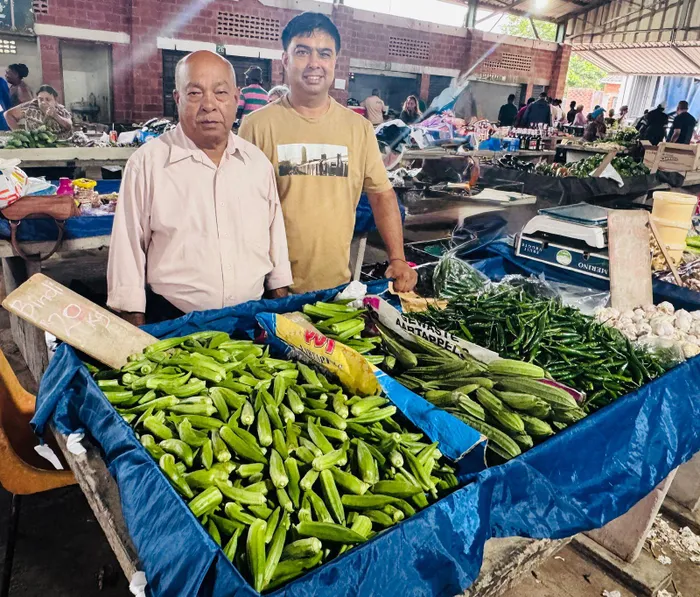
Kushial Mahadeo with his son, Hemendra.
Image: Monishka Govender
FOR more than half a century, the Tongaat Morning Market has been the cultural and economic heart of its community.
Now, as elderly vendors battle extreme weather, changing consumer habits, and economic hardship, they share their stories of resilience while facing an uncertain future for this once-thriving institution.
Kushial Mahadeo, 84, is among the market’s oldest traders. Originally born in Reservoir Hills and now living in Emona, he began selling at the Tongaat Morning Market in 1973.
“I am a vegetable farmer. I sell bhindi, green chillies and garlic,” he said.
“The market is no longer the way it used to be. A lot has changed especially with the age groups who now buy from us. The Covid-19 pandemic took away many elderly people who visited us regularly.”
Mahadeo believes the shift in customer demographics has dealt a heavy blow to traders.
“Business is difficult because the young generation do not like to visit the market nor eat vegetables.”
He grows his produce in Emona.
“To make sure our vegetables get sold, we take orders and deliver them directly to our customers' homes. Thankfully. we did not lose too much of our crop with the hot weather.”
Having grown up on a farm, Mahadeo said trading was all he had ever known.
“I have been working in this market since I was 10. This is my livelihood. I know nothing else and will only stop when I can no longer work,” he said.
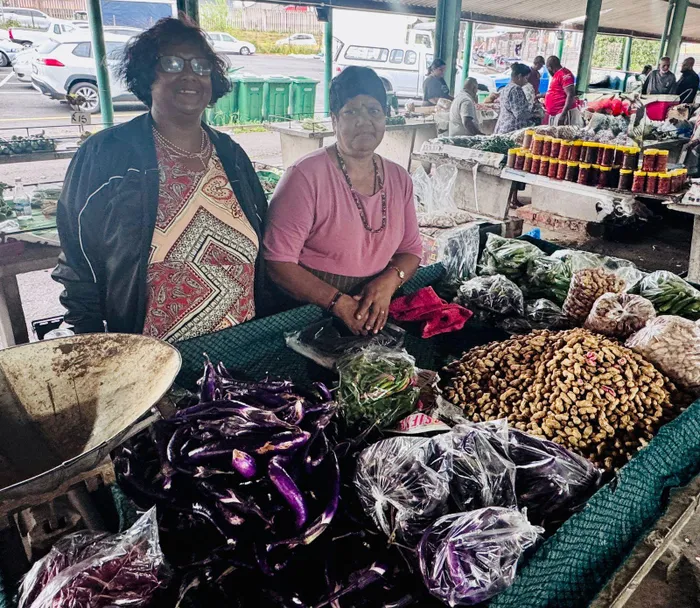
Anjalla Naicker with her niece, Premakamachi Moodley.
Image: Supplied
Anjalla Naicker, 71, from Frasers, has been selling at the market for three decades alongside her niece, Premakamachi Moodley, 48, from Stanger. Naicker started trading with her husband.
“I have been selling at this market for 30 years. We pay R176 a month for our stall. Sometimes, I do not even make that much in profit. The weather this year has been terrible. The vegetables are not doing well.”
Naicker sells green beans, brinjals and nuts, but does not have land to farm herself.
She said competition from supermarkets had intensified their struggles.
“There are not many customers who come to the market. They prefer buying from the supermarkets because of convenience.”
She said when her produce did not sell at the market, she took to the streets.
“I go door to door trying to sell them. I love working at the market and it is the only job I know.”
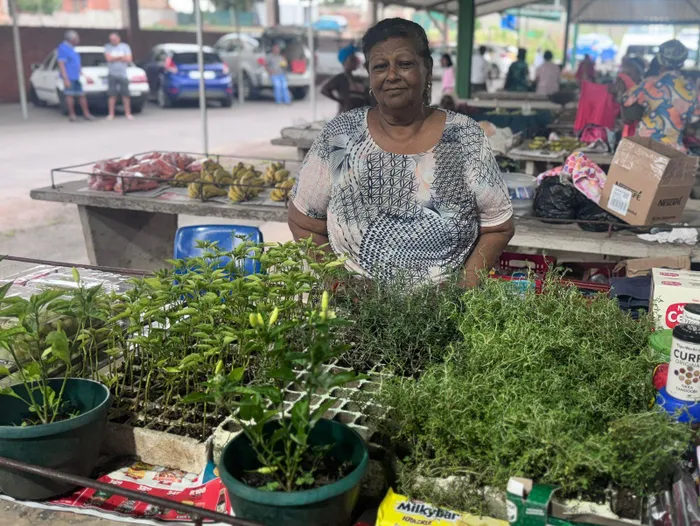
Ragini Harridass.
Image: Monishka Govender
Ragini Harridass, 64, from Sandfields, has built a 35-year livelihood selling seedlings. She supplies subsistence farmers with trays of thyme, onion and garlic seedlings, but the recent heatwave devastated her stock.
“Due to the heat, the seedlings have been dying. I lost quite a bit of my income due to the weather. I buy a tray of thyme is R240 and a tray of rosemary for R440, but I do not make the same money back.”
Harridass splits her weekends between Tongaat and the car boot market in Greyville.
“I sell here on Saturdays, and the car boot market in Greyville on Sundays. I am just trying to make ends meet,” she said.
She has also noticed a steady decline in customer numbers.
“The market's customers have regressed drastically. The economy is bad and the cost to grow seedlings is becoming higher. People also bargain with me which does not help because I end up not making a profit.”
As a single mother, Harridass credits the stall for helping her raise her children.
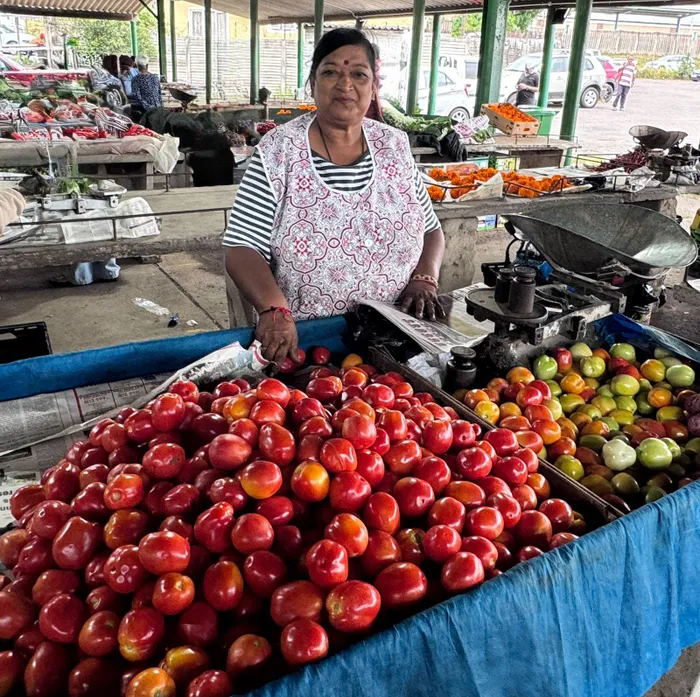
Radha Baijnath.
Image: Monishka Govender
For Radha Baijnath, 60, from Flamingo Heights, the market began as a survival strategy.
“I have been a stall holder for 26 years. I started when I was 34 years old after my husband got unemployed. We started selling pineapples and we continued,” she said.
Baijnath sells at the market on Saturdays, while her husband operates a gazebo stall at the Flamingo Fourways during the week. Though she remains passionate about her work, she said the pressures was mounting.
“Our difficulty recently has been the hot weather. We also find less people frequenting the market. We make money, but not enough to run our homes. We work seven days a week.
“This stall helped me educate my children. I just wish more people would visit us at the market. We sell the same fresh vegetables offered in supermarkets,” she said.
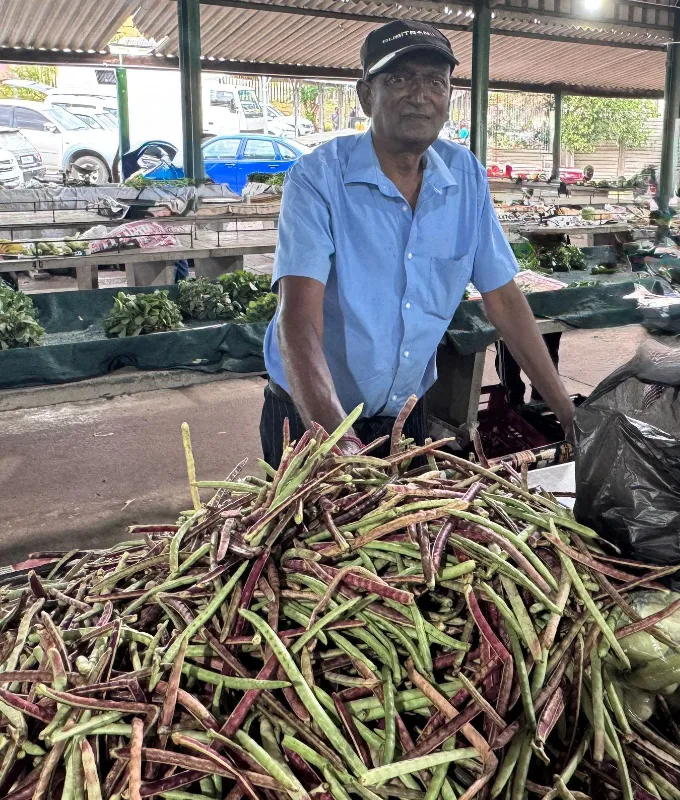
Pakiri ‘Sid’ Naidu.
Image: Monishka Govender
Pakiri "Sid" Naidu, 76, from Belvedere, began trading at 16, alongside his father. He once farmed in Glendale before land invasions disrupted operations.
“Our land was taken away so now I plant on vacant lands in Metcalf and Gandhinagar, with permission. Theft and weather remains the biggest issue for me.”
Naidu has been forced to reduce his stock due to slow sales.
“I used to bring a truckload of vegetables and sell everything by 11am, but now I bring less and still do not sell everything by closing time. I can sit the whole day and still have only a handful of customers.”
To avoid losses from spoilage, he lowers prices.
“Since the weather has been bad, we had to sell our vegetables cheaper just to get rid of it. It has been difficult with the slow traffic of customers.”
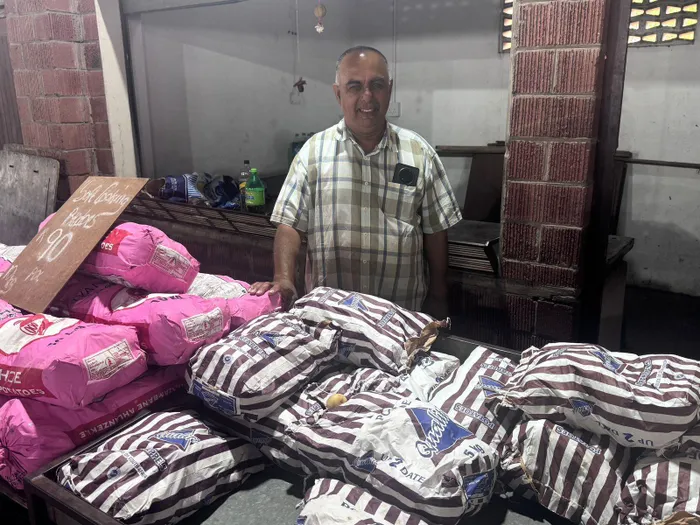
Dhunraj Mahadeo.
Image: Monishka Govender
Dhunraj Mahadeo, 58, also from Emona, has worked at the market for 45 years and farmed with his family for 55.
“We faced a loss of close to R90 000 with the weather and other factors like theft. It has been bad recently, but we still try to be here for our customers.”
He sells ginger, garlic and potatoes, but struggles to clear stock.
“We are not making enough money. We do not always sell everything we bring to the market. I still end up bringing back the potatoes which did not sell last week.”
Yet despite the hardship, he continues.
“I like working here and it has been my living for most of my life but the challenges make it upsetting to carry on. I think about leaving it all behind but what little we make, helps us survive,” said Dhunraj.