From father to son: the violent reality of farming in Shakaskraal and Tongaat
BLOOD AND SOIL
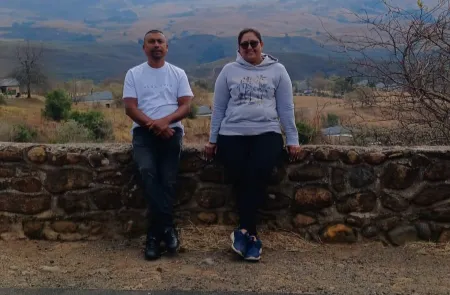
Rishen Naicker and his wife, Arisha, who also dedicated her life to their farm.
Image: Supplied
AFTER surviving seven bullets in an attack that killed his father, Rishen Naicker continues to farm in Tongaat despite relentless land invasions, violent crime and economic hardship.
His story reveals the harsh reality faced by small-scale farmers caught between their love for the land and the struggle to survive.
For Naicker, 47, a generational vegetable and sugar cane farmer in Tongaat and Shakaskraal, the land has become both a livelihood and battleground.
He said years of land invasions, crop destruction, violent crimes and mounting economic pressure had pushed his family and many other small-scale farmers to the brink of collapse.
He said 20 years ago he watched as his father, Kosie Naicker, gunned down on their farm.
“The criminals came in army clothes, like proper assassins. They came to kill my father ,” he said.
Naicker was 25 years old at the time, ran outside after hearing his mother scream. He was shot seven times while trying to reach her.
“They only stopped shooting when I fell. I survived, my father did not.”
He said this incident changed his family permanently.
“How do we ever forgive the brutality of this incident that took my father’s life?” he asked.
Naicker said although they owned property in more remote areas, he refused to relocate his wife and three children to isolated the farmland.
“It is too remote. The schools are far. And we have been through too much. It is not worth my family’s life.”
He said despite the tragedy he continued farming and tried to stay afloat despite theft, failed policing, extreme weather and collapsing market margins.
“In Shakaskraal, parts of our sugar cane plantation were destroyed by land invaders with an excavator. None of the Indians stay on the farms any more. It is so dangerous. This has been going on for two or three years. Unfortunately, we do not even get help from the police,” he said.
“The invaders just left patches of sugar cane to say, ‘Oh, we did not destroy all of your sugar cane.’ But they used heavy machinery and destroyed our cane. We had to go to the high court to challenge the land invasion. Who will compensate us now?”
Naicker claimed attempts to get assistance from local police had been frustrating.
“When we go to the police station we are told there are no available vehicles to go to the farm. By the time they eventually get there, the invaders are long gone,” he added.
Naicker also alleged collusion between local authorities and those occupying the farm lands illegally.
“It has been going on too long. We are at a point where we are fed up. It has become mundane, nothing has changed over the years.”
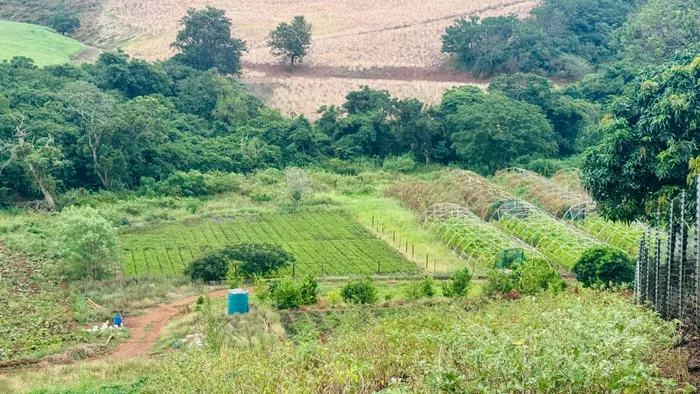
The Naicker's family farm in Tongaat.
Image: Monishka Govender
Today, the family focuses primarily on vegetables, supplying fresh produce to local markets and middlemen who distribute to retail chains. Their sugarcane is delivered to a regional mill.
But crime remains relentless.
“We pay to employ two guards at night. That is R10 000 a month just for night security. During the day, we pay someone to watch the farm as well. I do not have medical aid. But I have double electric fencing. That is where the money goes,” he said.
He added concrete had been laid along the farm's perimeter to prevent tunnelling.
“It cost us an arm and a leg. But without it, we could be dead.”
Beyond crime, climate change has added fresh strain.
“In the last four years we have had flooding, tornadoes, and now extreme heat. Our tunnels were crushed to the ground one year. This year it is hot. The leaves just curl in front of you.”
Watercress, one of their primary income crops, suffered heavily, he said.
The mint plants have burned and the constant raids by monkeys had forced them to harvest produce prematurely.
“The monkeys sit on the poles and bite the beans. If we leave it longer, we get nothing. So we sell it half-grown at half the price,” he said.
Despite increasing input costs, from labour to fertiliser to fuel, Naicker said their prices had barely changed in decades.
“In my father’s time, we sold three bunches of mint for R10. Today we still sell three bunches for R10. But bread is R20,” he said.
He detailed the economics of harvesting cabbage, from paying the labourers to cut and load and transport costs to market – only to sell it for as little as R5 or R6 per head.
“Sometimes we just break even to get our money back. The middleman can make R4 overnight. We wait three months.”
Labour regulations and minimum wage increases have also forced downsizing.
“We had over 30 workers. Now we keep 15 to 20 because that is all we can afford to employ. To stay within regulations, we had to let others go. How do they survive?”
The Covid-19 pandemic further eroded savings. With markets closed and movement restricted, farmers struggled to sell produce.
“We had no market. We had to get permission letters just to deliver stock. But our workers had no food. My mother cried for them. We used our savings to give them money and food parcels.”
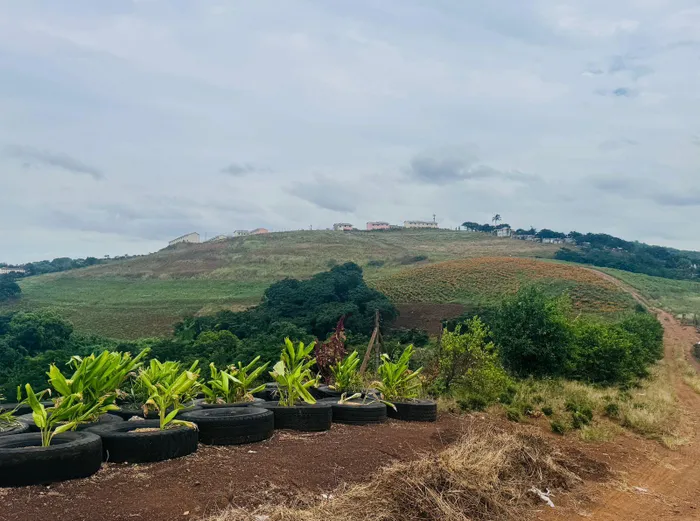
The Naicker's family farm in Tongaat.
Image: Monishka Govender
Those reserves, he said, have never been fully restored.
Naicker also believes that changing eating habits posed a quieter, but equally serious threat.
“Who eats vegetables today? People buy processed food, frozen packs and takeaway. The older customers who came to the markets passed away during Covid. The younger ones do not come.”
However, Naicker insisted farming was not a “miserable life” despite the challenges.
“It is a beautiful life. The freedom, the space, the freshness. I love waking up and going to the farm. If you put me in an office the whole day, I will not have that enthusiasm.”
He had once secured a job at a bank shortly before his father’s death.
“At that time, farming paid well. It built this house. It put my sister through university. Compared to a bank salary, it made sense. The difference now is the outcome.”
The couple’s three children attend government schools while medical aid remains unaffordable.
He admitted he pushed his children hard academically, hoping they would have options beyond farming.
“I go down on my knees and beg God not to give them this life. If it is written for them, we will guide them. But I pray for their safety and a better life.”
For Naicker, farming is not just about the money.
“What else do you do if you have loved farming your whole life? Sometimes it is not just about money. It is about who you are,” said Naicker.