
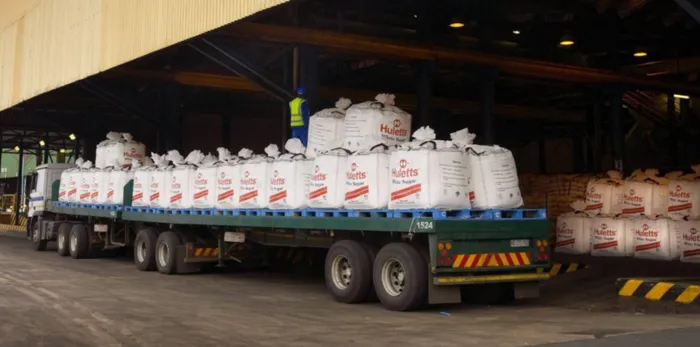
THE filing for provisional liquidation by Tongaat Hulett on February 12, marked the end of an era for a 134-year-old giant of the South African industry.
Image: Supplied
THE filing for provisional liquidation by Tongaat Hulett on February 12 marked the end of an era for a 134-year-old giant of the South African industry.
What began as a hopeful business rescue process in October 2022, has devolved into a legal and financial crisis, leaving the nation’s sugar sector on the brink of collapse.
The failure of the Vision Group’s rescue plan – triggered by an inability to secure funding from the Industrial Development Corporation (IDC) and a subsequent demand for immediate repayment of R11.7 billion – is not merely a corporate failure; it is a socio-economic disaster.
The aftermath of Tongaat Hulett's liquidation threatens the livelihoods of nearly a million people, including small-scale growers in rural KwaZulu-Natal and many others across the national economy.
For over three years, Tongaat Hulett has been grappling with the repercussions of significant accounting irregularities that wiped out R12 billion in shareholder value. The business rescue practitioners had pinned the company’s survival on the Vision Consortium.
However, their plan was contingent upon three critical conditions that were ultimately unmet.
First, the refinancing of the entity's debt obligations. The Vision Group failed to finalise an R2.3 billion funding arrangement with the IDC.
Second, the payment of statutory levies imposed by the Supreme Court of Appeal. A ruling in December 2025 mandated that Tongaat Hulett pay outstanding statutory levies to the South African Sugar Association (Sasa), creating a R517 million liability that the rescue plan had hoped to defer.
Third, creditor demands delivered the final blow to the company’s future. Following the expiration of the sale agreement on February 7, Vision demanded the immediate repayment of R11.7 billion in bank debt, effectively sealing the company's fate of insolvency.
The most immediate and intense impact is felt by the 27 000 small-scale farmers and 1 100 large-scale growers who supply Tongaat’s three primary mills: Maidstone, Amatikulu and Felixton.
Sugar cane is a unique commodity. It is perishable and must be milled within 48 hours of harvest to remain viable. If Tongaat’s mills cease operations, there is no alternative for this cane.
Other mills in the province are already operating at full capacity. If the liquidation proceeds, approximately four million tons of cane could risk rotting in the fields.
For small-scale farmers, a single uncrushed season is not just a setback; it can lead to bankruptcy. In the most recent season, small-scale farmers delivered over one million tons of cane, generating around R845.7 million in revenue. Liquidation would halt cash flow instantly, leaving farmers unable to pay workers, purchase fertiliser, or service their debts.
Tongaat Hulett serves as the economic anchor of northern KwaZulu-Natal. The "sugar economy" supports approximately one million livelihoods, including those of dependants and related services. Currently, 2 600 direct jobs at South African operations are under immediate threat, and up to 250 000 jobs in the broader cane-growing sector are destabilised.
This situation signals a significant shift in our socio-economic conditions, with 220 000 of these jobs concentrated in KwaZulu-Natal, a province still recovering from the 2021 unrest.
Tongaat accounts for 27% of South Africa's sugar production and 40% of its refining capacity. The company's potential liquidation threatens to create a "sugar desert" in rural areas.
Without the sugar mills, the local transport industry, including trucking and logistics, is likely to collapse, and the retail ecosystems that support farmworkers and mill employees will probably follow suit. At the national level, losing Tongaat’s refining capacity could lead to a reliance on expensive imports, which would worsen South Africa’s trade balance and food security.
Tongaat's refinery is a key source of white sugar. Its collapse, combined with a 155% spike in cheap imports as of December last year, leaves South Africa vulnerable to global price shocks.
The liquidation creates a "haircut" scenario for many, but it acts as a "guillotine" for some. The Vision Group, now a lead-secured lender, is attempting to seize the pledged assets, which include mills and land.
Their aim is to bypass the rescue plan and take direct control of the assets.
However, this legal process could take months of litigation, during which the assets will remain idle and likely deteriorate.
Small suppliers and local service providers are expected to receive only a fraction of what they are owed. Many of these are small- to medium-sized enterprises (SMEs) that lack the capital reserves to survive a total default by Tongaat.
The industry is highly interconnected – if Tongaat fails to pay its statutory levies imposed by the Sasa, the financial burden would shift to other millers and growers, potentially dragging the entire industry into a downward spiral of insolvency.
Beyond the spreadsheets, there is a high human cost to consider. In the "sugar belt", generations of families have worked the same land or in the same mills.
Towns such as Tongaat and KwaGingindlovu have thrived because of these mills. A permanent closure would result in a mass exodus of skilled labour, and an increase in local poverty and crime rates. Many small-scale farmers rely on their sugar revenue to fund their children's education and private health care.
Without this income, the social safety net in these regions would be stretched to its breaking point. For the16 000 grower enterprises that are the backbone of the industry, this situation is not merely a job loss, it represents the destruction of a legacy.
The only glimmer of hope lies in the potential for a "controlled and funded" liquidation.
If the court-appointed liquidators can secure interim funding to keep the mills operational through the current season, we may avoid the worst-case scenario of millions of tons of rotting sugar cane.
The decline of Tongaat Hulett serves as a cautionary tale about how failures in corporate governance can ultimately impact the most vulnerable members of society.
In the coming weeks, we will see whether the "sugar giant" can be dismantled in a manner that preserves the industry, or if it will drag the entire South African sugar sector down with it.
** The views expressed do not necessarily reflect the views of IOL or Independent Media.