

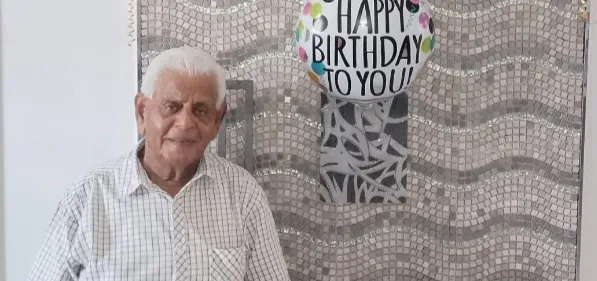
Dhunniram Moolchun celebrated his 99th birthday on February 1.
Image: Supplied
At 99 years old, Dhunniram Moolchun, affectionately known as “Babes”, stands as a testament to resilience, community service and the rich tapestry of South African history.
Born on February 1, 1927, Moolchun has been a driving force in education, and an active participant in community initiatives throughout his life.
Moolchun’s lineage traces back to indentured labourers from India. He was born and lived in a modest wood-and-iron house in Brickfield Road, Overport, before moving to his maternal grandmother’s farm in Springfield at 11 months old after his father’s death.
He fondly recalls his childhood filled with vegetable farming, outdoor play, and the continuous love and support from his family. His maternal uncles, in particular, stepped into a father role, and ensured he received an education.
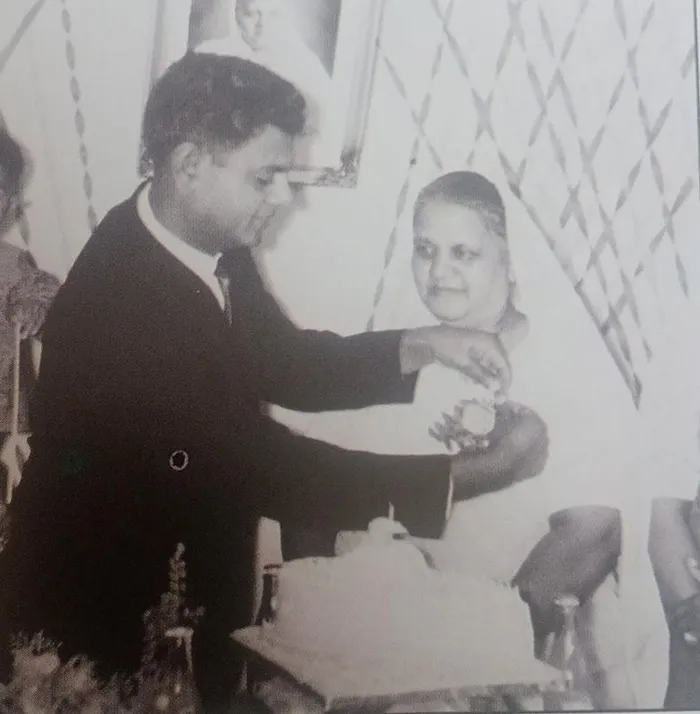
With his mother, Kabuthrie Moolchun, now late.
Image: Supplied
Moolchun, who is one of four children and the only son, said his father, Maniram Moolchun, worked in a printing press, and his mother, Kabuthrie, was a housewife.
He had a simple, yet exciting childhood.
“We spent our days watching our grandmother and mother working on the farm, planting and harvesting vegetables, which they took to the Early Morning Market in Durban central to sell. I played soccer and other games such as three-tins with the boys from the surrounding farms. We also swam in the Umgeni River.
“When my mother washed clothes in the river, I cooked along the river bank. I must have been about 10 years old. She told me to light the fire and prepare our meal for the day. I cooked a variety of curries using vegetables such as cabbage and brinjals from the farm,” he said.
Moolchun said his maternal uncles played a pivotal role in his life.
“My father died young, leaving my mother a widow at just 19 years old. But her brothers supported and guided us. They ensured I went to school and paid for my studies.”
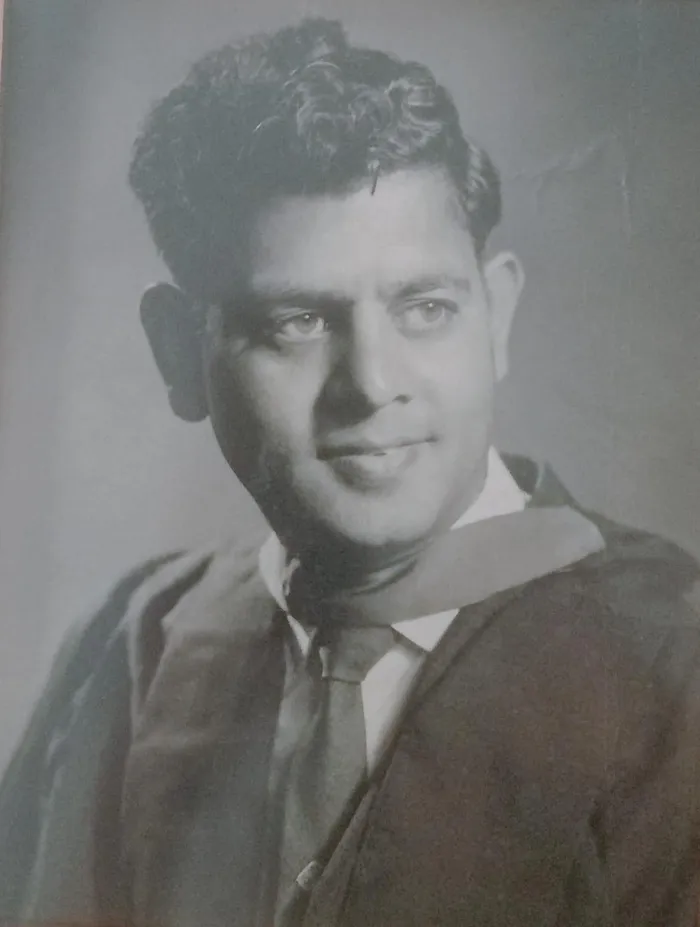
He graduated with a BA degree, majoring in geography and psychology at the then-University of Natal.
Image: Supplied
At the age of 6, he attended the Springfield Methodist Primary School, which a community organisation later bought and renamed Springfield Hindu Primary School in 1947.
He attended the school until Standard 6.
Moolchun enjoyed subjects such as arithmetic, geography and English, and was part of the soccer, cricket and athletics teams. He thereafter attended Sastri College.
“We walked from our home in Springfield to Morningside, caught the tram outside Mitchell Park to First Avenue, and then walked to school. It was quite a distance, but walking with my friends always made it fun.”
After matriculating in 1947, he completed a teaching diploma offered by the school.
“At the time, I wanted a diploma so I could get a job. Teaching was the quickest option, but it turned out to be one of the most enjoyable and fulfilling professions I could have chosen.”
While working, Moolchun completed a BA degree, majoring in geography and psychology at the then University of Natal.
He started his first job at the Natal Steam Primary School in Wesselsnek, situated between Ladysmith and Dundee, in 1950.
“It was a coal mining town. I taught Class 2 and later Standard 4, which was the highest standard the school offered. I enjoyed teaching, but the living conditions were not the best. I lived with two other teachers in a small room, and the toilet was outside. We also slept on grass mats.
“I approached the mine manager and asked for better accommodation, but he said there was nothing available. A week later, I went up to him again and stated that we could not live like this, and that all three of us would resign. At that time, there were just five teachers and the principal at the school. So, he agreed. They built us a three-bedroomed cottage with all of the facilities, including a toilet and bathroom inside,” he said.
After about two and a half years, he transferred to Verulam Methodist School where he taught Standard 4 pupils, and started a vegetable garden at the school.
“I don’t know why, but one day I decided to taste the free lunch that was being given to the children. It was tasteless and lacked nutrition. I told my class pupils that when they got home, they must find whatever garden tools, and bring them to school the next day.
“I asked the school management if I could use a piece of land to start a vegetable garden. The children and I planted and grew our own vegetables, which we then sold at one-third of the market price to the school to prepare the meals. With the first payment I received, I paid each child for their hard work. With the remainder, I hired a bus and took them for a picnic to the dam,” he said.
He worked at the school for three years and then taught at other schools before receiving a promotion.
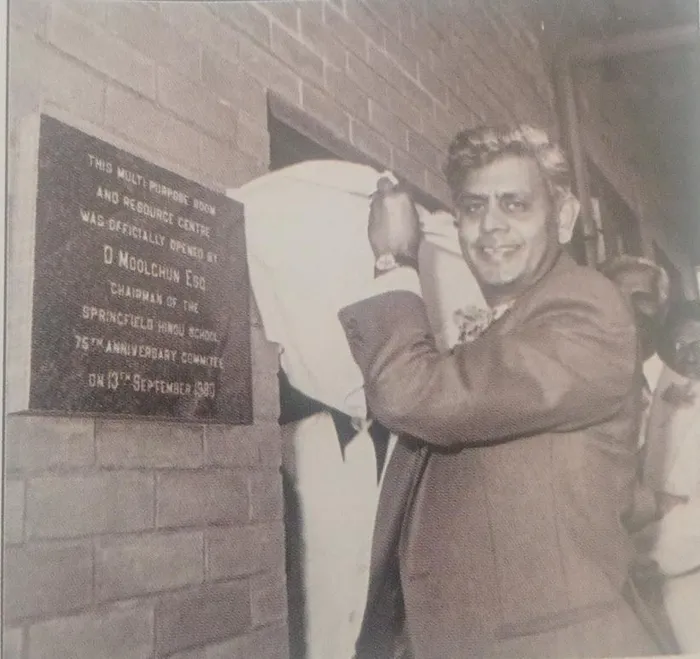
At the opening of the multipurpose and resource centre at Springfield Hindu Primary School.
Image: Supplied
Moolchun was appointed as the vice-principal of the then-Verulam Madressa School in 1962, a position he held for seven years.
He was thereafter promoted to senior vice-principal at Lakehaven Secondary School, and then deputy principal at Springfield Hindu Primary School where he was instrumental in building a multipurpose and resource centre.
“It was the school’s 85th anniversary and I managed to get a donation from a foundation, which was used to build the centre. It was quite a proud moment.”
He was thereafter appointed as the vice principal and was part of the opening of a new school, Nagari Pracharni Primary in Springfield, in 1981.
The following year, he was promoted to principal of Howick Primary.
In 1983, he was appointed principal and opened a new school, Eastview Primary, in Phoenix. He served at the school until his retirement in 1987.
Moolchun said there had been been many highlights in his career.
“One of my greatest achievements was making a difference in children's lives academically, and ensuring they had facilities such as halls and sports grounds. I also enjoyed introducing concerts and art exhibitions at the schools where the children showcased their talents.”
Moolchun served as a member and later the chairperson of the S Dass School board in Phoenix, which catered for children with special needs.
“A few months after retirement, I met the school principal who asked if I would be interested in being part of the board. I worked with the school throughout my career, assisting it in getting donations. So the school was close to my heart. While on the board, the principal and I raised funds to build a learning centre, known as the Pesco Hall, which provided skills training for children with special needs. The aim was to provide the pupils with some sort of further skills development after they finished school. I served on the board for 17 years.”
Moolchun was also a member of the Fellowship of Retired Teachers where he served as the secretary for two years.
"While there, I was approached to be a trustee of the Natal Indian School Building Society. During this time, I led initiatives to fund and build classrooms to eliminate the shortage and the platoon system.
“We also built a school in Reservoir Hills. However, when two other schools were built in the area, they took all of our pupils, leaving the school empty, and prone to vandalism. We decided to sell it and were paid over R1 million.”
He also revived the Sastri College Old Boys' Club of which he was a founding member. In 1980, he was involved in establishing the Sastri College Alumni Association, which included former boys and girls of the school.
In 2010, the money from the sale of the Reservoir Hills school (R1.2 million) was donated by the Natal Indian School Building Society to the association to establish a bursary fund project.
Moolchun is currently an executive board member of the association and a trustee of the bursary fund project.
“A bursary was initially given to only the top pupils, but most received funding for their further studies. We decided to assist one child each year who excelled, but lacked the financial means to continue their studies. We also funded a school hall and made other necessary upgrades.”
He said the late Ismail Chota Meer, an anti-apartheid activist, and founding member of the Sastri College Old Boys' Club, was instrumental in a park in Umbilo being declared as a heritage site.
He said what is known as the Resistance Park had now been left to deteriorate.
The park was officially opened by Nelson Mandela in May 2002, to honour the 1946 Passive Resistance movement which was instrumental in fighting apartheid.
The Passive Resistance Campaign was a response to laws such as the Asiatic Land Tenure and Indian Representation Act 1946 or “Ghetto Act”, which restricted the rights of Indian South Africans to own or occupy land, and offered limited, segregated political representation.
The act came into being on June 6, 1946, and the Natal Indian Congress declared June 13 as “Resistance Day”.
On June 13, 1946, about 25 000 protesters marched from “Red Square” to what is now the Resistance Park, in defiance of the legislation.
“In the early 2000, I was a member of the Liberation History Foundation, started by Meer, and the late Fatima Meer. The association later gave a R100 000 donation to Fatima Meer, which was used to develop this historical site. A monument and plaques were erected, and the area fenced. However, the council (eThekwini Municipality) owns the park, which has been neglected and overtaken by vagrants. We are looking for funding to revamp the park, including installing better security fencing, and the restoration of the existing monument.”
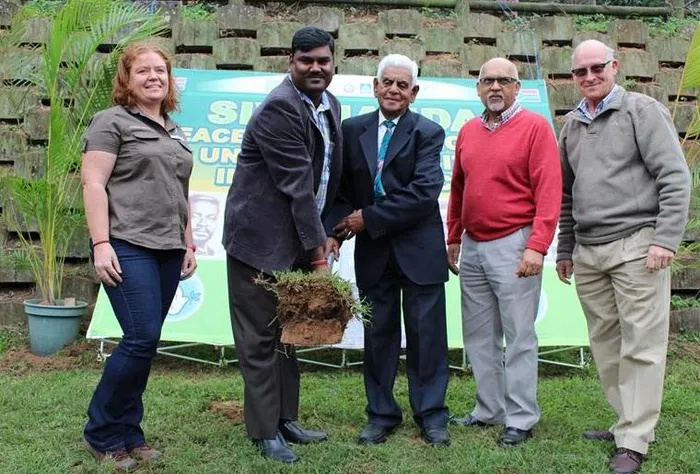
Moolchun, third from left, with Joanne Marais, Ishwar Ramlutchman, Dr Sanil Singh and Garth Kloppenborg at the sod turning ceremony of the Mitchell Park Environmental Education Centre.
Image: Supplied
Moolchun has served as trustee of the Mitchell Park Trust since 1998.
“I received a call from a trustee informing me that my name had been submitted to be a member of the trust. I did not know who submitted my name, even until today. However, before agreeing, I spoke to a relative about the offer. He advised me to accept because we suffered in that park, and I could make a difference there.
"The park was for white people during apartheid. There were benches just for whites, and the non-whites had only a few green benches. We had to sit in the sun. I was the only Indian trustee at the time.”
As a trustee, he was instrumental in securing funding for various initiatives, including establishing the environmental education centre.
“My wife (now late) and I went on a cruise, and met a young gentleman during dinner. We were discussing our work, and during the conversation I mentioned this initiative. I wanted to open this centre. He asked me how much I needed. I told him R100 000, not thinking what would happen after that.
“About a week later he called and asked for my banking details. I asked him why, and he said so I could build the centre. I was in shock, but happy. We built the centre, which opened in 2017. Thousands of pupils visit the park, and before they get a tour, we take them to the centre which has displays, models and educational material relating to the environment and conservation,” he said.
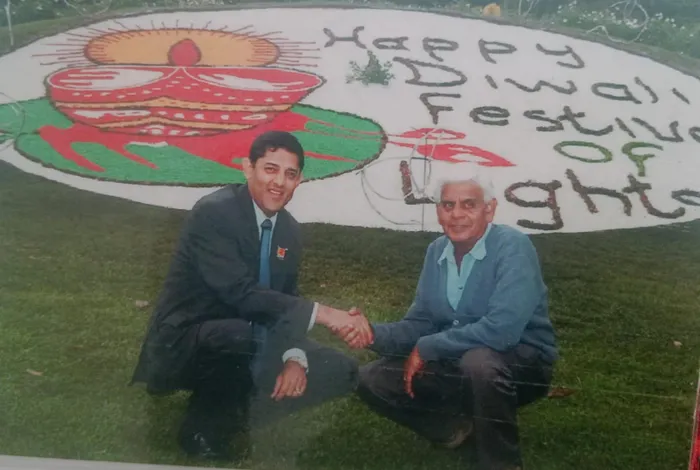
With Narend Singh, now Deputy Minister of Forestry, Fisheries and the Environment, at a Festival of Lights (Diwali) event at Mitchell Park.
Image: Supplied
He also founded the first multicultural social cohesion festival of lights (Diwali) event at the park.
“There were many objections at first as people thought we would use fireworks, but it was just a colourful lights display.”
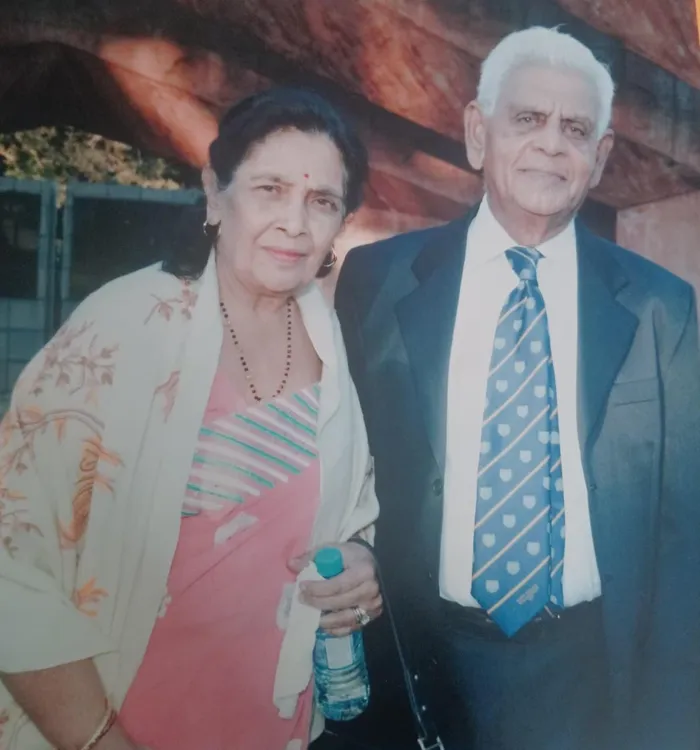
With his wife, Maltee Moolchun, now late.
Image: Supplied
Moolchun married Maltee on January 26, 1958. They were married for 66 years until she passed away at the age of 86 in February last year. The couple have three children: Shanil, 66; Arthi, 65; and Subash, 60, and five grandchildren.
He lives with Subash and his daughter-in-law, Eshni.
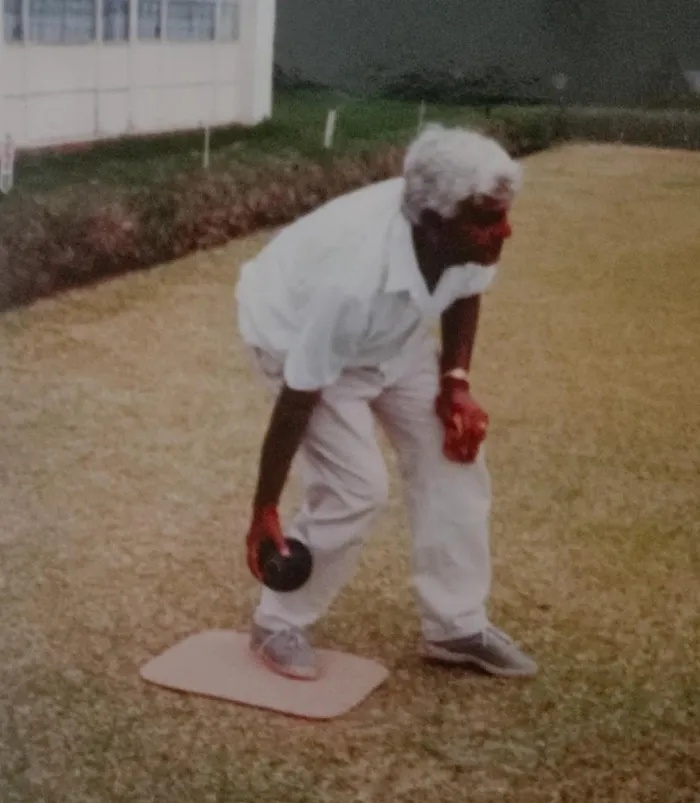
He enjoyed playing bowls, among other sports.
Image: Supplied
Moolchun attributes his longevity to leading a fulfilling and balanced lifestyle.
“I have always kept fit by playing sports such as soccer and tennis since a young age. I was also the president of a local football club, Pirates FC. As I got older, I participated in bowls and won many tournaments.
“I also enjoy travelling. My late wife and I visited the US, and several countries in Europe and Asia, among other places. My favourite destination was Tokyo, Japan, as it is one of the cleanest countries. We also went on many cruises. I believed in having my meals in moderation, and I still do,” he said.
Nowadays, he enjoys spending time with his family, attending social gatherings, walking, reading the newspaper, and watching sports on television.