

The Labour Court ruled in favour of an employee dismissed over a low alcohol reading. He claimed he simply drank an energy drink on his way to work.
Image: File
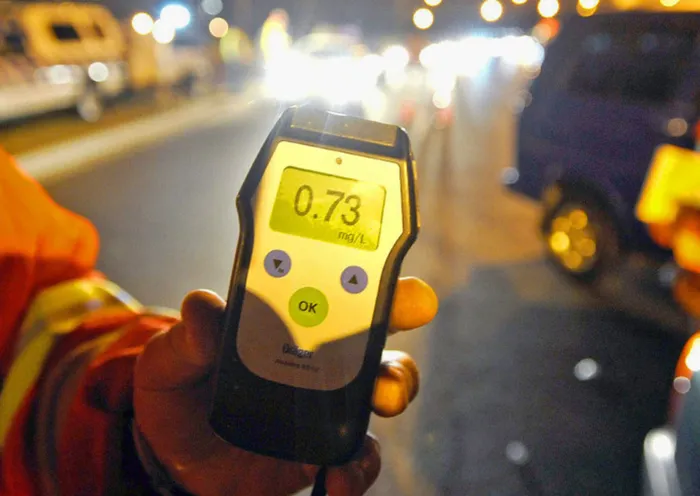
A WAREHOUSE operator who was fired after testing positive during an alcohol test conducted at work and subsequently fired, maintained that he had consumed a Bioplus energy drink on his way to work, while his employer said he smelt of alcohol.
Mike Mwale was employed with Cipla Distribution Gateway, which has a zero tolerance for the use of alcohol at work. He tested positive for alcohol following a breathalyser test, which recorded a reading of 0.019%.
Mwale was subsequently charged and dismissed for testing positive for alcohol/drugs or being in possession of alcohol during working hours or while on duty.
The CCMA earlier found that although the dismissal was procedurally fair, it was substantively unfair. The commissioner accordingly ordered the company to reinstate the employee with limited backpay.
Unhappy with this outcome, Cipla turned to the Western Cape Labour Court to have it overturned.
Mwale maintained from the start that he had consumed a Bioplus energy drink while on his way to work and said he had not drunk water afterwards. He said that this may have caused the positive reading. He, however, disputed the breathalyser result and said his employer ought to have advised him of his right to request confirmatory blood testing.
A human resources officer of Cipla testified that in terms of the zero-tolerance policy, where an employee disputes the outcome of a breathalyser test and requests further testing of blood, the company would make that option available and arrange for the necessary testing. She said this was not requested by Mwale.
The company’s case was that dismissal was warranted because the employee was on a final written warning for similar misconduct and that the warning had not expired at the time of the incident.
It was not disputed that on a previous occasion Mwale recorded a reading of 0.068% and admitted to having consumed alcohol into the early hours of the morning, before he came to work. A final written warning, valid for 12 months, was issued. The company relied on this warning in support of the sanction of dismissal.
It argued before the Labour Court that the CCMA was wrong in not enforcing the zero-tolerance rule of the company as a strict standard. The court had to determine whether the dismissal was fair in circumstances where the employee was not impaired, the breathalyser reading was very low and the employer failed to prove the accuracy of the calibration of the device used.
Fairness requires more, especially where the employer, as in this case, accepts that the employee exhibited no signs of intoxication or impairment and where the alcohol reading was notably low, and the employee’s explanation was known to the company from the outset, Judge Molatelo Makhura said. It requires that the employer establish, on reliable evidence, both the misconduct relied upon and that dismissal was an appropriate response to the alleged transgression.
Judge Makhura added that the commissioner during the CCMA proceedings assessed the company’s zero-tolerance policy against the facts and the overarching requirement of fairness.
“In circumstances where the employer failed to establish impairment, failed to lead reliable evidence confirming the breathalyser result, and failed to demonstrate that dismissal was a proportionate response to the misconduct proved, the conclusion that the dismissal was substantively unfair falls within the bounds of reasonableness,” he said in dismissing the review.