

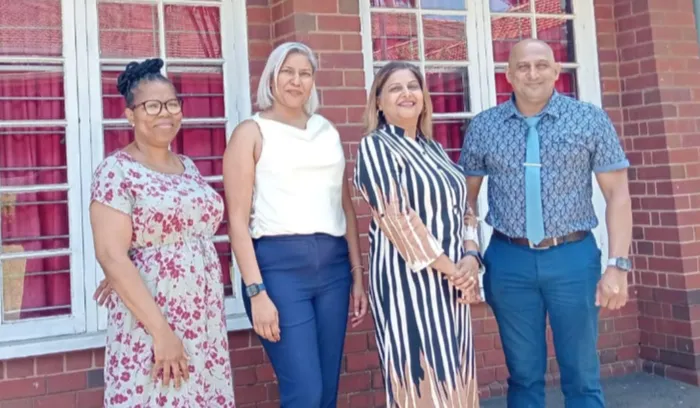
From left: Bongekile Gasa, deputy principal of the primary school division; Samantha Sayanna, principal; Zahira Abdulla, chief education therapist; and Nash Singh, deputy principal of the high school division; outside one of the four original classrooms.
Image: Supplied
AS OPEN Air School commemorated its 105th birthday this month, the institution reflected on its rich history of serving children with physical and medical challenges.
The school, which caters for about 260 pupils with physical and medical conditions from pre-primary to Grade 12, was opened by the then-Natal Education Department in February 1921.
Zahira Abdulla, the school's chief education therapist, shared the school's origins, successes, and challenges over the years.
With its aged infrastructure and growing needs of its pupils, the school now seeks the generosity of donors and sponsors.
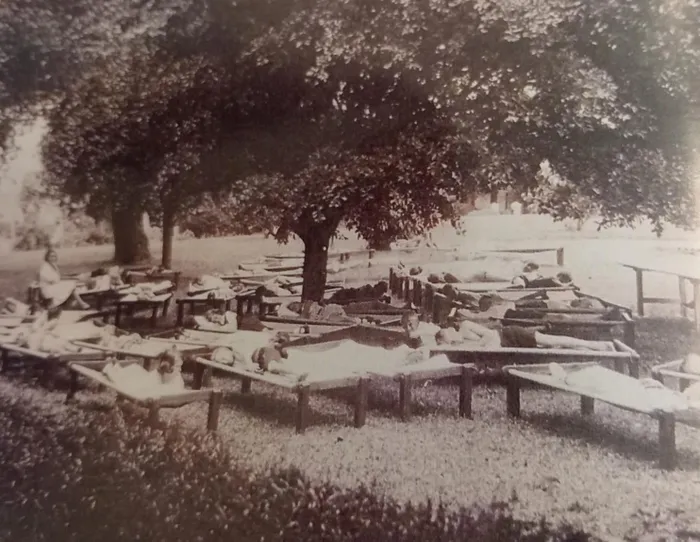
The school when it was first opened. Classes were held outside so children with respiratory conditions could be in the “open air” to heal, which led to the school’s name.
Image: Supplied
Abdulla said the school’s first headmistress hailed from Scotland.
“The education department, who were looking to start a school for children with special needs, had put out an advertisement, to which she responded. The school started with just two teachers and a handful of pupils with some form of medical condition.
“The school name originated from the manner in which the day was structured. Classes were mostly held outside because many pupils had respiratory conditions. They felt that a child being in the 'open air' would help facilitate their healing. They put stretchers outside for their lessons. Some of the classrooms did not have windows to allow for air circulation. Furthermore, the school started with just four classrooms."
Abdulla added that the school was initially only for white children, and was an Afrikaans medium school. However, around 1994 with the country’s transformation, black children and those with a range of disabilities were given admission.
She said while the school followed the mainstream curriculum as per the education department, including its matric pupils sitting for the National Senior Certificate examination, they also offered a technical occupational skills unit.
“This unit is for children who are not coping with the mainstream curriculum, and need some sort of skills training. This component is a new edition to our school. However, it is helping them to still be educated. Every child in the school has accommodations or concessions. We identify what may affect their ability to learn and to excel, and put support structures in place to assist them, this could be them requiring occupational therapy, speech therapy or physiotherapy, among others.
“In addition, at our school we have textbook cases of children; every medical condition you can think of. We also have children with physical disabilities, some who are born with them, and others who, for example, were caught in gang-fights and due to being shot suffered spinal cord injury and ended up in a wheelchair. We also have children who were diagnosed with cancer resulting in them losing an eye or limb. But through adversity, we are quite proud of pupils and our staff, as for a number of years, including in 2025, the school achieved a 100% matric pass rate."
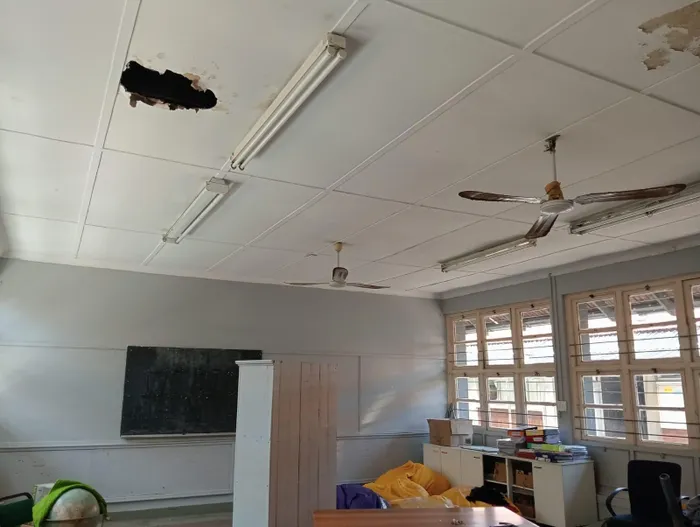
The ceiling of one of the classrooms in the school’s primary division that is in need of repairs.
Image: Nadia Khan
Abdulla said while they were grateful to their donors and for sponsorships, the school needed ongoing support due to its ageing infrastructure and need for ongoing maintenance.
“We have some amazing donors that do their best to help us as best as they can. But this is an old school, and one of the greatest challenges we are facing is a borer infestation. We have had some of the wooden windows replaced with aluminum, as well as changed the classroom doors. We also have a classroom that cannot be used due to the ceiling that needs to be repaired. But there is still more that needs to be done, and we just don’t have the funds.
“While we receive a subsidy from the education department, it is not enough. We are also a fee-paying school, but many of our pupils come from low-income homes. Therefore many receive concessions. The children collect grants, but most of the families must choose between paying the school fees or putting food on the table.
“We have tried fundraising events over the years, but it costs us more to organise these, and doesn’t generate the amount of money we need. However, one of our ongoing projects is 'back a child', where a person can help to pay towards the fees."
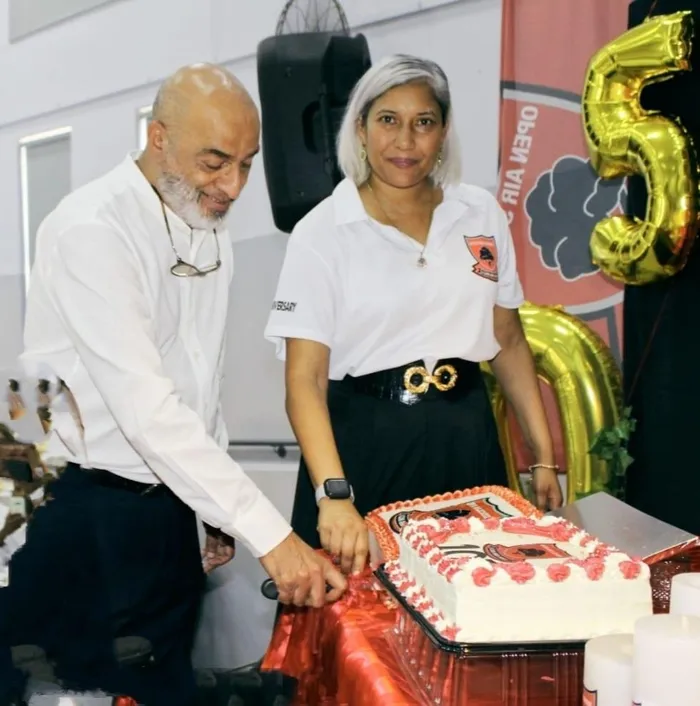
Donor, Ahmed Paruk, and principal, Samantha Sayanna, at the recent birthday celebration.
Image: Supplied
Abdulla said the school, which also runs a hostel facility, received a utility bill of between R40 000 and R60 000 per month.
“Ensuring that our utility bill, especially electricity, is paid is important as our pupils rely on it in class. We have pupils who rely on assistive devices such as laptops. We also have a hydrotherapy pool, which is used for pupils during physiotherapy who are not mobile when they are on land, but they are more buoyant. But we can't put them in a normal pool because it is too cold. Their muscles need warm water. The pools need to be heated overnight.”
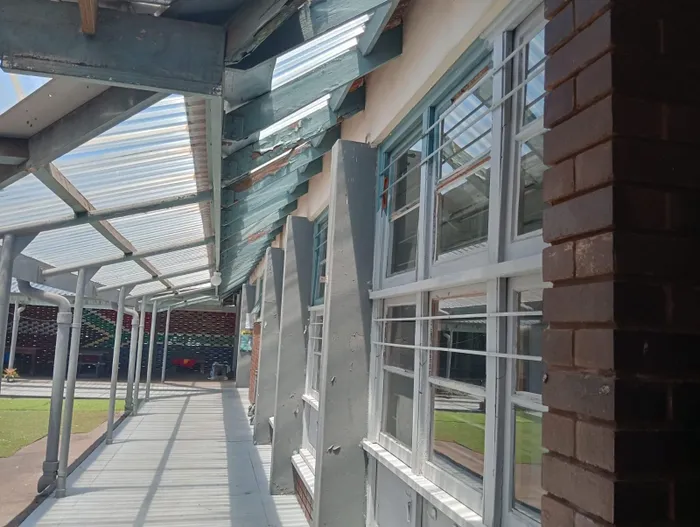
Some of the wooden windows that need to be replaced around the school.
Image: Nadia Khan
Abdulla said the school also paid out of its funds for additional staff.
“The education department has not provided us with some staff such as occupational therapists, or teachers' assistants. We have to bear these additional salaries. But they are not full-time. It is just a few times a week or month.
“Right now, we depend on the generosity of donors and the general public for assistance. They have been the greatest to our school and our children. Our only wish for more people to open their hearts and help us to better the lives of our children, who are already faced with many challenges,” she said.
For more information, call 031 205 1277.