

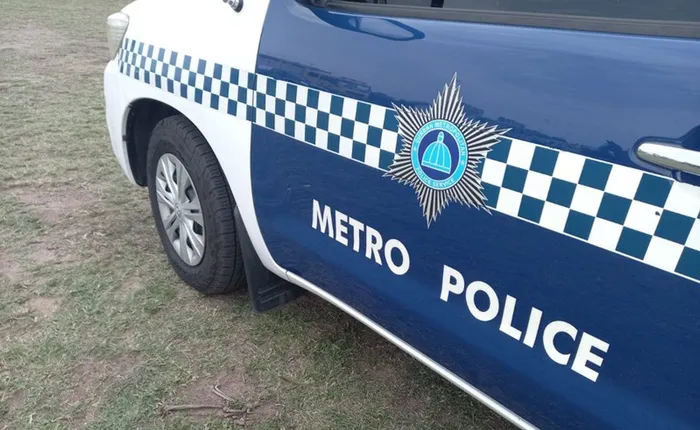
Concerns about the Durban metro police's ballooning overtime expenses of R109 million for the 2025/26 financial year were discussed at an eThekwini Finance Committee meeting.
Image: File
The Durban metro police's ballooning overtime expenses of R109 million could be resolved once additional officers are recruited.
The anticipated overspend was brought up in a council meeting on Thursday during the eThekwini Municipality Finance Committee's budget statement report ending January 31, 2026.
The metro police had an overtime budget of R82.6 million during the 2025/26 financial year. However, R109.5 million was spent.
The municipality stated that the unit had identified savings to partially fund the overtime. In the adjustment report, the council on Thursday approved that the Security Management Unit be allocated R26 million.
The other expenditure highlighted was for the Expanded Public Works Programme (EPWP), which had a budget of R8.5 million, but the spend was R65 million in the 2025/26 financial year. In its report, the municipality stated that an additional funding of R91 million would be effected during the adjustment budget in February 2026.
The overexpenditure for the metro police and the EPWP was expressed as a concern because the financial year was only coming to an end in a few months. On the issue of overtime for the metro police, the eThekwini council noted that some services were of an emergency nature and at times, expenditure was incurred.
The report stated that the expenditure for the above was being monitored monthly by the departments, as well as the executive management team (EMC).
During deliberations at the committee, councillors were concerned about the reported 17 days of cash on hand against the benchmark of one to three months, a submission made that the municipality was regressing, and that more work needed to be undertaken to salvage the situation.
“A request is being made for the cost containment strategies that were developed to improve the cashflow position to be within the required norms to be made available to the committee for oversight purposes,” the report stated.
The municipality was also concerned about the debtors’ book, which was increasing due to various factors, including unaffordability. Councillors stated that the relief programmes being provided by the municipality were not yielding the intended results.
“The municipality had to prioritise resolving customer queries and addressing incorrect billings before entering into payment agreements with consumers,” the report stated.
The municipality intends to provide more details at the next committee meeting regarding the debt dispute resolution mechanism, which will detail what is regarded as a dispute, the number of disputes received and resolved, the values involved, and the age analysis thereof.
The presentation will also entail the contact office for dispute resolutions and how the municipality manages the process of disputes for accountability purposes.
A close-out report on the recent Special Debt Relief Programme, inclusive of the impact on the debt reduction, will also be presented in March 2026.
Councillor Thabani Ndlovu, DA eThekwini whip of the Finance Committee, said that the municipality’s overall financial outlook was a concern, particularly the cash on hand.
Ndlovu advised that if urgent corrective measures are not implemented, eThekwini risked sliding further into financial instability, with devastating consequences for residents and businesses alike.
“This places the city in a dangerously vulnerable position, threatening its ability to meet operational obligations, pay service providers on time, and maintain essential service delivery. Residents are already experiencing service delivery failures, and a deteriorating cash position will only deepen this crisis,” he said.