

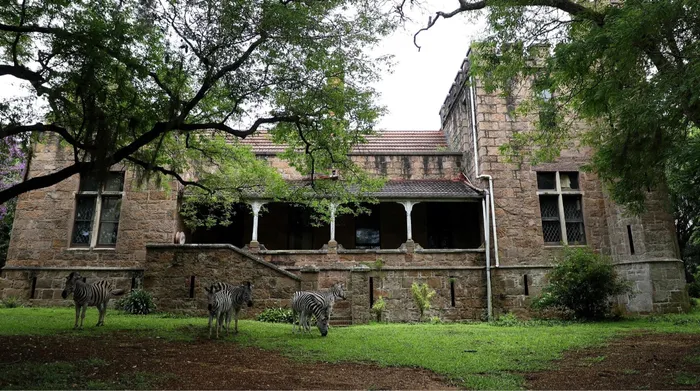
The Coedmore Castle was built as a family home in the 1800s, and is still home to a family of zebras.
Image: Supplied: eThekwini Municipality
Coedmore Castle, which once served as a refuge for Indians from Chatsworth and surrounding areas during the 1949 riots, has the potential to become a tourist attraction.
Last week, eThekwini Mayor Cyril Xaba visited the castle nestled in the heart of the serene Kenneth Stainbank Nature Reserve in Yellowwood Park. The visit was part of the city’s plan to uncover hidden heritage sites and expand Durban's tourism industry.
In a statement on the city’s Facebook page, Xaba said he wanted to see the state of Coedmore Castle firsthand.
“Built in 1885 by the Stainbank family who owned the dairy farm, this unique property remains intact and it captures the history with its architectural design. The property has a potential to become a tourist attraction, expanding tourism products the city has to offer to visitors,” he said.
Years ago, Jenny Keith, the granddaughter of Kenneth Stainbank, said the family hoped the 253-hectare reserve would be recognised as a national heritage site and a tourist attraction.
Keith, 62, still lives in the reserve in a property next to the castle with her family.
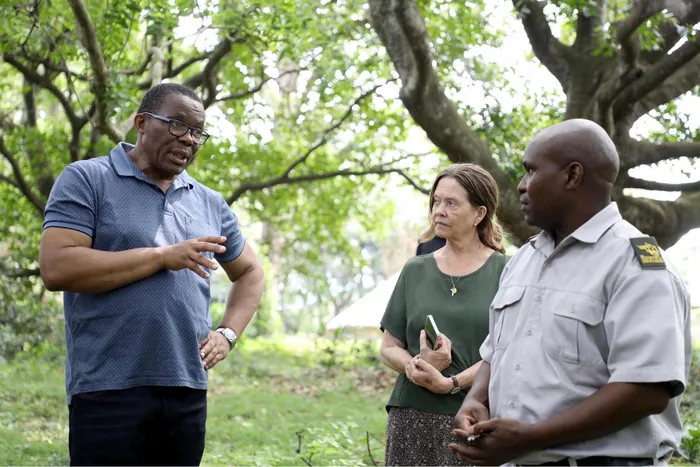
Mayor Cyril Xaba with Jenny Keith and Thanduxolo Nomatshila from Ezemvelo KZN Wildlife.
Image: Supplied: eThekwini Municipality
She said Thanduxolo Nomatshila, the reserves manager from Ezemvelo KZN Wildlife, invited her to the castle for the mayor’s visit.
“My great-grandfather Dering Stainbank was the first owner of the land. He acquired the land, which was situated on the south bank of the Umhlatuzana River, and was once the cattle kraal of the Zulu King Shaka. The land held great historical significance. Skilled Scottish stonemasons built Coedmore Castle using stones that were quarried on the farm.
“The farm first cultivated coffee and naartjies and then became a dairy farm which supplied milk to neighbouring communities. The castle also holds historical significance as a sanctuary of refuge during the violent 1949 riots, as it was used as a refugee site for over 2,000 Indian people from Chatsworth and surrounding areas."
She said that when her great-grandfather died in 1907 at the age of 66, her father Kenneth inherited the castle and wanted to honour his dad’s legacy by preserving the land and its natural habitat.
Keith said her dad donated the land to the Department of Public Works and the reserve was managed by Ezemvelo KZN Wildlife from 1963.
When her mother, Elizabeth Keith, died in 2019, their family decided to also donate the castle to the Department of Public Works.
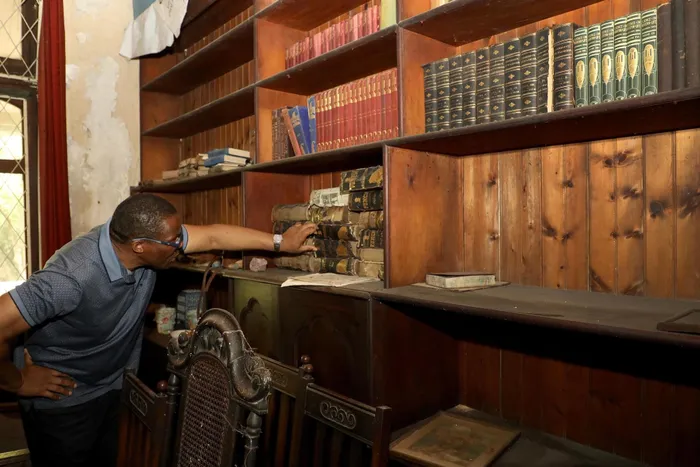
Mayor Cyril Xaba inside one of the rooms in the castle
Image: Supplied: eThekwini Municipality
Keith said she hoped the State would honour her family’s legacy by maintaining and preserving the castle and the reserve so that future generations would enjoy the reserve's natural beauty.
“The castle had been built as a family home, and after my father’s passing, the castle had been unoccupied for about 40 years. We envisioned it would end up as a tourist attraction and heritage site, but unfortunately it has not been maintained effectively.
“It is a beautiful house and can be restored by somebody with money and a vision. The house was built on a grand scale, with large rooms, high ceilings, a dining room, big kitchen and a library. The house has not been modified in any way since the 1800s. The castle used to be opened to the public, but due to no funding, it was stopped.
“When the building was transferred in 2019, we had hoped we could get the area to be a heritage hub, which was always the goal. But the Covid-19 pandemic hit and the plans did not take off. The last time we spoke to the public works department, they said Ezemvelo KZN Wildlife was willing to take over the building.
“Last week, the mayor popped out of nowhere for a visit. Although he did not share any ideas as to what plans were in the pipeline for the area, we hope that the area would finally get the recognition it deserves,” Keith added.