
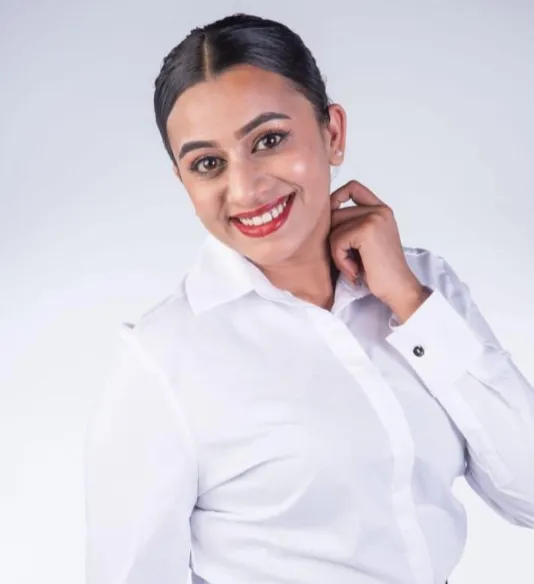
Danielle Maistry is a symbol of resilience and hope, as she transformed her five-year battle for justice against gender-based violence into a powerful advocacy for change, inspiring others to break the silence.
Image: Supplied
FIVE years after Danielle Maistry was brutally assaulted by her then-boyfriend Ryle Steenkamp, he was sentenced to 15 years in prison for attempted murder, on February 23.
Maistry, a final-year business administration student aged just 20, had her life shattered on the night of June 1, 2020, at Steenkamp’s flat in Mariannridge, west of Durban.
The charge sheet details how Steenkamp unlawfully and intentionally tried to kill her by repeatedly striking her with a hard object and repeatedly kicking, and punching her across her body.
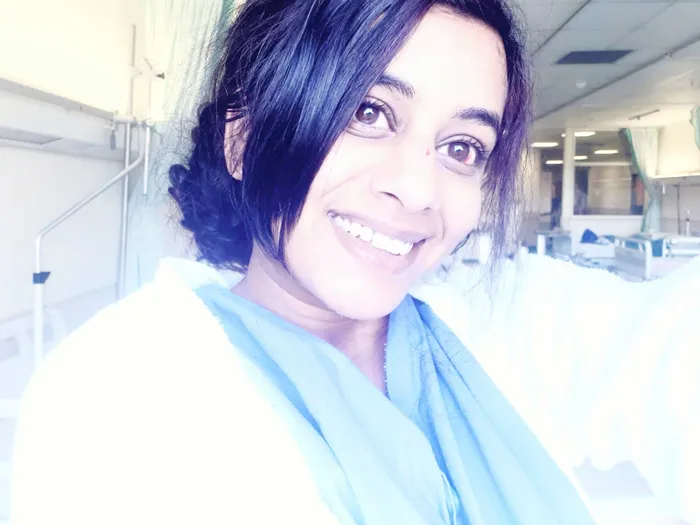
In the face of adversity, Danielle Maistry found her voice. This hospital moment marked the beginning of her journey from victim to advocate, as she bravely shared her story of survival and resilience against gender-based violence.
Image: Supplied
The severity of the assault left her with life-threatening internal injuries, including internal bleeding and a blood clot in her brain that required neurosurgery.
Rushed to the hospital, Maistry spoke to the media from her hospital bed. "I may not be 100% now, but I know that with time, I will be just fine," said a fragile Maistry at the time, her face swollen and bruised as she struggled to breathe and move. She recalled looking like a "completely different person".
She was candid about the emotional trap of the abusive relationship, admitting she had "ignored the red flags" because she was in love.
"A normal person would say, ‘Leave! Get out! Remove yourself from the situation, but I know what it’s like. If you want to stay, you find a reason to and look for one good thing amongst all the bad," she explained at the time.
Her life was ultimately saved by her mother, Michelle Maistry, who came for her. "If my mom hadn't come for me, I think I would have bled to death," she shared.
Steenkamp, an unemployed father of two at the time of the incident, was arrested and initially appeared in the Pinetown Magistrate’s Court, charged with attempted murder and kidnapping.
However, the trial dragged on for a gruelling five years, constantly marked by delays.
"It’s a really long (road). I've been all over the place with emotions. I've been happy, confident. I felt optimistic. I felt bad at times, but with everything that I felt, I knew that justice needed to be served."
The primary obstacle was Steenkamp’s defence, which Maistry called a calculated denial of the assault.
The five-year duration was largely due to what Maistry termed "delay tactics" employed by the defence.
She described an exhausting cycle of postponements, citing unavailable lawyers and the slow, bureaucratic pace of the court.
To counter the denials, the State was forced to call numerous witnesses, including police officers, three doctors, the head of neurosurgery, and Maistry’s own mother.
"I went to court several times. Sometimes I even gave up. And I think in the beginning, I got demotivated, and then when that happened, I noticed that that delayed it more," she said.
Maistry’s own memory loss, a consequence of the severe head trauma, further complicated matters.
"It was not an easy case, especially because of the injuries I sustained that caused me to lose a part of my memory," she noted, acknowledging the crucial support of her prosecutor, Advocate Thiveshnee Govender, who she credits as an "angel in my life".
The judgment was finally delivered on February 13, 2026, a turning point for Steenkamp, who had remained free on bail for the preceding five years.
The magistrate found him guilty on Count 1 of attempted murder but acquitted him on the charge of kidnapping (Count 2), which stemmed from his refusal to allow her to leave the apartment.
"The magistrate found him guilty... I felt relieved when he was taken into custody."
The sentencing followed on February 23, 2026. Steenkamp was handed a 15-year prison sentence for attempted murder and further declared unfit to possess a firearm.
Maistry's immediate reaction was one of deep gratitude and vindication. "I just thanked God. 'God, you hear my prayers. I didn’t pray all the time for nothing. You gave me that hope'," she said.
She added that the sentence validated her resilience and silenced the victim-blaming voices she had encountered.
Maistry shared that after leaving the hospital, some people were posting on social media that "she deserved it".
"I felt so belittled, and I felt like I needed to regain myself and I needed something to happen to give me the confidence to know that what happened to me was not my fault... I questioned it at first, did I deserve it? I prayed for them, and I prayed for myself. Recently, I realised that I didn’t deserve that," she stated firmly.
Five years later, Maistry is a testament to survival and recovery. Despite the trauma, she completed her final year of business administration, even writing her final exams after her hospitalisation.
After graduating, she first worked at an electrical company before moving to South African Breweries in 2025, a career change that required her to leave Durban.
"I’m enjoying it. It’s amazing. I’ve met so many new people, different people. I’ve got to go to so many places and see so many things... It’s just keeping me busy. It’s keeping me on my feet, and it’s helping me to build up my own life," she shared, highlighting the therapeutic power of professional and personal growth.
Emotionally, the healing is ongoing. She still experiences flashbacks, but they are now mixed with "tears of joy, because I’m so grateful I survived".
The experience, she said, has made her "so much stronger", and her journey has ignited a passion for advocacy.
Feeling "united with everyone", she gained a sense of empowerment from the nationwide 'National Shutdown' protest against GBV in November 2025.
The verdict, she hopes, adds positively to the national dialogue. "I feel good after the verdict. I feel like there’s hope. You can’t do bad things to people and get away with it. There’s so much evil happening in the world, but (the verdict) showed that you won’t get away with it forever."
She now uses her experience to advise other young women. Her message is one of strength and the absolute necessity of breaking the silence.
"I would definitely tell her that she needs to be strong, courageous, and have hope in herself," advised Maistry.
"I know it feels scary, that he is going to hurt her or that her world is going to end. She should definitely speak to somebody that she trusts. I would recommend maybe her mother, sister, or a friend; talk to somebody. It’s so important to speak to somebody that you can trust."
She warned against the instinct to protect the abuser or the relationship, an impulse she admits she had often succumbed to. "I did protect him many times. And look where he got me. I mean, I almost lost my life."
Maistry’s experience has led her to call for changes to the court system, particularly addressing the red tape and slow process that often leads to victims dropping charges. She advocated for mandatory state intervention in GBV cases, even if the victim wants to withdraw.
"(The case) shouldn’t be closed if the victim or the complainant is closing it, because sometimes they are persuaded, or they are threatened to close, to drop the charges," she argued.
She believed that shortening the court process and removing bureaucracy would alleviate the hopelessness that victims feel.
Maistry also underlined the critical role of psychological support, having benefited herself from seeing a psychologist after the attack.
She suggested government-funded psychological support for victims, especially considering the high cost.
"We undermine how much a psychologist does help... I think that if the government could provide that, that would be excellent," she said.
For Maistry, the verdict is not an ending but a powerful milestone in a life now dedicated to healing and helping others.
She is focused on living well, travelling, and building her career. "I just want to live a good life and really see life for the good that it has in it, and enjoy the presence with the people that I love and the people that love me," she concluded.
"I also want to help others. I want to help others that are not happy, that are not okay, that (are) in the situation that I was in."