

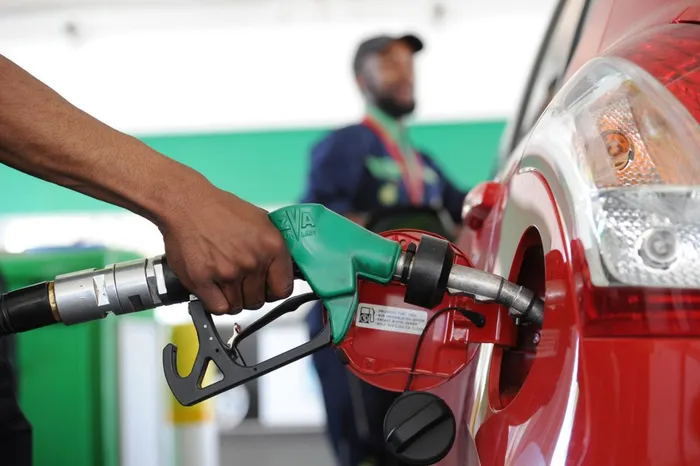
SOUTH AFRICA is bracing for unprecedented fuel price increases in April, driven by soaring international oil prices and a weaker rand, with predictions indicating hikes of over R3 for petrol and R5 for diesel.
Image: Karen Sandison / Independent Media
SOUTH AFRICA is bracing for unprecedented fuel price increases in April, driven by soaring international oil prices and a weaker rand, with predictions indicating hikes of over R3 for petrol and R5 for diesel
This could result in the largest monthly increases in history.
The extent of the increases remains difficult to predict at this early stage of the month, but the latest data from the Central Energy Fund is painting a grim picture.
The ‘best case scenario’ at present is a petrol price hike of R2.41 for petrol and diesel increases of up to R4.50 for 50ppm diesel.
This prediction is, however, based on the month average, which has yet to fully factor in the sharp oil price surges that took place during the latter half of the past week. Daily data released on Friday showed a diesel under-recovery of R7 per litre, with petrol around R3.78 in the red.
Should current oil price and rand trends continue for the remainder of the month, South Africans will almost certainly see a petrol increase of more than R3 and diesel going up by over R5, and that’s a conservative estimate.
95 Unleaded petrol currently costs R19.47 at the coast and R20.30 in Gauteng, where 93 Unleaded retails at R20.19. The wholesale price of diesel is currently pegged at R17.84 at the coast and R19.17 inland.
On Friday, Brent Crude oil was trading at $87 per barrel, which is 36% higher than its February average of $64. In the past week alone, oil has gone up by 20%.
Oil prices have risen primarily as a result of the war sparked by US and Israeli attacks on Iran, which has injected significant geopolitical risk into energy markets. Much of the heightened price pressure stems from concerns around the Strait of Hormuz, which Iran has threatened to disrupt. Around 20% of the world’s seaborne crude oil passes through this critical chokepoint.
A weaker rand is also taking its toll, with the local currency having depreciated from its February average of $16.31 to the US dollar. On Saturday, it was trading at R16.54 to the greenback, after hitting R16.79 on Thursday.
The final blow will be dealt by the increase in fuel taxes that was announced by Finance Minister Enoch Godongwana during his 2026 Budget Speech. From April 1, South Africans will be paying an additional 21 cents per litre in fuel taxes, following increases to the General Fuel Levy (9 cents), Carbon Levy (5 cents) and Road Accident Fund levy (7 cents).
Following the tax adjustments, drivers will be contributing a total of R4.10 per litre to the GFL and R2.25 to the embattled RAF.
Keep in mind that the abovementioned fuel price increases are based on early-month data, and much could still transpire before the end of March, when April’s official fuel price adjustments will be calculated.