
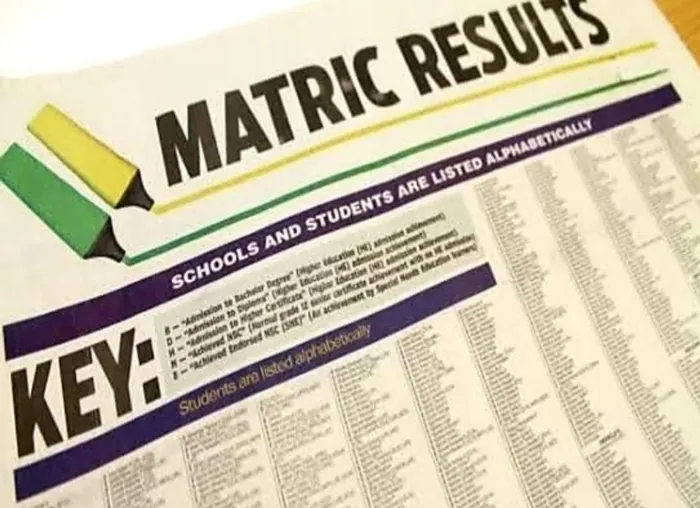
The Information Regulator says the court was wrong in its interpretation of POPIA concerning the publication of matric results.
Image: File
THE Information Regulator (IR) is set to appear in the Gauteng High Court, Pretoria, on Thursday to apply for leave to appeal a recent judgment that permits the publication of matric results in newspapers and on online platforms.
The IR will argue that the High Court erred in its interpretation of the Protection of Personal Information Act (POPIA).
Counsel for the IR will argue that in confining the whole case to “whether the manner of publication of results constitutes publication of personally identifiable information,” the court erred in its finding.
A full court (three judges) in December concluded that publishing the matric results by only using a learner’s exam number did not infringe on POPIA.
The issue of whether matric results should be published or not has been a subject of legal debate since 2022. The courts have, during all those applications, ruled in favour of publishing the results, but made it clear that this may only be done by using exam numbers and not the names of the candidates.
But the IR has since maintained that this still infringes on POPIA. In its leave to appeal application, it contends that the Supreme Court of Appeal should take another look at the Act in the context of matric results.
Advocate Kennedy Tsatsawane SC is expected to argue that the phrase “personally identifiable information” is not defined, mentioned, or referred to anywhere in POPIA.
According to the IR, the court further erred in defining the phrase “personally identifiable information” to mean the ability to identify a particular person.
In terms of its argument, the case was not argued on the basis that what was in dispute between the parties was “personally identifiable information” as defined by the court.
It was thus not legally competent for the court to unilaterally introduce a new concept into the matter and a definition without allowing the parties to make submissions on this issue, the IR will argue.
The IR argued during its application in December that learners sitting alongside each other while writing exams may see each other’s exam numbers and thus use this in identifying each other when the results are published.
But the court had rejected this as being far-fetched. In raising this point during its leave to appeal application, the IR will argue that the court could not dismiss the possibility that learners might wish to know the results of their fellow learners and will be able to make out their examination numbers based on the sequential seating arrangements.
In urging the court to afford it leave to appeal, the IR will argue that it is in the interests of justice and in the public interest that the lawfulness of the publication of matric results be finally determined by a higher court.
In opposing the application, the Department of Basic Education will argue that an appeal has no prospects of succeeding because the IR “totally ignores” the legal requirements for the lawful processing of personal information as required by the POPIA.